• About
  • Farmers

vedika

~ your forum for critical and constructive writings

vedika

Tag Archives: climate

COP21 Fossil Fuel Addiction : A guide for intervention from the climate justice movement

01 Tuesday Dec 2015

Posted by raomk in Current Affairs, Environment, INTERNATIONAL NEWS, Science

≈ Leave a comment

Tags

climate, COP21, Fossil Fuel, Paris-Climate-Talks

Brad Hornick

Author’s note: this article is meant to be both deadly serious and parody. It attempts humour and commits unforgiveable psychological reductionism of political issues. It is hoped the reader will discern the message behind the form of delivery.

Fossil Fuel Addiction is killing the planet. The Climate Justice Movement must ready for an intervention before this addiction kills us all. The following is a practical guide to recognize addictive behaviour as well as how to effectively intervene to assist in the Addict’s recovery. In the middle of global climate marches and actions worldwide, climate justice activists would do well to study these tips for an informed intervention.

The earth’s ecosystems metabolize everything human society produces and consumes. Its delicate ecological subsystems have been bombarded by toxic by-products of our industrial systems. Under normal conditions, it may be easy to believe that within moderate amounts, toxic substances can be metabolized to no effect on the planet as a whole.

Climate or Profit

But there is a pervasive tendency amongst the world’s Fossil Fuel Addicts to underestimate the amount consumed as well as the devastation wrought on systems in their entirety. Units of pollution add-up and like any addictive behaviour, it is easy to forget or hide how much has been consumed, especially true within the licentious atmosphere of extreme and unconventional energy exploitation.

The viability of whole ecosystems is at stake. Atmospheric, oceanic and earth systems globally are becoming corrupted at the systemic level. Arctic jet streams are languishing and becoming lazy. Global thermo-haline ocean currents are slowing down. Climate change is contributing to significantly alter nitrogen cycling processes, in both terrestrial and aquatic ecosystems.

The Fossil Fuel Addict will inevitably engage in self-denial about over-consumption, citing lower amounts than is really the case. But when the earth exhibits tipping point tendencies that threaten to “fire the clathrate gun,” dangerous defensive postures on the part of the Addict must be called-out. This is the time to recognize that the Addict has hit rock bottom, that there is an imminent crash, driven by multiple sets of amplified positive feedbacks producing abrupt and runaway climate changes.

Justifying ‘Safe Levels’

With frankenweather as a backdrop, a desperate coordinated effort has been underway amongst industry and the nations of the world to define, justify and reinforce their own notions of “safe levels of global warming.” While it may be obvious to thinking and sober people that in fact there can be no safe levels of global warming, it appears that this realization is not so obvious to people making decisions at the Paris COP21 meetings.

Multiple scenarios are invented, draped in mystifying strings of scientific jargon, tight correlations and mathematical equations such as “30 per cent emissions reductions below 2005 levels by 2020 for a 66 per cent chance of averting 2C rise (which would permit human survival).” High levels of credulity are aspired to by cloaking these numbers in precise terms as if they represent solid, scientifically valid insight into climate and social science.

Versions of these statements are rolled-out to the public by scientists, activists, government representatives in a logical-positivist heuristics of persuasion for maximum saliency and self-efficacy. “Critical” commentators join the fray, commenting on the cogency of the numbers themselves, add their own dimensions to the same questionable logic, and thereby consent/submit to the “authority” of the form in which Fossil Fuel Addict statements are couched as if they represent reality.

Addictive Behaviour Justifying Non-Action

But this collective conspiracy to enable a semblance of solid foundation, all only to justify non-action should be recognized as the desperate call for help that it is. If the equations themselves are analyzed, as well as the frames and conventions in which they are generated, are analyzed – it becomes clear they hardly reflect the reality to which they intend to refer.

The impacts from climate change have always risen at a far faster rate than either scientists and the public can keep up with. We know that IPCC reports have consistently understated the threat and urgency. Recent research by James Hansen concludes that threshold effects of global warming could be kicking in at a global temperature rise of 1C beyond pre-industrial benchmarks. In other words, that means kicking in NOW, not at 1.5C or 2C!

Fossil Fuel Addiction is the inability to see beyond mechanisms of denial or culpability avoidance. The Addict exhibits behaviour that includes: minimizing, rationalizing, forgetting, self-deception, suppression and repression. We have seen these mechanisms at work in multiple instances in the last 20 iterations of United Nations Committee of the Parties (COP) meetings. After 20 years, emissions this year are 63 per cent higher than when “negotiations” started.

Addictive Behaviour is Enabled by the Rest of Us

Because addictive behaviour has been allowed to continue over such a long time, fossil fuel addicts have been given free reign to experience dissociation and a tendency to adopt personality traits governed by self-interestedness, amorality, callousness and deceit. Furthermore, Addicts tend to not suffer from guilt and are able to mimic human qualities of empathy, caring and altruism.

Our toleration of lax social norms and our passivity toward addictive behaviour has encouraged the rapid spread of this disease to the point that it has become endemic amongst the global elite. As a result, the rest of the world endures the destructive consequences and painful relationships with Fossil Fuel Addicts due in part to their own low-self-esteem and co-dependencies of the Addicts.

The world is fed a myriad of self-justifications given to support Fossil Fuel Addiction. At a personal level, these exculpatory rationalizations take on the form of irrational and often vituperative personal attacks on others. Look for some of these admissions that are ‘signs’ of Fossil Fuel Addiction behaviour. The Fossil Fuel Addict may say things such as:

  • the real problem is people judging them
  • their addictions are somehow necessary to the normal functioning of the economy
  • it’s their job and someone else would do it if it weren’t them
  • there are no alternatives to fossil fuel related jobs
  • renewable energy is boring, costly, inadequate and inefficient
  • people who dislike coal, oil and gas are weird and uptight
  • our economy is being ruined by socialists and anarchists and that is why their life is miserable
  • the weather is to blame

But these flippant associations should be juxtaposed to the reality and measured against objective circumstances. Fossil Fuel Addiction is leading to a terminal situation in which human civilization is facing an unprecedented, extreme, intractable and imminently catastrophic threat to life support systems. Even if activists are ‘uptight’, as well as anxious, depressed and morbid, the Addict must be able to concede that it is for legitimate reason.

Treatment

Treatment begins by coming out of denial. As long as polluters remain in denial, they will continue to pollute and blame everyone and everything else as the cause of their problems. If a Fossil Fuel Addict is able to muster enough honesty, then recovery can begin. If they refuse to come out of denial, the climate justice movement must perform a planned intervention with a professional who helps the Addict to see the truth in their polluting.

It is incumbent upon all those who consider themselves to be part of the “Climate Justice Movement” to step-up, lead the politicians and CEOs and at the same time enhance their own sense of mission and self-worth, by putting any sense of our own weaknesses and emotional vulnerabilities aside, by focussing on helping Fossil Fuel Addicts help themselves!

Major high-risk polluters attending the COP21 conference are a danger to themselves and others; they need to get their problem under control. After seasoned activists have tried suggesting to Committee of Parties over 20 international climate summits that they need to face their addictions but having only been met with resistance, it is time for an intervention. Time to confront Addicts to help them see the danger their abuse is to themselves and others and begin a process of recovery. It is time to show them that we care and that they themselves, as well as others are being hurt by their behaviour.

Intervention Guidelines

Pollution is a disease of excuses, so you must remove all possible reasons for the Fossil Fuel Addict to refuse your help: promises to “meet targets” at some far-off date; promises to privately and voluntarily “pledge” or “commit” to change, rather than submit to more stringent, mandatory, legally enforced carbon targets; promises to reform but not fully transform through devises such as green capitalism, market mechanisms, green taxes and other miraculous cures. Remember that you must deal with the deep causation of the addiction and not the symptoms.

Don’t be fooled. Addiction is irrational, unbalanced and unhealthy behaviour patterning resulting from abnormal obsessions. It could not continue without a distortion of reality and delusional thinking. The Fossil Fuel Addict may swear that s/he is clean and sober when negotiating the addiction, while still under the influence of the profit motive. S/he will try to conceal the amount of nature consumed in the commodification process. S/he will invent alibies for absence at oil spills and methane releases as present these as “mistakes” that anyone could do. They may plead “I promise” and use such phrases as “I know I have been wrong, and this time I have learned my lesson. It will not happen again!”

Recognize half-truths. Like cigarette addiction, Fossil Fuel Addicts (FFAs) may express sincere desire to convert to cleaner forms of technology, but they accomplish little to achieve that outcome. Addicts may try to focus attention on meagre attempts at promoting conversion to a greener economy on a particular day and use this as evidence that they have control over their polluting. They will ignore other aspects of their life that do not support their polluting behaviour, using half-truths along with their denial to support continued substance abuse.

Avoid Stigmatizing. When unduly threatened in an uncontrolled environment Fossil Fuel Addicts may react to the stigma associated with this disorder causing addicts to close ranks in private foras such as the G20 or the G7 where new ways fossil fuel addictive behaviour is legitimized and codified into international agreements such as the Trans Pacific Partnership (TPP). Cornering of the FFA may lead to this kind of institutionalization of neurosis, working into the very infrastructure of society the malfeasance of the Addict and should be avoided at all costs.

We need our planet back.

Confront the problem head-on by facing it in direct actions. Choose a time such as the COP21 meetings when the polluter attempts to be sober and transparent about their condition. Remain calm and corner the polluter while exercising non-violent civil disobedience in a situation where it may be a surprise. It may take place on the streets, in an office, at home or within a neutral place, like a restaurant or country club of their choice.

Be as firm and specific as possible by telling the FFA how his/her behaviour affects you personally and those around you. Give personal examples such as “my house burned down from forest fires,” “my island is disappearing from sea level rise,” or more large scale examples such as “this year you caused the polar ice caps to melt causing untold mayhem world wide.” Tell them “I won’t let this happen again. I know you love your children, but polluting makes you a different person.” Tell them how his/her addiction makes you, your friends and family feel!

Show them you care. Let your combined lifetime of existential angst over the damage caused by big fossil fuel, big pharma, big agro, big armament, etc. etc. well-up and spill into their consciousness. Tell them how your neighbours and co-workers have noticed their psychopathic behaviour and have lost respect for them. Expect hostility from a possible paranoid reaction that you are part of a growing movement to overthrow the foundations of their established order in the global hierarchy. Meet this antagonism with firm and calm resolve. Show the Fossil Fuel Addict in no uncertain terms that you care about him, but that you simply will not tolerate his paranoid behaviour any further.

Keep your eyes on the ball. All of the sophisticated science still knows virtually nothing about the complexities of deep ecosystems dynamics. The unspoken and mysterious truths contained with the notion of the precautionary principle presently loom large. At the edge of global climate precariousness, we might as well adopt a “primal reference” immediately as an obvious and deliberate “new” benchmark which the Addict can lean on; that the average population dose from human-made radiative forcing should be no greater than that which the population already receives from “natural” causes, or from pre-industrial levels. “Zero tolerance” are the new code-words!

Linear thinking is the enemy. Addicts tend toward linear and concrete dissociative thinking. Remind them we are now living amidst abrupt climate change. When severe distortions are introduced and become systemically disruptive, eco-systems become defined more by chaos theory and complex dynamics – characterized by lack of predictability. Excessive input levels of anthropogenic carbon dioxide, methane, nitrous oxide and ozone, water vapor, unsettle complex chemical compositions and structural balances in delicately balanced ecosystems. Old epistemologies and ontologies for navigating complex bio-chemical and thermodynamic principles don’t apply!

Don’t let the Addict slip into old behaviours. Intruding into the assumptions behind the mainstream discourses of Addicts are biases generated within cultures of commodity production in which perpetual energy and material throughput are system requirements. This provides a deceptive escape valve of projected “carbon budgets” extended into the future with continued production of externalities within which countries and corporations can still massively pollute. To prevent recidivism, isolate and obstruct Addicts from contact with the ghettoized language of their homies.

Ask others for help. If you don’t succeed as a small affinity group, plan more interventions. This time, invite friends, family, co-workers, flash mobs, Facebook groups… anyone from the 99% who has been personally affected by the polluters insensitivities. Tell them all how to be prepared to share specific examples of how the polluter has hurt them and our non-human friends through their sustained abusive behaviour. Each person should be given an opportunity on the streets and with the blow-horn to offer her/his sensitive thoughts.

Don’t be afraid to say how you really feel. A non-violent, direct-action, civil disobedience intervention will not be effective if you worry more about the Addicts’ feelings than you do about the future of the planet, or those immediately immediately impacted. Coax polluters to face their victims such as the “Vulnerable 20” or the “Alliance of Small Island States,” the many indigenous communities. Don’t exaggerate, but tell the polluter how they are actually murderers and that their actions are killing life on the planet, its wonderful species, and any prospects for our civilization to survive. Suggest some prefacing nightmare stats of lives being lost to the Fossil Fuel Addicts. Convince them that they need to show some humility and remorse for the past. Now is the time for them to make sincere apologies and making amends, not more excuses.

Get professional help. If you are still not able to convince the polluter to seek treatment, ask a seasoned professional agitator to assist you.

Set consequences for the problem. Let the Addict know you mean business. If his pollution affects your consumption patterns, tell him you will divest from companies that supply his products. If his company sponsors events or public institutions, tell him you will campaign with others to boycott those venues. If he pollutes in your home, tell him you will change the locks on your door, or move out, until he is sober. Threaten civil and criminal lawsuits! Seek compensation! Tell them their actions will haunt them all there life – suggest possibilities of “deferred prosecution.” Make the consequences something the polluter will not be able to live with. But be sure you don’t use empty threats – you must have the persistence to campaign on the polluters’ behalf until the addiction is resolved.

Offer hope in solving the problem. If at the COP21 meetings, hold the polluter within the conference centre and restrict his freedom until s/he is cured. Don’t allow any actions that enable the polluters addictions – such as “voluntary INDCs.” Don’t allow visitors. This may frustrate the polluter – and you – but remember, rules are in place in the interests of sobriety, as well as no less than the averting of catastrophic climate change. Let the polluter know you will stick with him/her on the long road to recovery and eco-socialist revolution.

Find Alternatives. Losing an addiction is like losing a body part. A big empty space will be left by the losses caused by the “cure.” Addicts tend to live in the future, hoping the continued addictions will be paid handsomely in quarterly reports and bottom-lines. To avoid the problem of filling these spaces up with regrets, if-onlys and could-have-beens, ensure that a new personal and political vision re-occupies these spaces, one not based on private property, the growth and profit imperative, inequality and class division, etc.

Now Celebrate. Remember what Jean Paul Sartre says… real encounter with the “other” contains the potential for mutual liberation. When you help a friend to overcome their addictions you are also liberating yourself and the world from capitalism. You deserve a great big pat on the back, and the right to form new lines of governmental authority based on socialist and anarchist principles. A new day will dawn!

Finally, remember there is no cure for FFAs. Once a Fossil Fuel Addict, always an FFA. Can this disease be kept within remission with treatment? Even with the potential for sobriety, polluters think they can pollute again, without same devastating consequences.

When corporations and their state enablers admit they have a problem with Fossil Fuel Addiction – that is when the real work begins. Recovery is not a single event, but will require a process of permanent revolution in multiple areas of life. Learning how to cope with these changing circumstances is a lifelong process – requires strong commitment and support.

Admittance to the COP21 opens the door for climate justice to enter a polluter’s life and radically transform them from inside out. The personal acceptance of the guilt, shame – give the polluter the power to pollute or not pollute – one day at a time. Help them to learn to live without! •

Brad Hornick is a Vancouver writer and Ph.D. candidate at Simon Fraser University in Vancouver Canada. Some of his writing appears onrabble.ca blog. He is active with systemchangenotclimatechange.org, vancouverclimateconvergence.org and parisclimatejustice.org. Follow his tweets at @bradhornick.

Share this:

  • Tweet
  • More
Like Loading...

How climate change has sparked political and social unrest in Punjab this year

30 Monday Nov 2015

Posted by raomk in Current Affairs, Farmers, NATIONAL NEWS

≈ Leave a comment

Tags

climate, Farmers, Punjab, white fly

And what that tells us about how agriculture is faring in Punjab.
M Rajshekhar

How climate change has sparked political and social unrest in Punjab this year

Photo Credit: Munish Sharma/Reuters

The professor will not forget 2015 easily.

A scientist at Ludhiana’s Punjab Agriculture University, he has been studying cotton for 15 years. But what he saw this year was entirely unfamiliar.

It started with the rains. Punjab saw downpours during the normally dry months of March and April. It rained in June as well – a month when temperatures should have touched 47 degrees, with hot summer winds (the famous loo) gusting across the state.

Instead, the temperature stayed below 40 degrees on most days that month. On the days it did rise, said the scientist, who spoke to Scroll on the condition of anonymity, it did not cross 43 degrees.

More climatic strangeness followed. It barely rained in the traditional monsoon months of July and August. The first three weeks of September stayed dry as well, followed by heavy rains towards the end of the month.

The aberrant weather patterns catalysed a boom in whitefly – an insect that sucks sap from plants during its nymphal stage. And this triggered, among other things, a political crisis in Punjab.

Typically, whiteflies emerge around March and are active till winter sets in. Most years, they are a minor pest preying on most crops, their numbers kept in check by the loo and then the rains. This year, however, the skies stayed overcast but the earth saw little rain; temperatures stayed relatively low and humidity relatively high, creating conditions where whitefly numbers began rising earlier than usual – in June.

Crawling out of their eggs, the nymphs encountered a cotton crop that was more vulnerable than usual. The rains in March and April had delayed the winter harvest – the wheat crop took longer to ripen. This in turn delayed the sowing of cotton. “Due to the late sowing, the crop was just 1.5 months old when the Whiteflies came,” says the scientist. “Normally, it is about 3 months old, and therefore more robust.”

It was a perfect storm. Whiteflies live for about 24-30 days – a quicksilver lifespan in course of which eggs hatch into nymphs, nymphs change into pupas, and pupas become adult whiteflies which mate, lay eggs on crop leaves and die. This year, with favourable conditions lasting longer during the cotton crop, Punjab saw an explosion in their numbers.

The plants were swamped. As the nymphs sucked out the sap, the plants sickened.

What happened next was inevitable. Anywhere between two-fifths to two-thirds of Punjab’s cotton crop was damaged. By mid-October, about 15 farmers had killed themselves. A farmers’ agitation, demanding compensation from the state, began.

Pesticides failed to control the plague, giving rise to speculation that they were fake. The director of Punjab’s agriculture department and several pesticide dealers were duly arrested.

The unrest was building when reports began to proliferate about copies of the Guru Granth Sahib being desecrated in several parts of the Punjab. Public attention swung away from the failed cotton crop – and in the process, the state squandered a chance to understand why whitefly erupted this year.

Make no mistake – fake pesticides are not the primary reason the crop failed.

Start with the rains.

Why were the rains abnormal?

From his office in the Indian Meteorological Department’s red-brick building in Chandigarh’s Sector 39, Surender Paul, a director, has been witnessing large changes in the weather patterns over Punjab.

Punjab gets almost all its rainfall during the monsoon months. Over the last 15 years, said Paul, the state has “seen a decline in mean precipitation between June and September”. In the last ten years, it has seen six “meteorological droughts”, the term for when rainfall is at least 25% below normal.

Paul sees other changes. Historically, rains used to reach the state around June 30. They now arrive five days earlier. Their departure has been delayed as well. “The norm is September 30. But now, winds start blowing towards the south seven-eight days later than before.”

Rainfall is also getting concentrated across time and space. This year, most of the rainfall over Punjab occurred in just 10 days. “This is one of the patterns we are seeing – a few days of concentrated rainfall,” said Paul. At the same time, the state is seeing greater local variations in rain. This year, for instance, only six out of the 20 districts in the state got normal rainfall.

Paul’s work suggests these changes are manifestations of a new interaction between mid-latitude westerlies and India’s monsoons.

It’s like this: The monsoon originates to the south-west of India, over the Arabian Sea, and then moves north till the Himalayas, curving along India’s eastern coast before moving towards the low pressure area that develops over central India due to the summer heat.

As for the westerlies, these blow at a greater distance from the equator, starting from about 32 N (Latitude) – say, the northern tip of Punjab.

However, over the last ten years, the westerlies have been swinging farther south. This trend, said Paul, is seen mostly in the monsoon and winter months. In the last four or five years, they have reached as far south as 25 North – that is, the northern reaches of Madhya Pradesh. In the process, India is seeing greater interaction between the westerlies and the monsoon. “In the last ten years, the influence of extra-tropical weather has increased,” he said. “We have seen as many as 40 instances of western disturbances affecting the monsoons this year.”

It’s not yet clear why the westerlies are swinging south in recent years. What is incontrovertible, however, is that the monsoonal trough – the low pressure area which attracts monsoon clouds – is coming to depend on the interplay between the westerlies and the monsoon winds. The collision of the two, says Paul, results in the formation of a large cloud mass and an abrupt, short-lived but intense cloudburst. That is what India has seen this year in Jammu and Kashmir, Himachal Pradesh, Uttarakhand and Rajasthan.

Elsewhere, rainfall tends to be low. With the monsoon clouds weakened, more rain falls on places that are more conducive for rainfall – like lakes and forests. The moisture they release into the air, says Paul, encourages precipitation.

All of this bodes ill for Punjab. The state’s industrial belt releases emissions that reduce the quantum of moisture in the air. Further, the state has no dense forest cover – less than 4% of the state is forested. States to its north and east have far higher forest cover.

The collapse of extension work

The change in rainfall patterns combined with another factor to create the crisis in Punjab’s cotton fields this year.

During the heyday of the green revolution in the 1970s and ’80s, Punjab had a large bureaucracy that transmitted agricultural knowhow to farmers – chief agricultural officers and gram sewaks in each district, doing what was called agricultural extension. There were also kisan melas at the block and district levels that disseminated knowhow about agriculture and technology – information on new crops, seeds, fertilisers, implements and pesticides – to farmers through camps and lectures.

The system does not work any more. There has been a 50%-60% reduction in the number of extension workers, scientists say. The remaining staff is often deputed for other work – like conducting local elections.

One fallout of the collapse of extension work? It hamstrung attempts to fight off whitefly.

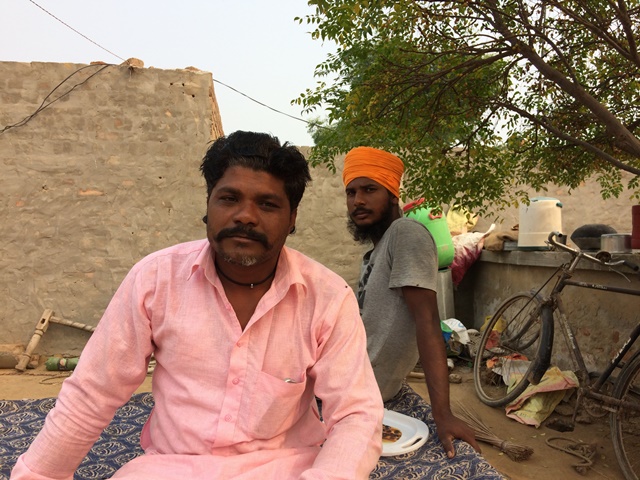
Take Balwana village, about 12 kilometres from the agricultural town of Abohar. Here Jagdish Kumar, a young man in his thirties who runs a shop near the village gurudwara that sells agricultural inputs (fertilisers and pesticides), had a window seat to what happened once the whiteflies arrived.

First, the crisis was spotted late. “Farmers responded only when the whiteflies started flying over their field,” he said. “That is when they asked for medicine, saying, ‘Mujhe spray de do ki kal ko mujhe whitefly dikhai nahin de.’” Give me a medicine which will make sure there is not a single whitefly over my field tomorrow.

There are several problems with such a process, Kumar said. First, whitefly is at its most dangerous as a nymph, which is when it sucks away at the sap and enfeebles the plant. “The whitefly stage is not so harmful,” he said. “All that will happen is the insect will lay the next generation of eggs.”

Second, spraying the flies will not help if it is not coordinated. “All the flies have to do is move to an adjoining field where spraying is not yet underway,” he noted.

Third, the lack of information about the emergent weather patterns meant that the farmers did not spray their fields for a long time. As the Met department noticed, the weather stayed overcast with minor drizzles. This made farmers reluctant to spray  “Companies tell farmers that fields should stay dry for four-six hours after spraying,” Jagdish said. “And the spray is costly – Rs 1,800/litre. Since farmers were never sure when it would rain, they deferred spraying.”

So the eggs grew undisturbed into mites, with concentrations per leaf much higher than before; the plants weakened and their leaves turned black. Which is when, Kumar said, desperate farmers began looking for medicines – “sprays, synthetics, anything”.

Take Hazara Ram of Balwana. The farmer, now in his sixties, sprayed four different pesticides in a bid to control his whitefly outbreak. None of them worked. His harvest was just 80 kilos from two acres, which netted him no more than Rs 4,000 – against which, he spent Rs 5,000 on pesticides alone.

Sukhdev Singhji. Credit: M Rajshekhar
In this part of India, it is the kharif crop – usually a cash crop like basmati or cotton – that introduces variability into farmers’ annual income. The winter crop, usually sold to the government at fixed rates, is more of a safety net. Like Hazara Ram, Sukhdev Singhji, a resident of Balwana village near Abohar, will not make any money on his cotton crop this year. He will make money only if wheat (kanak, in Punjabi) does well: “Kanak bachave to bachave.”

There is another issue here: Given that whitefly go through four stages – egg, nymph, pupa and adult – how did farmers like Ram know the stage of infection and therefore the appropriate medicines to spray?

They went by what agricultural traders or company agents – whose job is to sell pesticides – told them.

The rise of new ‘knowhow’

As Punjab’s extension machinery weakened, other actors stepped into the void – such as companies that sell fertiliser and pesticides. Said the Punjab Agriculture University scientist, “Their agents usually visit villages 15 days before the time of application. If the pesticide doesn’t work, they start working in another village. As it is, they are not even agri-graduates.”

Most of them are very young, said Sukhdev Singhji – “Navey munde. Unhey khud hi nahin pata honda.”

Another entrant into this informational vacuum is the adatiya, the agricultural trader. As an article in the November 7, 2015, issue of the Economic & Political Weekly, titled “Commission Agent System: Significance in Contemporary Agricultural Economy of Punjab”, notes: “They [adatiyas] have become the exploitative alternative for supply of credit, farm and domestic inputs as well as sale of produce. Not only do they provide credit for purchasing essential articles, but also push the farmers to purchase the same from the shops they, or their friends, own.”

One reason for their rise is the worsening economics of agriculture in Punjab.

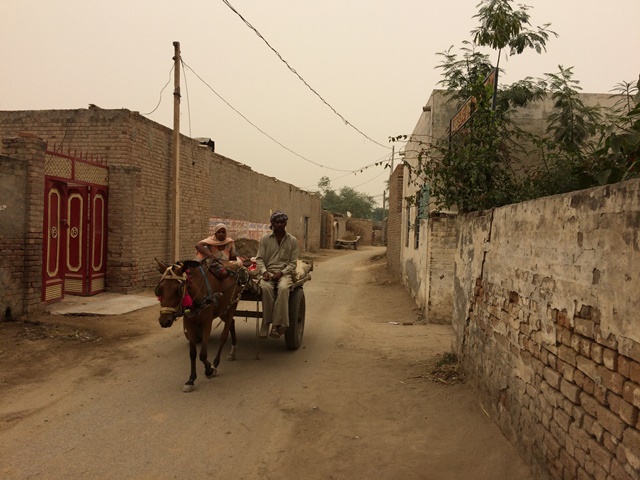
Take cotton: It is mainly grown in the southern reaches of Punjab, in the Malwa region. On the whole, this is the poorest of the three regions of the state, and the one that sees the most farmer suicides.

Villages in south-western Punjab’s Malwa region are far poorer than villages elsewhere in Punjab.
Credit: M Rajshekhar

Bt Cotton came here in 2004, in response to the American bollworm attacks that started in 1997. Sukhpal Singh, head of Punjab Agricultural University’s Department of Economics and Sociology, points out that since then, though farmer incomes have risen, their debt has not come down.

There are several reasons for this, Singh said. While Bt Cotton was resistant to bollworm, after about seven or eight years of normalcy, attacks from secondary pests started. At the same time, input costs began rising faster than output prices. “It was partly globalisation. Subsidy on input prices was reduced. Diesel and machinery and seeds got costlier. At the same time, international cotton prices fell.”

This is a story that is playing out all across Punjab. As the cost of agriculture rises and its profitability falls, Punjab’s farmers are being pushed into debt – 89% of all farming households are in debt, according to this EPW paper. They borrow from the adatiyas. When the harvest comes in, they give the crop to the adatiyas who sell it, recover the loan, and give the balance to the farmers.

And so, when whiteflys came, most farmers turned to the traders seeking pesticides. The EPWpaper estimates that 15.01% of pesticides in Punjab (across all crops) are now supplied from the shops of commission agents, and another 80% are procured from the shops owned by people connected to these agents. They, says the paper, issue “a “slip” to farmers for obtaining items from their “owned or connected shops”.

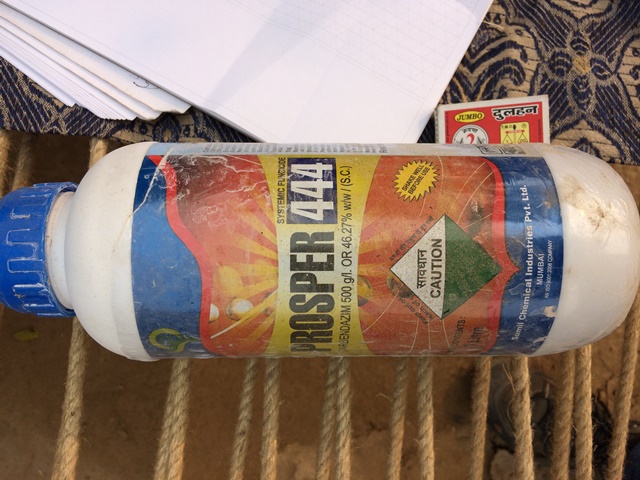
The fungicide that Singhji applied to his cotton fields. Credit: M Rajshekhar
This further compromised farmers’ efforts against whiteflies. There was now the added risk that the traders (who are not farmers) might recommend the wrong pesticide, or one with a greater margin, or that farmers might buy cheaper pesticides to keep their debt low.

Agreed the scientist, “Extension work has collapsed. Paisa nahin hain. Udhaar lena hain. Sasti kaun si hain?”

Singhji, for instance, sprayed a fungicide while trying to take on whitefly.

That won’t work, said Jagdish, the young shop-owner of Balwana, pointing out that farmers sprayed unthinkingly. “Decide kuch nahin kiya, jo mila woh daal diya,” he said. They sprayed whatever they could get.

Other farmers underestimated the whitefly crisis and either sprayed the right medicine too late, or used a milder pesticide than they should have. Matters were further complicated by perennial factors like fake pesticides and batch variations. “I see a farmer’s plot after spraying and if there is no change a day later, I send that batch of spray back,” said Jagdish.

That is the arithmetic of this moment. It’s telling that farmers held off spraying as long as the skies stayed overcast – it shows that farmers’ knowhow is static in a world that is changing fast. The state needs to work on mitigation and adaptation. And for that, it needs to prepare its farmers better.

“Our outreach has to be strengthened,” said Surinder Paul of the Met department. “The information is there. But not all farmers are getting it.”

Failing that, the state will only see the turmoil in its farmlands increase.

This article appeared in scroll.in

Share this:

  • Tweet
  • More
Like Loading...

Recent Posts

  • చైనాతో చిప్‌ యుద్దం 2.0లో గెలుపెవరిది -భారత్‌ను పక్కన పెట్టిన అమెరికా !
  • చైనాపై జపాన్‌ తప్పుడు ఆరోపణలకు అమెరికా దన్ను !
  • నరేంద్రమోడీ అభివృద్ధి ఓ అంకెల గారడీ – జిడిపి సమాచార గ్రేడ్‌ తగ్గించిన ఐఎంఎఫ్‌ !
  • యుద్ధం వద్దని పోప్‌ హితవు : ఏ క్షణమైనా వెనెజులాపై దాడికి డోనాల్డ్‌ ట్రంప్‌ సన్నాహం !
  • అరుణాచల్‌ ప్రదేశ్‌ వివాదం ఎందుకు, 1962లో చైనాతో యుద్ధ కారణాలేమిటి !

Recent Comments

Venugopalrao Nagumothu's avatarVenugopalrao Nagumot… on విత్తనాల ముసాయిదా బిల్లు …
Raj's avatarRaj on న్యూయార్క్‌ మేయర్‌గా సోషలిస్టు…
Aravind's avatarAravind on సిజెఐ బిఆర్‌ గవాయిపై దాడి యత్న…
Arthur K's avatarArthur K on CPI(M) for proportional repres…
Pratapa Chandrasekhar's avatarPratapa Chandrasekha… on బొమ్మా బొరుసూ : ప్రపంచ జిడిపిల…

Archives

  • December 2025
  • November 2025
  • October 2025
  • September 2025
  • August 2025
  • July 2025
  • June 2025
  • May 2025
  • April 2025
  • March 2025
  • February 2025
  • January 2025
  • December 2024
  • November 2024
  • October 2024
  • September 2024
  • August 2024
  • July 2024
  • June 2024
  • May 2024
  • April 2024
  • March 2024
  • February 2024
  • January 2024
  • December 2023
  • November 2023
  • October 2023
  • September 2023
  • August 2023
  • July 2023
  • June 2023
  • May 2023
  • April 2023
  • March 2023
  • February 2023
  • January 2023
  • December 2022
  • November 2022
  • October 2022
  • September 2022
  • August 2022
  • July 2022
  • June 2022
  • May 2022
  • April 2022
  • March 2022
  • February 2022
  • January 2022
  • December 2021
  • November 2021
  • October 2021
  • September 2021
  • August 2021
  • July 2021
  • June 2021
  • May 2021
  • April 2021
  • March 2021
  • February 2021
  • January 2021
  • December 2020
  • November 2020
  • October 2020
  • September 2020
  • August 2020
  • July 2020
  • June 2020
  • May 2020
  • April 2020
  • March 2020
  • February 2020
  • January 2020
  • December 2019
  • November 2019
  • October 2019
  • September 2019
  • August 2019
  • July 2019
  • June 2019
  • May 2019
  • April 2019
  • March 2019
  • February 2019
  • January 2019
  • December 2018
  • November 2018
  • October 2018
  • September 2018
  • August 2018
  • July 2018
  • June 2018
  • May 2018
  • April 2018
  • March 2018
  • February 2018
  • January 2018
  • December 2017
  • November 2017
  • October 2017
  • September 2017
  • August 2017
  • July 2017
  • June 2017
  • May 2017
  • April 2017
  • March 2017
  • February 2017
  • January 2017
  • December 2016
  • November 2016
  • October 2016
  • September 2016
  • August 2016
  • July 2016
  • June 2016
  • May 2016
  • April 2016
  • March 2016
  • February 2016
  • January 2016
  • December 2015
  • November 2015
  • October 2015

Categories

  • Africa
  • AP
  • AP NEWS
  • Asia
  • BJP
  • BRS
  • CHINA
  • Communalism
  • Congress
  • COUNTRIES
  • CPI(M)
  • Current Affairs
  • Economics
  • Education
  • employees
  • Environment
  • Europe
  • Farmers
  • Filims
  • Germany
  • Greek
  • Gujarat
  • Health
  • History
  • imperialism
  • INDIA
  • International
  • INTERNATIONAL NEWS
  • Japan
  • Latin America
  • Left politics
  • Literature.
  • Loksabha Elections
  • NATIONAL NEWS
  • Opinion
  • Others
  • Pensioners
  • Political Parties
  • Politics
  • Prices
  • Readers News Service
  • RELIGION
  • Religious Intolarence
  • RUSSIA
  • Science
  • Social Inclusion
  • Sports
  • STATES NEWS
  • tdp
  • TDP
  • Telangana
  • Telugu
  • UK
  • Uncategorized
  • USA
  • WAR
  • Women
  • Women
  • Ycp

Meta

  • Create account
  • Log in
  • Entries feed
  • Comments feed
  • WordPress.com

Recent Posts

  • చైనాతో చిప్‌ యుద్దం 2.0లో గెలుపెవరిది -భారత్‌ను పక్కన పెట్టిన అమెరికా !
  • చైనాపై జపాన్‌ తప్పుడు ఆరోపణలకు అమెరికా దన్ను !
  • నరేంద్రమోడీ అభివృద్ధి ఓ అంకెల గారడీ – జిడిపి సమాచార గ్రేడ్‌ తగ్గించిన ఐఎంఎఫ్‌ !
  • యుద్ధం వద్దని పోప్‌ హితవు : ఏ క్షణమైనా వెనెజులాపై దాడికి డోనాల్డ్‌ ట్రంప్‌ సన్నాహం !
  • అరుణాచల్‌ ప్రదేశ్‌ వివాదం ఎందుకు, 1962లో చైనాతో యుద్ధ కారణాలేమిటి !

Recent Comments

Venugopalrao Nagumothu's avatarVenugopalrao Nagumot… on విత్తనాల ముసాయిదా బిల్లు …
Raj's avatarRaj on న్యూయార్క్‌ మేయర్‌గా సోషలిస్టు…
Aravind's avatarAravind on సిజెఐ బిఆర్‌ గవాయిపై దాడి యత్న…
Arthur K's avatarArthur K on CPI(M) for proportional repres…
Pratapa Chandrasekhar's avatarPratapa Chandrasekha… on బొమ్మా బొరుసూ : ప్రపంచ జిడిపిల…

Archives

  • December 2025
  • November 2025
  • October 2025
  • September 2025
  • August 2025
  • July 2025
  • June 2025
  • May 2025
  • April 2025
  • March 2025
  • February 2025
  • January 2025
  • December 2024
  • November 2024
  • October 2024
  • September 2024
  • August 2024
  • July 2024
  • June 2024
  • May 2024
  • April 2024
  • March 2024
  • February 2024
  • January 2024
  • December 2023
  • November 2023
  • October 2023
  • September 2023
  • August 2023
  • July 2023
  • June 2023
  • May 2023
  • April 2023
  • March 2023
  • February 2023
  • January 2023
  • December 2022
  • November 2022
  • October 2022
  • September 2022
  • August 2022
  • July 2022
  • June 2022
  • May 2022
  • April 2022
  • March 2022
  • February 2022
  • January 2022
  • December 2021
  • November 2021
  • October 2021
  • September 2021
  • August 2021
  • July 2021
  • June 2021
  • May 2021
  • April 2021
  • March 2021
  • February 2021
  • January 2021
  • December 2020
  • November 2020
  • October 2020
  • September 2020
  • August 2020
  • July 2020
  • June 2020
  • May 2020
  • April 2020
  • March 2020
  • February 2020
  • January 2020
  • December 2019
  • November 2019
  • October 2019
  • September 2019
  • August 2019
  • July 2019
  • June 2019
  • May 2019
  • April 2019
  • March 2019
  • February 2019
  • January 2019
  • December 2018
  • November 2018
  • October 2018
  • September 2018
  • August 2018
  • July 2018
  • June 2018
  • May 2018
  • April 2018
  • March 2018
  • February 2018
  • January 2018
  • December 2017
  • November 2017
  • October 2017
  • September 2017
  • August 2017
  • July 2017
  • June 2017
  • May 2017
  • April 2017
  • March 2017
  • February 2017
  • January 2017
  • December 2016
  • November 2016
  • October 2016
  • September 2016
  • August 2016
  • July 2016
  • June 2016
  • May 2016
  • April 2016
  • March 2016
  • February 2016
  • January 2016
  • December 2015
  • November 2015
  • October 2015

Categories

  • Africa
  • AP
  • AP NEWS
  • Asia
  • BJP
  • BRS
  • CHINA
  • Communalism
  • Congress
  • COUNTRIES
  • CPI(M)
  • Current Affairs
  • Economics
  • Education
  • employees
  • Environment
  • Europe
  • Farmers
  • Filims
  • Germany
  • Greek
  • Gujarat
  • Health
  • History
  • imperialism
  • INDIA
  • International
  • INTERNATIONAL NEWS
  • Japan
  • Latin America
  • Left politics
  • Literature.
  • Loksabha Elections
  • NATIONAL NEWS
  • Opinion
  • Others
  • Pensioners
  • Political Parties
  • Politics
  • Prices
  • Readers News Service
  • RELIGION
  • Religious Intolarence
  • RUSSIA
  • Science
  • Social Inclusion
  • Sports
  • STATES NEWS
  • tdp
  • TDP
  • Telangana
  • Telugu
  • UK
  • Uncategorized
  • USA
  • WAR
  • Women
  • Women
  • Ycp

Meta

  • Create account
  • Log in
  • Entries feed
  • Comments feed
  • WordPress.com

Social

  • View mannem.koteswararao’s profile on Facebook
  • View mannemkoteswara’s profile on Twitter

Recent Posts

  • చైనాతో చిప్‌ యుద్దం 2.0లో గెలుపెవరిది -భారత్‌ను పక్కన పెట్టిన అమెరికా !
  • చైనాపై జపాన్‌ తప్పుడు ఆరోపణలకు అమెరికా దన్ను !
  • నరేంద్రమోడీ అభివృద్ధి ఓ అంకెల గారడీ – జిడిపి సమాచార గ్రేడ్‌ తగ్గించిన ఐఎంఎఫ్‌ !
  • యుద్ధం వద్దని పోప్‌ హితవు : ఏ క్షణమైనా వెనెజులాపై దాడికి డోనాల్డ్‌ ట్రంప్‌ సన్నాహం !
  • అరుణాచల్‌ ప్రదేశ్‌ వివాదం ఎందుకు, 1962లో చైనాతో యుద్ధ కారణాలేమిటి !

Recent Comments

Venugopalrao Nagumothu's avatarVenugopalrao Nagumot… on విత్తనాల ముసాయిదా బిల్లు …
Raj's avatarRaj on న్యూయార్క్‌ మేయర్‌గా సోషలిస్టు…
Aravind's avatarAravind on సిజెఐ బిఆర్‌ గవాయిపై దాడి యత్న…
Arthur K's avatarArthur K on CPI(M) for proportional repres…
Pratapa Chandrasekhar's avatarPratapa Chandrasekha… on బొమ్మా బొరుసూ : ప్రపంచ జిడిపిల…

Archives

  • December 2025
  • November 2025
  • October 2025
  • September 2025
  • August 2025
  • July 2025
  • June 2025
  • May 2025
  • April 2025
  • March 2025
  • February 2025
  • January 2025
  • December 2024
  • November 2024
  • October 2024
  • September 2024
  • August 2024
  • July 2024
  • June 2024
  • May 2024
  • April 2024
  • March 2024
  • February 2024
  • January 2024
  • December 2023
  • November 2023
  • October 2023
  • September 2023
  • August 2023
  • July 2023
  • June 2023
  • May 2023
  • April 2023
  • March 2023
  • February 2023
  • January 2023
  • December 2022
  • November 2022
  • October 2022
  • September 2022
  • August 2022
  • July 2022
  • June 2022
  • May 2022
  • April 2022
  • March 2022
  • February 2022
  • January 2022
  • December 2021
  • November 2021
  • October 2021
  • September 2021
  • August 2021
  • July 2021
  • June 2021
  • May 2021
  • April 2021
  • March 2021
  • February 2021
  • January 2021
  • December 2020
  • November 2020
  • October 2020
  • September 2020
  • August 2020
  • July 2020
  • June 2020
  • May 2020
  • April 2020
  • March 2020
  • February 2020
  • January 2020
  • December 2019
  • November 2019
  • October 2019
  • September 2019
  • August 2019
  • July 2019
  • June 2019
  • May 2019
  • April 2019
  • March 2019
  • February 2019
  • January 2019
  • December 2018
  • November 2018
  • October 2018
  • September 2018
  • August 2018
  • July 2018
  • June 2018
  • May 2018
  • April 2018
  • March 2018
  • February 2018
  • January 2018
  • December 2017
  • November 2017
  • October 2017
  • September 2017
  • August 2017
  • July 2017
  • June 2017
  • May 2017
  • April 2017
  • March 2017
  • February 2017
  • January 2017
  • December 2016
  • November 2016
  • October 2016
  • September 2016
  • August 2016
  • July 2016
  • June 2016
  • May 2016
  • April 2016
  • March 2016
  • February 2016
  • January 2016
  • December 2015
  • November 2015
  • October 2015

Categories

  • Africa
  • AP
  • AP NEWS
  • Asia
  • BJP
  • BRS
  • CHINA
  • Communalism
  • Congress
  • COUNTRIES
  • CPI(M)
  • Current Affairs
  • Economics
  • Education
  • employees
  • Environment
  • Europe
  • Farmers
  • Filims
  • Germany
  • Greek
  • Gujarat
  • Health
  • History
  • imperialism
  • INDIA
  • International
  • INTERNATIONAL NEWS
  • Japan
  • Latin America
  • Left politics
  • Literature.
  • Loksabha Elections
  • NATIONAL NEWS
  • Opinion
  • Others
  • Pensioners
  • Political Parties
  • Politics
  • Prices
  • Readers News Service
  • RELIGION
  • Religious Intolarence
  • RUSSIA
  • Science
  • Social Inclusion
  • Sports
  • STATES NEWS
  • tdp
  • TDP
  • Telangana
  • Telugu
  • UK
  • Uncategorized
  • USA
  • WAR
  • Women
  • Women
  • Ycp

Meta

  • Create account
  • Log in
  • Entries feed
  • Comments feed
  • WordPress.com

Blog at WordPress.com.

Privacy & Cookies: This site uses cookies. By continuing to use this website, you agree to their use.
To find out more, including how to control cookies, see here: Cookie Policy
  • Subscribe Subscribed
    • vedika
    • Join 247 other subscribers
    • Already have a WordPress.com account? Log in now.
    • vedika
    • Subscribe Subscribed
    • Sign up
    • Log in
    • Report this content
    • View site in Reader
    • Manage subscriptions
    • Collapse this bar
%d