• About
  • Farmers

vedika

~ your forum for critical and constructive writings

vedika

Category Archives: International

American Cops Calling for Further Police Militarization in Wake of Paris Attacks

20 Friday Nov 2015

Posted by raomk in International, INTERNATIONAL NEWS

≈ Leave a comment

Tags

American Cops, Paris Attacks, Police Militarization

PINAC News: The dust had barely settled from Friday’s terrorist attacks in Paris when cops in the United States began calling for further militarization of police, claiming they are unequipped to protect our country from terrorism.

But militarizing police, as we have learned, results in them stripping us of our rights at gunpoint by treating us like enemy combatants in our own country.

Nevertheless, this is  how it was presented on the popular police Facebook page Blue Lives Matter.

It’s evident that the cop who wrote this is still angry over President Obama’s executive order this year banning the flow of military weapons from our overseas wars to our city streets into the hands of police.

Now police in this country will no longer receive armored vehicles, weaponized aircraft, vessels or vehicles as well as firearms and ammunition of .50 caliber or higher, not to mention grenade launchers, bayonets and camouflage uniforms.

So thanks to Obama, police feel inadequate to battle terrorism.

But the ACLU published an in-depth report last year that shows militarized police turn into the domestic terrorists by raiding people’s homes on non-violent allegations, including minor marijuana sales.

So hopefully, these latest attacks won’t give our government a sudden case of amnesia about the dangers of militarized police.

However, we must prepare for police in the next few weeks to beat the drums for further militarization.

According to the Southern California-based police magazine, Behind the Badge OC:

Those who cringe at the militarization of police should take note. Law enforcement is only responding to the changing world we live in. They didn’t create it; they just have to police it.

Every law enforcement officer in the United States is thinking the same thing. Are we ready for the next one?

But every citizen should be thinking the same thing, which is, history has proven that police will use these weapons against the people they supposedly protect and serve.

The reality is, police in this country have been stockpiling hand-me-down weapons from the military for two decades, and rarely, if at all, have ever had to use them against terrorists.

So they should be more than equipped to handle any terrorist act if it comes down to guerrilla warfare on the streets.

And as far as demilitarization of police being a result of “liberal ideologies,” here is a video of conservative judge Alex Kozinski of the U.S. Court of Appeals for the 9th Circuit, speaking about the dangers of police militarization.


Share this:

  • Tweet
  • More
Like Loading...

FRANCE ALSO TO BLAME FOR RISE OF ISIS: CPI-M

19 Thursday Nov 2015

Posted by raomk in CPI(M), Current Affairs, International, Left politics

≈ Leave a comment

Tags

CPI-M, FRANCE, ISIS

France also to blame for rise of ISIS: CPI-M

New Delhi, 19 Nov 2015: France cannot escape responsibility for the rise of the Islamic State which has now unleashed bloodbath in Paris, the CPI-M said on Thursday.

An editorial in “People’s Democracy” said the West, including the US and France, had played a key role in toppling the secular regimes in Iraq and Syria by propping up Islamist forces.

“The destructive civil war and the weakening of the Syrian government created conditions for the rise of (Islamic State) and the establishment of the Islamic State that controls large chunks of territory in Northern Iraq and parts of Syria,” the editorial said.

“It is this monster which was created by the US-French-NATO intervention that is now posing such a serious threat.

“The US-French bombings in Syria are now seeking to curb this menace which was, in the first place, created by their aiding the extremist forces like Jabhat al-Nusra and other Islamist forces that were financed and equipped by Saudi Arabia and its Gulf allies,” it added.

On November 13, terrorists linked to the Islamic State unleashed mayhem in Paris, killing nearly 130 people and wounding around 350 in the bloodiest incident of violence in the French capital since World War II.

The Communist Party of India-Marxist said there were vehement denunciations whenever anyone seeks to expose certain facts and truths to the Western powers.

“The roots of the tragedy, which hit Paris, lie in the killing fields of Syria and Iraq.

“The rise of Islamist extremism and the acts of terror which have taken place around the world stem from the military interventions and the policies pursued by the Western powers led by the US in Iraq and Syria.

“The US attacked Iraq and occupied it after toppling the Saddam Hussein regime. President Bush falsely accused Saddam of helping Al Qaeda… Now that Al Qaeda has morphed into the IS.”

The editorial pointed out that in Syria, France had been in the forefront among the NATO allies of the US in working for the overthrow of the secular regime of President Bashar al-Assad.

“In doing so, it has funded and equipped the Islamist extremist forces who are backed by Saudi Arabia and its Gulf allies.

“France has been complicit with Turkey, another NATO partner who has through its borders, facilitated the crossing of thousands of extremists who flocked to Syria to wage jihad against the Assad government.

“The French government was not unduly concerned when radicalized Muslim French citizens went to Syria to fight, as long as they were fighting the Assad government.”

(IANS)


Share this:

  • Tweet
  • More
Like Loading...

International Tribunal Reopens Indonesia’s ‘Forgotten Genocide’ · Global Voices

18 Wednesday Nov 2015

Posted by raomk in History, International, Left politics

≈ Leave a comment

The Indonesian government is accused of orchestrating an anti-communist purge that killed at least half a million people. What kind of reconciliation is possible today?

Source: International Tribunal Reopens Indonesia’s ‘Forgotten Genocide’ · Global Voices

Share this:

  • Tweet
  • More
Like Loading...

Twenty-six years after Velvet Revolution, Czech Communists say history’s still in their favour

18 Wednesday Nov 2015

Posted by raomk in History, International, Left politics

≈ Leave a comment

Tags

Czech Communists, Velvet Revolution

Jan Richter,  radio.cz

 Since the fall of communism, the Czech Communist party has well established itself on the Czech political scene. It has a stable support base, and since 1990 has not been voted out of the lower house. What is the Communist Party’s appeal for Czech voters? What is its role in the country’s political system? And what are the outlooks for the Czech Communist movement?

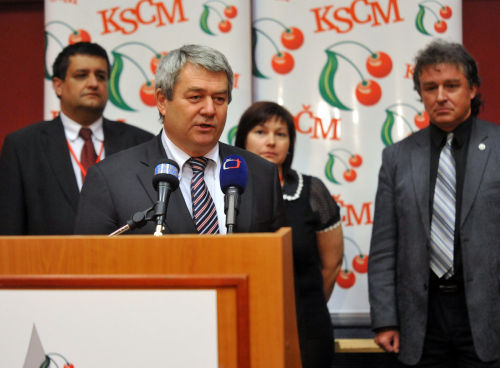
The leader of the Communist Party Vojtěch Filip, photo: Filip JandourekThe leader of the Communist Party Vojtěch Filip, photo: Filip Jandourek

The end of one-party rule was one of the slogans frequently heard at public rallies during the Velvet Revolution 26 years ago. Indeed, the Czechoslovak Parliament changed the Constitution as early as November 29, cancelling Article 4 which maintained the Communist party was “the leading power in the society and the country.”

On that day, the Communist party lost its dominant position to become just one of many political groups in the newly formed democracy. But few would guess that 26 years later, its direct successor, the Communist Party of Bohemia and Moravia, would be a stable and influential force in the Czech political system. One of the organizers of that student march on November 17, 1989, which triggered the Velvet Revolution, was Pavel Žáček.

“The situation right after November 1989 was very special. There was a general consensus that the Communist party should not be outlawed. In the early 1990s, Václav Havel was one of those who believed that after several elections, the party will naturally disappear in the foreseeable future.

“That was one of the reasons why the party was not banned. As it has turned out, however, the party has survived. It was a very serious mistake that has had a lasting impact on all political processes to date.”

In the early 1990s, there was a general belief the Communist party would gradually diminish both in size and influence. But the group remains a power to be reckoned with on local, regional and national levels.

Josef Skála, an influential Communist politician from Prague, says he knew right from the start the time for the party would come again, despite the massive flight of its members at that time.

“There were many people who left the party in 1989 and 1990 because wanted to follow their careers and spat in their own faces. There were others who left the party because they were frustrated. But there were also those who understood this was not the end of history.

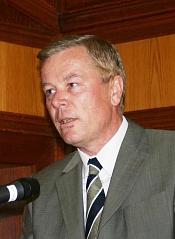
Josef Skála, photo: archive of Radio PragueJosef Skála, photo: archive of Radio Prague“They knew it was a moment in history which will weigh up all the elements to be reckoned with, and that this big change, let’s say, was inevitably heading towards a big crisis. That was my conviction, and I’m somewhat proud that later developments confirmed my views.”

As its members are quick to point out, the Communist Party of Bohemia and Moravia is formally a different entity than the totalitarian Communist Party of Czechoslovakia.

The group that exists today was officially established in March 1990, during the formative years of modern Czech democracy. For many of those who stayed on, the dawn of the new era was not a time they like to remember.

Communist MP Jan Klán, who comes from a small village in central Bohemia, was in first grade in 1989. I sat down with him in his lower house office and asked him what he recalled from the Velvet Revolution.

“The change was apparent in that for one, we stopped calling teachers comrades which is what I remember vividly. I also remember the change at the post of the president immediately after November 1989 and how the president’s portraits were replaced in the classrooms.

“Looking at the first years after 1990, my mother was the head of a local communist party group – she was the only member in fact after everyone else had quit the party – I remember some things that were not that nice. For instance, people would paint gallows in front of our house, and things like that.”

In 1989, right before the collapse of the totalitarian regime, the Communist party had 1.5 million members, an incredible 10 percent of Czechoslovakia’s total population.

During and after the Velvet Revolution, there was a massive flight, just like in the group in Mr Klán’s village. In 2004, the party had over 100,000 members and the number has since dropped by half. Josef Skála again.

“There were big fears in the early 1990s that the party could be banned. As you know, there were such attempts, with legislation prohibiting a certain category of people from any sort of public jobs, and so on.

“But in the early 2000s, we were successful at the polls both in the national and the European election where we won over 20 percent of the vote in 2004. This showed that today’s Czech president Miloš Zeman was wrong in his expectation the Communist party will disappear due to a generational change. He was wrong, we were alive and well and moving ahead.”

Do you think it was a good idea to keep the name of the party, which your members agreed on, and the party didn’t transform into one a new grouping as we saw in Slovakia, Poland and Hungary?

“I’ll be honest. In the 1992 inner-party referendum, I was proposing a different name because I understood that at that time, it would take away certain pressure. The referendum said what it said and we should respect it but today, the situation is different. I’m not sure that if we changed our name today, it would help.

“Also, the parties you mentioned in other countries – they are all gone. People had big expectations from them but were disappointed. So in this respect, it‘s them who lost, not us.”

Since 1990, the Communist party’s ideology has undergone major alterations. Addressing requests to disband the party on grounds of extremism, the Czech Interior Ministry has repeatedly ascertained the Communist party does not pose a threat to democracy.

The Communists still want to achieve socialism but unlike their predecessors, they say they want to arrive there via democratic and pluralistic means. Jan Klán joined the party in 2003, and has been a communist MP since 2010.

“We see the future in socialism, in a socially-just society. The 2008 crisis showed that capitalism is not working properly, so we are searching for a system that would replace it and end the plundering of the planet and the enormous social inequality. If that does not happen, we will face worse crises than the one in 2008.”

With time, these views, along with consistent criticism of the country’s post-communist transformation and apologetic attitudes towards the 40 years of totalitarianism, have paid off.

In the general election of 2002, which followed a four-year rule of a grand coalition, the Communist party scored its best result to date. It received more than 18.5 percent of the vote, coming in third and winning 41 seats in the 200-member lower house.

Another major success, and a more recent one, came ten years later in regional elections. The party did so well that it is now part of regional government coalitions in nine out of 14 of Czech regions, and has one post of the regional governor.

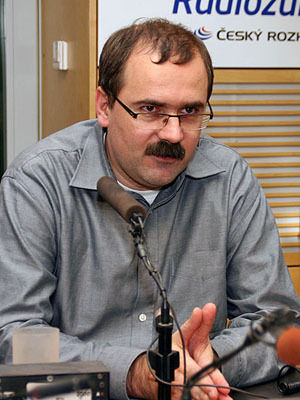
Pavel Žáček, photo: Anna DuchkováPavel Žáček, photo: Anna DuchkováPavel Žáček in 1998 became the first head of the Czech Institute for the Study of Totalitarian Regimes, a government agency researching documents from the Nazi and Communist regimes. He says the successes of the Communist party have had an adverse effect on the entire Czech political system.

“Since the 1990s until today, there has been no chance to form a left-wing coalition. So it’s not an issue of just one political party. It’s a problem for the entire political system.”

Compared with the 1990s, do you see a shift in how the Czechs view their communist past? In 2010, you were dismissed as the head of the Institute for the Study of Totalitarian Regimes in a big brawl over what it should do and how we should look at the past. Was that a symptom of the changing understanding of the past?

“It’s a symptom of a larger issue. There is a political as well as a moral point of view held by the people trying to redefine what communism was. This has to with a struggle against the post-1989 Czech establishment, and it looks like some part of our past is coming back.

“But I think it’s only temporary but we have to be active and keep explaining these issues, particularly to the young people who are a relevant force when it comes opposing today’s establishment of the Czech Republic.”

Another recurring theme in the Communist party ideology lies in the field of foreign policy. The party remains highly critical of the United States and the West in general, while being much more understanding of the policies of the Kremlin. I discussed their approach to international relations with MEP Miloslav Randsforf, the party’s shadow foreign minister.

“In Russia, there is a radical capitalist regime with many savage aspects. But demonizing Russia is also foolish. The US is not the good guy and Russia is not the bad guy. I think for instance that the [EU and US] sanctions against Russia are irrational and are directing Europe which is losing more than the United States.

But they were imposed over the annexation of Crimea and the war in Ukraine.

“There is no war in Ukraine. This war was launched by the authorities in Kiev. Over the last year, I’ve been to Ukraine on a weekly basis and I have to say that without these new arrogant attitudes of the Kiev authorities, even Crime would not make secession.

Well, Crimea did not make secession; it was occupied by Russian troops.

So if there would have been positive attitudes towards the decentralization of power on the side of Kiev, even Crimea would remain part of Ukraine. I’ve been to Crimea; nobody was prepared for the crisis and nobody was planning to secede. It was a coincidence of various factors.

Miloslav Ransdorf, photo: archive of Radio PragueMiloslav Ransdorf, photo: archive of Radio Prague“But the situation in Ukraine is desperate because it’s economically mismanaged. The prices of gas have gone up seven times, the prices of water and electricity three times, the inflation rate is 60 percent. It’s irrational. The real power was handed over not to the people and democratic structures but to oligarchs, and the oligarchs are the ruling force in Ukraine.”

Following the 2008 global financial crisis, dissatisfaction with capitalism took solid roots in Greece, Spain and other countries in Europe and elsewhere. Is this an opportunity for the Czech Communists to position themselves as leader of these “liquid” movements and win over new supporters? Josef Skála is sceptical of groups such as Greece’s Syriza and Spain’s Podemos but is certain that in the future, the Communist party will grow.

“The season for the Communist party is yet to come. The crisis of overproduction and of capital, is converting into a permanent state. You see it on a number of issues – the Greek crisis, the Ukrainian crisis, the migration wave, or the TTIP story that is a big danger of Europe and is another desperate attempt by the US to somehow solve their debt trap.

“So the period of a deep crisis is coming and all the key items will again be on the agenda. The question is whether we can tolerate and follow developments moving to an ever deeper crisis, or if there will be a new attempt, a new scenario to overcome the crisis. And I’m deeply convinced, which is a topic for a deep philosophical discussion, that Marxism has many things to about this.”

The question is, however, why should Czechs trust the Communists once again given the fact their attempt at building up a socially just society after the Second World War ended in 40 years of totalitarianism. I asked MP Jan Klán what he would say to that.

“I would tell them that was a different party. KSČM was founded in 1990. Before 1989, the socialist idea was good but the elites also became disconnected from the people. I think that if they had been more flexible, nothing would have happened in 1989 and the Communist Party of Czechoslovakia would be here today.”

The lack of modernization has worked well for the Communist party, which has been capitalizing on disenchantment with democracy and nostalgia for the past. But will this be enough for the future, or does the party need to adapt itself to the era of grassroots movements and social media campaigns? Josef Skála says he has a vision to make the Communist party a relevant force.

“Personally, I’m not very happy about the party’s capability to address the new situation which originated after the 2008 financial crisis. It looks as if we are still frozen in the period of the 1990s when it was necessary to make concessions, to be softer, and so on.

“I think the train has moved along but we have not been able to cope. That’s problem which we’ll address at next year’s party congress.

Where, as I understand, you are going to run for the chair of the party?

“Yes, there are certain rumours of this kind, yes.”

Michel Perottino, photo: archive of Charles UniversityMichel Perottino, photo: archive of Charles UniversityWhile Communist officials are happy to share optimistic visions of their future, others are more sceptical. I discussed the party’s prospects with Michel Perottino, the head of the political science department at Charles University’s Faculty of Social Sciences and a co-author of Between Mass and Cartel Party, a study of recent developments in the Czech Communist and Social Democrat parties. I began by asking him what the Communist party really stood for.

“It is in a sense a party of the past. Trying to understand why this party still exists requires a look back in the history. It is one of the ‘real’ Communist parties in Central Europe in that it was not installed by the Soviets after 1945. So from this point of view, they do have a base in the society. On the other hand, in the 1990s it was mainly a party of losers of the transition, at least politically.”

How have they developed since then? What is their attraction now?

“Partly, it’s a continuum. There are people who were in the party and they don’t have any reasons not to support it now.

“But the party has of course adapted to the new conditions. As it has not been in power, they can for instance very criticize issues such as corruption, and present themselves as not corrupt, and as an alternative for the Czech Republic.”

They also present themselves as the only left-wing opposition. How would you describe the party’s values and policies?

“First of all, they claim they are only left-wing party in the Czech Republic. They consider the Social Democrats to be centrists.

“They are mainly conservative – socially, economically in the sense that they look back to the system before 1989 and they claim the system was very effective and very positive from many points of view.

They are very different from Western communist parties because they are not a genuine workers’ party, they are not linked to the lowest class of the society. Typically for the post-communist context, it is much more a party of former bureaucrats and pensioners. They might claim they are a workers’ party but the reality is quite different.”

How do you see the party’s attitude to Russia? For decades, they were vassals to the Soviet Communists and they seem to have a soft spot for Russian policies.

“Yes, that’s certainly true to a certain extent. They are one of the last pan-Slavic organizations, and they say that we have to fix the broken ties with the East. So they are active in this respect, although perhaps less towards the former Soviet Union than towards China, Vietnam, and so on. So they are pro-Russian, but not necessarily pro-Putin.

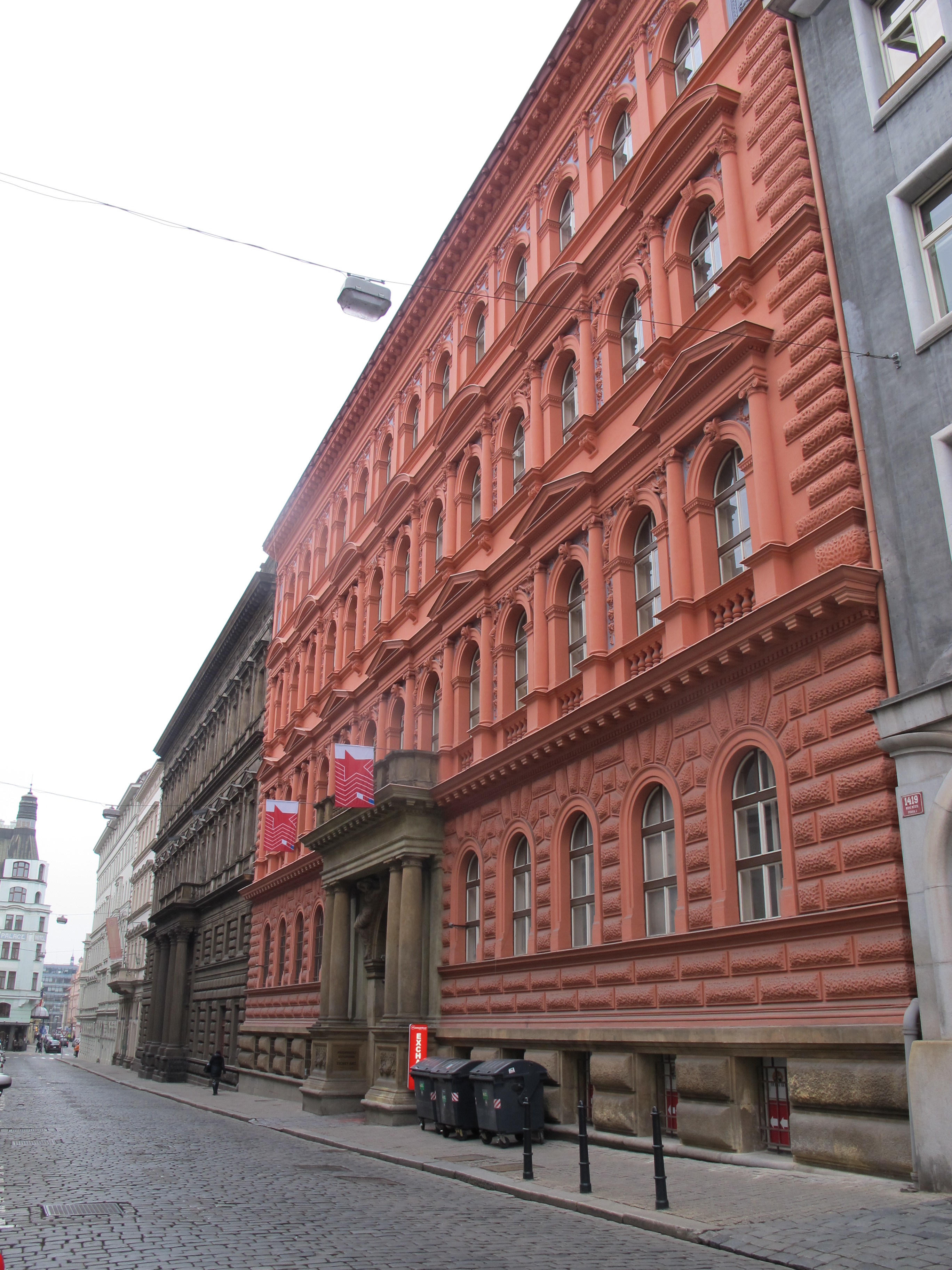
Communist Party headquarters in Prague, photo: Anette KrausCommunist Party headquarters in Prague, photo: Anette Kraus“And another point: although they say they are an internationalist party, they have developed very nationalist and self-centred policies.”

I was going to ask you about that because at school under communism, we heard quite a bit about ‘proletarian internationalism’. What happened to that?

“It’s quite typical for every Communist party, it’s not just the case of the Czechs. It’s also very typical for Communist parties in the West which have developed very nationalist attitudes and programmes, even though they might always claim they are internationalists.

“In the Czech case, it’s also due to the fact they have not been in government and they say they know how to run the country. We can see this on the example of the ongoing migration crisis. To some extent, we could expect the Communists would be positive towards the migrants, and say they are brothers and so on. But they also see them as ‘competitors’ for ‘our people’. So it’s quite difficult for them to cope with this issue.”

One thing that has changed very little since before 1989 is the Communist party’s attitude towards the US. Is that based on pragmatism or rather on their ideology?

“I think it’s mainly ideological that they position themselves against the United States and also against NATO. This is one of the most important themes of the Communist approach to international relations.”

Is this an issue that could drum up support from some of the Czech grassroots movements that in the past vocally opposed some US policies, such as the plan to station an US radar base in the Czech Republic? Are they in a position to bring these groups together?

“I’m not sure that some of those people would want to be drafted by the Communists. The situation is complicated and very heterogeneous. The opposition against the American radar base was formed by other groups, not just by the Communist movement, and the Communists were not very successful in acquiring new supporters.

“They are very conservative and turned inwards. Also, they to a certain degree fear the new movements.”

So you don’t think we will see a revival of the Communist party along the lines of what we see in Greece or Spain where new movements critical of capitalism have emerged?

“I don’t think there are such scenarios in the Czech society. The society is not that comparable to those in Greece and Spain, it is too post-communist to accept new forms of anti-capitalist movements.

“I think the main line here is held for instance by the ANO 2011 group which has a much more right-wing concept of the society.”

How do you see the future of the Communist party? When do you think it will return to power, maybe not in terms of years but of conditions that need to be here for them to be in government?

“Right now, they are in regional governments. On the national level, they are blocked by a 1995 provision of the Social Democrats not to cooperate with them on the national level. This could change but we should not at least two aspects here

“First, I’m not sure the Communists want to play this game because being in the opposition is much more practical and efficient for them. Also, we should expect that if the Communists join government, they will disappear. That is in fact the condition for them to disappear – that they come to power and show they are the same as the others.”

Share this:

  • Tweet
  • More
Like Loading...

Now is a time of reflection and action

18 Wednesday Nov 2015

Posted by raomk in Current Affairs, International

≈ Leave a comment

Tags

ISIS, MIDDLE EAST, Paris, terrorist

BEN CHACKO ON MIDDLE EAST – Now is a time of reflection and action

Ben Chacko, Morning Star editor,  calls on anti war activists to step up the level of thinking and action, to support the beleaguered peoples of the Middle East.

MIDDLE EAST

has reeled in shock this weekend, as the appalling scale of the terrorist murders in Paris becomes clear. One hundred and twenty-nine people killed, nearly 400 injured, in seven separate but co-ordinated massacres.
Isis has been waging its war of unparalleled brutality in Iraq and Syria for years. Murdering civilians is nothing new to an organisation that executes 10-year-olds, stones women to death and flings gay people from the roofs of buildings, that deems entire villages, towns and peoples unfit to live if they belong to supposedly undesirable religious or ethnic groups.
Nor has its violence been confined to the vast territory it now controls. The 224 people on the doomed Russian airliner departing from Sharm el-Sheikh on October 31 most likely fell victim to its vengeance for the Russian air force’s attacks on Isis.
Thursday evening saw 41 killed in Beirut, probably because Lebanese militant group Hezbollah is helping the Syrian government fight Isis.
On the same evening as the Paris atrocities another 19 died in Baghdad, Shi’ites slaughtered by a suicide bomber for their religion.
Isis is the most recent and the most dangerous of the terrorist movements based on Saudi Arabia’s extremist Wahhabi version of Islam, but there are of course others, most famously al-Qaida, from which Isis originated as a split and whose affiliate the Nusra Front also fights in Syria for the overthrow of the government.
More than the other groups, though, Isis is frightening because it has succeeded in attracting people from our own countries to join it.
The first identified attacker from the Paris attacks was a French citizen, Omar Ismail Mostefai, born in 1985 in the Paris suburb of Courcouronnes.
Last week we had news that a US drone had killed Mohammed Emwazi, who slit the throats of prisoners for propaganda videos and was better known as “Jihadi John,” raised in London. And we know that large numbers of British, French and other European citizens have travelled to Syria to join the terrorists.
Pitiless, apocalyptic and irrational, there is no point in seeking to come to terms with murderers like Isis. The organisation must be defeated. But how?
Any attempt to pin the blame on Islam or Muslims for atrocities like these must be rejected immediately. Muslims across the world have expressed their horror at last Friday’s sickening events.
And, as President Francois Hollande has previously remarked, most victims of terror worldwide are Muslims. Certainly Isis spends most of its time murdering Muslims.
Sectarian hatred has to be faced down by unity and solidarity between people of all faiths and none. Those on the British right such as Ukip who rail at multiculturalism should note that France’s more prescriptive approach to national identity and “French values” has not spared it.
All too often, as with the ban on wearing veils, it has been perceived by disadvantaged communities as racism, however much socialists may respect the tradition of state secularism that goes back to the French Revolution.
Racism and discrimination can only increase the terrorist threat. But neither can we ignore the fact that Isis is currently a very powerful organisation, controlling a territory the size of a country — a first for an organisation of its type — fighting a bitter war to overthrow the Syrian government.
A united front against Isis in Syria is essential. Hilary Benn’s decision to support the peace talks among all anti-Isis forces in Syria, announced to the Independent on Sunday, is a massively positive step.
No-fly zones and military intervention against the Bashar al-Assad regime can only assist Isis, which with no air force would benefit enormously if the Syrians were prevented from bombing its positions. All such talk must now cease.
As for “moderate” rebels, where are they? US General Lloyd Austin testified to the Senate armed services committee back in September that only “four or five” such rebels were still in the field.
Russia’s intervention led to a rethink as Western governments rapidly claimed the Kremlin was targeting the “moderate opposition” rather than Isis, but this was political spin.
Defeating a threat of this nature requires a dose of cold realism and an understanding of why the threat exists. Isis in Syria has benefited enormously from the West’s sponsorship of the revolt against President Assad.
Isis itself has thanked the United States for weapons drops intended for other rebel groups, but which Isis hoovered up. Opposition fighters armed and trained by the US have, on entering Syria, joined Isis; others have handed their weapons over to it.
Turkey, a Nato member and close ally of the US, Britain and France, has allowed armed fighters to pour over its border into Syria. It continues to bomb and attack Kurdish forces fighting against Isis, even when those same troops are co-ordinating with Washington.
The collapse of the Gadaffi regime in Libya following Nato’s intervention on the side of Islamist rebel groups has not only created permanent civil war there, but flooded north Africa with arms, boosting terror organisations across the region.
And the longer story is of course that extremist terror has flourished in Iraq — home, of course, of Isis’s leader Abu Bakr al-Baghdadi — since the US-British invasion of 2003. After years of total denial, even Tony Blair recently acknowledged that there were “elements of truth” in the assessment that Isis was a child of the Iraq war.
Sadly not everyone is willing to learn the lesson. Hence the revolting spectacle of self-righteous Blairites competing to denounce the Stop the War Coalition over the weekend.
Pointing out the causal links between foreign policy decisions and terrorist attacks is a requirement if any serious effort is to be made to prevent such attacks and tackle the situations which give rise to them.
But for posting an article noting that US support for Sunni extremists had helped lead to the Paris atrocities, Stop the War came in for a barrage of Blairite ire.
Barrow and Furness MP John Woodcock called the group “disgusting apologists” for terrorism. Ilford South’s Mike Gapes says it is “beneath contempt.” Shadow Foreign Office minister Stephen Doughty denounced a “shameful” tweet about the article — which has since been removed — and said it “shows [Stop the War] for who [they] are.”
Even if Stop the War had done nothing else, for organising the largest peaceful protest march in our history in 2003 — when it brought two million onto the streets against the invasion of Iraq — it would deserve an honourable place in the history of British political protest.
Certainly on that occasion it was proved right. And since then Stop the War has continued to campaign for peace despite the mockery and hostility of an Establishment with blood on its hands.
Blairites might hate Stop the War on principle, but it is easy to see why it is being targeted now: because of Labour leader Jeremy Corbyn’s long association with the organisation, of which he is a former chairman.
The petty sniping of Woodcock, Gapes and Doughty — all supporters of Liz Kendall in the party leadership contest — stems from the same dishonourable source as the right-wing frenzy over Jeremy’s bow on Remembrance Sunday. They want to paint Labour’s leader as unpatriotic, as a friend of this country’s enemies.
But the warmongers have run this show for decades now. They cannot blame the peace movement for the terrible crimes committed against civilians by Isis.
Those who truly want to end the terrorist nightmare will face up to the role of Western governments in creating it, stop aiding and abetting the rebellion in Syria and start co-ordinating with Damascus and others on the front line in the battle to destroy this menace.

Share this:

  • Tweet
  • More
Like Loading...

GRAIN — Foreign pension funds and land grabbing in Brazil

18 Wednesday Nov 2015

Posted by raomk in Economics, Farmers, International

≈ Leave a comment

Source: GRAIN — Foreign pension funds and land grabbing in Brazil

Share this:

  • Tweet
  • More
Like Loading...

China released new “seed law”

18 Wednesday Nov 2015

Posted by raomk in Farmers, International

≈ Leave a comment

Tags

China, seed law

On November 4th, China’s National People’s Congress voted through the “seed law” amendment. Important modifications about seed production and management were made on the new “seed law”, which will effect on January 1st, 2016.

This revised “seed law” keep the variety approval system, improves the main crop variety approval system which promotes the integration of seed breeding and commercialization. For the management of genetically modified seeds, the new “seed law” is clear on the GM varieties to track the supervision and information disclosure. And those approved genetically modified crops must get production and operation licenses, variety authorization, registration and other requirements.

To protect the national food security, the new “seed law” has clarified in the general part that in order to promote the healthy development of seed industry, it should add more seed security review mechanisms when having external cooperation.

Share this:

  • Tweet
  • More
Like Loading...

G20 leaders falling US$4 trillion short of growth target

18 Wednesday Nov 2015

Posted by raomk in Current Affairs, International

≈ Leave a comment

Tags

G20, growth

Author: Adam Triggs, ANU

The IMF gave G20 leaders some bad news in Turkey: they are not doing enough to lift growth. The G20 has not implemented enough of their previous commitments and their goal of increasing G20 GDP by US$2 trillion by 2018 is falling short by about US$4 trillion. The problem is that G20 leaders are stuck in a business-as-usual mindset. Their commitments are duplicative and relate to reforms they were already planning to undertake. The G20 needs to break out of this mindset by urgently changing the process through which commitments are made in order to deliver meaningful reforms that will boost global growth.

In 2014, G20 leaders committed to implement about 1000 country-specific reforms, with the goal of lifting G20 GDP by 2 per cent (about US$2 trillion) by 2018. Unfortunately, since then, global growth forecasts have been downgraded six times. Instead of being US$2 trillion larger, G20 GDP for 2018 is forecast be about US$2 trillion smaller. This is a serious problem for the global economy, not to mention the credibility of the G20, which now has just three years to come up with US$4 trillion of growth.

In response to this challenge, G20 leaders met in Turkey on 15–16 November and added new reforms to their growth strategies. They developed new documents called ‘investment strategies’ to address the anaemic levels of investment in many economies. But leaders are starting to display ‘reform churn’ where, each year, previous commitments are discarded and new ones added.

For Australia, paid parental leave is out, but childcare funding is in. The medical co-payment and company tax cuts are out, but the small business package is in. And while higher education reforms remain, it’s quite possible they won’t be there next year if the Australian Senate has anything to do with it.

In the US, Obama’s immigration reforms, tipped to increase US GDP by a significant 3.2 per cent by 2023, are now being challenged by 26 US states. Public investment in Germany and market-oriented reforms in China are similarly too small or too slow to contribute what was promised under the original US$2 trillion growth goal.

While the G20 says it has implemented half of its commitments from the 2014 Brisbane summit, they have not implemented the reforms that matter. This figure also seems dubious since, under the Turkish presidency, the G20 is now only monitoring about 100 of the original 1000 commitments.

Leaders made important new commitments which will be implemented throughout China’s G20 presidency in 2016. Leaders will work to strengthen the global financial safety net. On trade, leaders urged prompt ratification and implementation of the Trade Facilitation Agreement and, following agreement of the Trans-Pacific Partnership, committed to ensuring bilateral, regional and plurilateral trade agreements complement one another. Leaders also completed core elements of the financial reform agenda and endorsed a new commitment to reduce youth unemployment.

Investment is a welcomed focus from the Turkey summit. For advanced economies in particular, investment collapsed during the global financial crisis and has struggled to recover. But the 300 commitments that make up the G20 investment strategies are largely duplicative of its growth strategies and include many of the same initiatives, particularly around infrastructure investment. Analysis by the OECD indicates these strategies will lift the aggregate G20 investment-to-GDP ratio by 1 percentage point by 2018. Although welcome, it is unclear whether this would translate into any additional growth over and above what is already built into the existing growth strategies.

The G20’s investment initiatives still remain too focused on public investment, which is woefully incapable of addressing the US$50 trillion global infrastructure gap. There is a conspicuous absence of any focus on improving multilateral investment. There is clear scope to exploit synergies between investment funding by the World Bank, G20 Infrastructure Hub, the Asian Infrastructure Investment Bank and the Asian Development Bank, to name a few.

The growing presence of investment chapters in free-trade agreements as well as bilateral and plurilateral investment treaties demonstrates a clear need for a global investment treaty. Yet, despite repeated calls from the WTO and trade experts to do so, the G20 has not identified this as a priority for boosting investment.

The G20 is an informal forum meaning there is no permanent secretariat and countries do not face penalties or sanctions for falling short on their commitments. Historically, attempts to change this have failed miserably. The only way to get better commitments seems to be by reforming the processes through which commitments are made. There are several reforms the G20 could immediately undertake to strengthen peer pressure and accountability.

First, the G20 needs to stop duplicating commitments. Having growth strategies, investment strategies, fiscal strategies, action plans and employment plans makes little sense. These should be rolled into a single document. The G20 growth strategies is the obvious choice.

Second, the G20 peer review process tends to be largely isolated to lower-level officials with limited engagement from finance deputies, sherpas, ministers and leaders who have the greatest capacity to influence outcomes. Peer review needs to be much more integrated and should take place at all levels, but particularly ministers and leaders.

Third, accountability at the level of officials could be improved. The G20 should adopt a panel of economic experts from outside the G20 community to provide practical suggestions on the individual strategies of members. Providing practical and specific recommendations is often politically easier for an independent panel of experts than it is for G20 countries or even international organisations.

Finally, leaders and ministers are unlikely to make ambitious commitments if there is little public interest back home. Strengthening the G20’s engagement with the public is therefore critically important. To encourage such engagement, members should be required to formally outline through the peer review process what actions they will take to engage with their public on their growth strategy. This could include public events, roundtables and interviews, fora with academic experts, as well as media campaigns and advertising.

The G20 is uniquely placed to provide political cover for G20 members to undertake coordinated reforms. These initiatives will not only boost the G20 forum but can assist countries in undertaking tough reforms back home.

Share this:

  • Tweet
  • More
Like Loading...

Paraguay: Who is Asuncion’s New Mayor-Elect Mario Ferreiro? Mario Ferreiro,

16 Monday Nov 2015

Posted by raomk in Current Affairs, International, Left politics

≈ Leave a comment

Tags

Asuncion, Mayor, Paraguay

representing the opposition coalition “Juntos Podemos”, celebrates his victory in the municipal elections, in Asuncion, Paraguay

Ferreiro has promised to improve transparency and tackle social inequality.Mario Ferreiro, of the Febrerista Revolutionary Party and the Together We Can alliance, won the Asuncion mayoral race on Sunday, Nov. 15, beating his closest challenger, incumbent mayor Arnaldo Samaniego, by more than 10 points. But who is he and what can we expect of his plans for Paraguay’s capital Asuncion?​  “A festive climate surrounds Mario Ferreiro, during the final vote count.”  Mario Ferreiro is a journalist who entered politics in 2012, with the center-left Guasu Front coalition headed by former President Fernando Lugo, who was ousted from power in a constitutional coup the same year. In 2013, Ferreiro unsuccessfully ran for president against current president Horacio Cartes with the center-left coalition Forward Country. Since then, he has continued as the host of the radio show “Mario x 800” and the television program “The Mañanero.”  “In my old home, with my companions @yolandapark1 and #CarlosTroche.”   With Ferreiro’s victory, Asuncion could see a political change. The shift could also signal popular will for broader change across Paraguay when the presidential race comes around again in 2018. Ferreiro has promised to improve transparency in city institutions and describes his platform as focused on resolving the problems of social inequality. “There are a hundred thousand people living in flood zones,” he said in an interview with teleSUR. “Infrastructure is needed to protect our people from the floods.”  Mayoral candidate Mario Ferreiro poses with youth voters. I Photo: Twitter/Mario Ferreiro The rise in Ferreiro’s popularity reflects growing popular discontent with the Colorado Party and its neoliberal policies. In recent weeks, students, teachers, medical staff, and transport workers have launched strikes to protest the lack of government support for public institutions. Campesinos, indigenous people, and educators have also marched on Asuncion to demand President Cartes resign and to protest policies that contribute to poverty and weak institutions.  Amid the wave of protests, diverse social sectors and unions have declared their participation in a general strike planned for Dec. 18, one month after the municipal elections. The action, the second general strike in President Cartes’ two years in office, will demand freedom of association and expression, solutions to various disputes, and social justice policies that benefit the people, not just corporations. Ferreiro’s social-democratic Revolutionary Febrerista Party is now part of the newly formed Together We Can alliance, which unites various left and center-left parties. The coalition also includes the main traditional opposition to the ruling Colorado Party, the Authentic Radical Liberal Party, as well as former president Lugo’s Guasu Front coalition.  During his presidency, Lugo introduced policies to combat poverty, including creating new free treatment hospitals and investing in housing programs for low-income people. This content was originally published by teleSUR at the following address:
“http://www.telesurtv.net/english/news/Paraguay-Who-is-Asuncions-New-Mayor-Elect-Mario-Ferreiro–20151115-0017.html”. If you intend to use it, please cite the source and provide a link to the original article. http://www.teleSURtv.net/english


Share this:

  • Tweet
  • More
Like Loading...

Facing evil in Paris and beyond – The Washington Post

15 Sunday Nov 2015

Posted by raomk in Current Affairs, International

≈ Leave a comment

The United States has lessons for France — and lessons to learn alongside France.

Source: Facing evil in Paris and beyond – The Washington Post

Share this:

  • Tweet
  • More
Like Loading...
← Older posts
Newer posts →

Recent Posts

  • చైనాతో వాణిజ్యంపై ఆందోళన – నిజా నిజాలేమిటి !
  • ఇరాన్‌పై దాడి – మిత్ర దేశాలపై బెదిరింపులకు దిగిన ట్రంప్‌ !
  • ఇరాన్‌కు చైనా ఆయుధాల నిజానిజాలేమిటి !
  • వహ్వా వహ్వా ! ఎవరైనా ఊహించారా : జిగినీదోస్తు మోడీ, కాషాయ దళాలను ఇరకాటంలో పెట్టిన డోనాల్డ్‌ ట్రంప్‌ !
  • ఇరాన్‌పై అమెరికా దాడి: అసంబద్ద వాదనలు, అడ్డగోలు సమర్ధనలు!

Recent Comments

pscknr's avatarpscknr on చైనాతో వాణిజ్యంపై ఆందోళన…
pscknr's avatarpscknr on కేరళ స్థానిక సంస్థల ఎన్నికల ఫల…
Venugopalrao Nagumothu's avatarVenugopalrao Nagumot… on విత్తనాల ముసాయిదా బిల్లు …
Raj's avatarRaj on న్యూయార్క్‌ మేయర్‌గా సోషలిస్టు…
Aravind's avatarAravind on సిజెఐ బిఆర్‌ గవాయిపై దాడి యత్న…

Archives

  • March 2026
  • February 2026
  • January 2026
  • December 2025
  • November 2025
  • October 2025
  • September 2025
  • August 2025
  • July 2025
  • June 2025
  • May 2025
  • April 2025
  • March 2025
  • February 2025
  • January 2025
  • December 2024
  • November 2024
  • October 2024
  • September 2024
  • August 2024
  • July 2024
  • June 2024
  • May 2024
  • April 2024
  • March 2024
  • February 2024
  • January 2024
  • December 2023
  • November 2023
  • October 2023
  • September 2023
  • August 2023
  • July 2023
  • June 2023
  • May 2023
  • April 2023
  • March 2023
  • February 2023
  • January 2023
  • December 2022
  • November 2022
  • October 2022
  • September 2022
  • August 2022
  • July 2022
  • June 2022
  • May 2022
  • April 2022
  • March 2022
  • February 2022
  • January 2022
  • December 2021
  • November 2021
  • October 2021
  • September 2021
  • August 2021
  • July 2021
  • June 2021
  • May 2021
  • April 2021
  • March 2021
  • February 2021
  • January 2021
  • December 2020
  • November 2020
  • October 2020
  • September 2020
  • August 2020
  • July 2020
  • June 2020
  • May 2020
  • April 2020
  • March 2020
  • February 2020
  • January 2020
  • December 2019
  • November 2019
  • October 2019
  • September 2019
  • August 2019
  • July 2019
  • June 2019
  • May 2019
  • April 2019
  • March 2019
  • February 2019
  • January 2019
  • December 2018
  • November 2018
  • October 2018
  • September 2018
  • August 2018
  • July 2018
  • June 2018
  • May 2018
  • April 2018
  • March 2018
  • February 2018
  • January 2018
  • December 2017
  • November 2017
  • October 2017
  • September 2017
  • August 2017
  • July 2017
  • June 2017
  • May 2017
  • April 2017
  • March 2017
  • February 2017
  • January 2017
  • December 2016
  • November 2016
  • October 2016
  • September 2016
  • August 2016
  • July 2016
  • June 2016
  • May 2016
  • April 2016
  • March 2016
  • February 2016
  • January 2016
  • December 2015
  • November 2015
  • October 2015

Categories

  • Africa
  • AP
  • AP NEWS
  • Asia
  • BJP
  • BRS
  • CHINA
  • Communalism
  • Congress
  • COUNTRIES
  • CPI(M)
  • Current Affairs
  • Economics
  • Education
  • employees
  • Environment
  • Europe
  • Farmers
  • Filims
  • Germany
  • Greek
  • Gujarat
  • Health
  • History
  • imperialism
  • INDIA
  • International
  • INTERNATIONAL NEWS
  • Japan
  • Latin America
  • Left politics
  • Literature.
  • Loksabha Elections
  • NATIONAL NEWS
  • Opinion
  • Others
  • Pensioners
  • Political Parties
  • Politics
  • Prices
  • Readers News Service
  • RELIGION
  • Religious Intolarence
  • RUSSIA
  • Science
  • Social Inclusion
  • Sports
  • STATES NEWS
  • tdp
  • TDP
  • Telangana
  • Telugu
  • UK
  • Uncategorized
  • USA
  • WAR
  • Women
  • Women
  • Ycp

Meta

  • Create account
  • Log in
  • Entries feed
  • Comments feed
  • WordPress.com

Recent Posts

  • చైనాతో వాణిజ్యంపై ఆందోళన – నిజా నిజాలేమిటి !
  • ఇరాన్‌పై దాడి – మిత్ర దేశాలపై బెదిరింపులకు దిగిన ట్రంప్‌ !
  • ఇరాన్‌కు చైనా ఆయుధాల నిజానిజాలేమిటి !
  • వహ్వా వహ్వా ! ఎవరైనా ఊహించారా : జిగినీదోస్తు మోడీ, కాషాయ దళాలను ఇరకాటంలో పెట్టిన డోనాల్డ్‌ ట్రంప్‌ !
  • ఇరాన్‌పై అమెరికా దాడి: అసంబద్ద వాదనలు, అడ్డగోలు సమర్ధనలు!

Recent Comments

pscknr's avatarpscknr on చైనాతో వాణిజ్యంపై ఆందోళన…
pscknr's avatarpscknr on కేరళ స్థానిక సంస్థల ఎన్నికల ఫల…
Venugopalrao Nagumothu's avatarVenugopalrao Nagumot… on విత్తనాల ముసాయిదా బిల్లు …
Raj's avatarRaj on న్యూయార్క్‌ మేయర్‌గా సోషలిస్టు…
Aravind's avatarAravind on సిజెఐ బిఆర్‌ గవాయిపై దాడి యత్న…

Archives

  • March 2026
  • February 2026
  • January 2026
  • December 2025
  • November 2025
  • October 2025
  • September 2025
  • August 2025
  • July 2025
  • June 2025
  • May 2025
  • April 2025
  • March 2025
  • February 2025
  • January 2025
  • December 2024
  • November 2024
  • October 2024
  • September 2024
  • August 2024
  • July 2024
  • June 2024
  • May 2024
  • April 2024
  • March 2024
  • February 2024
  • January 2024
  • December 2023
  • November 2023
  • October 2023
  • September 2023
  • August 2023
  • July 2023
  • June 2023
  • May 2023
  • April 2023
  • March 2023
  • February 2023
  • January 2023
  • December 2022
  • November 2022
  • October 2022
  • September 2022
  • August 2022
  • July 2022
  • June 2022
  • May 2022
  • April 2022
  • March 2022
  • February 2022
  • January 2022
  • December 2021
  • November 2021
  • October 2021
  • September 2021
  • August 2021
  • July 2021
  • June 2021
  • May 2021
  • April 2021
  • March 2021
  • February 2021
  • January 2021
  • December 2020
  • November 2020
  • October 2020
  • September 2020
  • August 2020
  • July 2020
  • June 2020
  • May 2020
  • April 2020
  • March 2020
  • February 2020
  • January 2020
  • December 2019
  • November 2019
  • October 2019
  • September 2019
  • August 2019
  • July 2019
  • June 2019
  • May 2019
  • April 2019
  • March 2019
  • February 2019
  • January 2019
  • December 2018
  • November 2018
  • October 2018
  • September 2018
  • August 2018
  • July 2018
  • June 2018
  • May 2018
  • April 2018
  • March 2018
  • February 2018
  • January 2018
  • December 2017
  • November 2017
  • October 2017
  • September 2017
  • August 2017
  • July 2017
  • June 2017
  • May 2017
  • April 2017
  • March 2017
  • February 2017
  • January 2017
  • December 2016
  • November 2016
  • October 2016
  • September 2016
  • August 2016
  • July 2016
  • June 2016
  • May 2016
  • April 2016
  • March 2016
  • February 2016
  • January 2016
  • December 2015
  • November 2015
  • October 2015

Categories

  • Africa
  • AP
  • AP NEWS
  • Asia
  • BJP
  • BRS
  • CHINA
  • Communalism
  • Congress
  • COUNTRIES
  • CPI(M)
  • Current Affairs
  • Economics
  • Education
  • employees
  • Environment
  • Europe
  • Farmers
  • Filims
  • Germany
  • Greek
  • Gujarat
  • Health
  • History
  • imperialism
  • INDIA
  • International
  • INTERNATIONAL NEWS
  • Japan
  • Latin America
  • Left politics
  • Literature.
  • Loksabha Elections
  • NATIONAL NEWS
  • Opinion
  • Others
  • Pensioners
  • Political Parties
  • Politics
  • Prices
  • Readers News Service
  • RELIGION
  • Religious Intolarence
  • RUSSIA
  • Science
  • Social Inclusion
  • Sports
  • STATES NEWS
  • tdp
  • TDP
  • Telangana
  • Telugu
  • UK
  • Uncategorized
  • USA
  • WAR
  • Women
  • Women
  • Ycp

Meta

  • Create account
  • Log in
  • Entries feed
  • Comments feed
  • WordPress.com

Social

  • View mannem.koteswararao’s profile on Facebook
  • View mannemkoteswara’s profile on Twitter

Recent Posts

  • చైనాతో వాణిజ్యంపై ఆందోళన – నిజా నిజాలేమిటి !
  • ఇరాన్‌పై దాడి – మిత్ర దేశాలపై బెదిరింపులకు దిగిన ట్రంప్‌ !
  • ఇరాన్‌కు చైనా ఆయుధాల నిజానిజాలేమిటి !
  • వహ్వా వహ్వా ! ఎవరైనా ఊహించారా : జిగినీదోస్తు మోడీ, కాషాయ దళాలను ఇరకాటంలో పెట్టిన డోనాల్డ్‌ ట్రంప్‌ !
  • ఇరాన్‌పై అమెరికా దాడి: అసంబద్ద వాదనలు, అడ్డగోలు సమర్ధనలు!

Recent Comments

pscknr's avatarpscknr on చైనాతో వాణిజ్యంపై ఆందోళన…
pscknr's avatarpscknr on కేరళ స్థానిక సంస్థల ఎన్నికల ఫల…
Venugopalrao Nagumothu's avatarVenugopalrao Nagumot… on విత్తనాల ముసాయిదా బిల్లు …
Raj's avatarRaj on న్యూయార్క్‌ మేయర్‌గా సోషలిస్టు…
Aravind's avatarAravind on సిజెఐ బిఆర్‌ గవాయిపై దాడి యత్న…

Archives

  • March 2026
  • February 2026
  • January 2026
  • December 2025
  • November 2025
  • October 2025
  • September 2025
  • August 2025
  • July 2025
  • June 2025
  • May 2025
  • April 2025
  • March 2025
  • February 2025
  • January 2025
  • December 2024
  • November 2024
  • October 2024
  • September 2024
  • August 2024
  • July 2024
  • June 2024
  • May 2024
  • April 2024
  • March 2024
  • February 2024
  • January 2024
  • December 2023
  • November 2023
  • October 2023
  • September 2023
  • August 2023
  • July 2023
  • June 2023
  • May 2023
  • April 2023
  • March 2023
  • February 2023
  • January 2023
  • December 2022
  • November 2022
  • October 2022
  • September 2022
  • August 2022
  • July 2022
  • June 2022
  • May 2022
  • April 2022
  • March 2022
  • February 2022
  • January 2022
  • December 2021
  • November 2021
  • October 2021
  • September 2021
  • August 2021
  • July 2021
  • June 2021
  • May 2021
  • April 2021
  • March 2021
  • February 2021
  • January 2021
  • December 2020
  • November 2020
  • October 2020
  • September 2020
  • August 2020
  • July 2020
  • June 2020
  • May 2020
  • April 2020
  • March 2020
  • February 2020
  • January 2020
  • December 2019
  • November 2019
  • October 2019
  • September 2019
  • August 2019
  • July 2019
  • June 2019
  • May 2019
  • April 2019
  • March 2019
  • February 2019
  • January 2019
  • December 2018
  • November 2018
  • October 2018
  • September 2018
  • August 2018
  • July 2018
  • June 2018
  • May 2018
  • April 2018
  • March 2018
  • February 2018
  • January 2018
  • December 2017
  • November 2017
  • October 2017
  • September 2017
  • August 2017
  • July 2017
  • June 2017
  • May 2017
  • April 2017
  • March 2017
  • February 2017
  • January 2017
  • December 2016
  • November 2016
  • October 2016
  • September 2016
  • August 2016
  • July 2016
  • June 2016
  • May 2016
  • April 2016
  • March 2016
  • February 2016
  • January 2016
  • December 2015
  • November 2015
  • October 2015

Categories

  • Africa
  • AP
  • AP NEWS
  • Asia
  • BJP
  • BRS
  • CHINA
  • Communalism
  • Congress
  • COUNTRIES
  • CPI(M)
  • Current Affairs
  • Economics
  • Education
  • employees
  • Environment
  • Europe
  • Farmers
  • Filims
  • Germany
  • Greek
  • Gujarat
  • Health
  • History
  • imperialism
  • INDIA
  • International
  • INTERNATIONAL NEWS
  • Japan
  • Latin America
  • Left politics
  • Literature.
  • Loksabha Elections
  • NATIONAL NEWS
  • Opinion
  • Others
  • Pensioners
  • Political Parties
  • Politics
  • Prices
  • Readers News Service
  • RELIGION
  • Religious Intolarence
  • RUSSIA
  • Science
  • Social Inclusion
  • Sports
  • STATES NEWS
  • tdp
  • TDP
  • Telangana
  • Telugu
  • UK
  • Uncategorized
  • USA
  • WAR
  • Women
  • Women
  • Ycp

Meta

  • Create account
  • Log in
  • Entries feed
  • Comments feed
  • WordPress.com

Blog at WordPress.com.

Privacy & Cookies: This site uses cookies. By continuing to use this website, you agree to their use.
To find out more, including how to control cookies, see here: Cookie Policy
  • Subscribe Subscribed
    • vedika
    • Join 246 other subscribers
    • Already have a WordPress.com account? Log in now.
    • vedika
    • Subscribe Subscribed
    • Sign up
    • Log in
    • Report this content
    • View site in Reader
    • Manage subscriptions
    • Collapse this bar
%d