• About
  • Farmers

vedika

~ your forum for critical and constructive writings

vedika

Tag Archives: Dilma Rousseff

లాటిన్‌ అమెరికాలో పార్లమెంటరీ, మీడియా కుట్ర !

03 Saturday Sep 2016

Posted by raomk in Current Affairs, History, INTERNATIONAL NEWS, Latin America, Opinion

≈ Leave a comment

Tags

Brazil, Dilma Rousseff, Honduras, Impeachment of Dilma Rousseff, media coup, Paraguay, Parliamentary coup
ఎం కోటేశ్వరరావు

బ్రెజిల్‌ వర్కర్స్‌ పార్టీ అనుభవం నుంచి తీసుకోవాల్సిన గుణ పాఠాలు ఏమిటి ?

ఏ దేశ చరిత్ర చూసినా ఏమున్నది గర్వకారణం

నరజాతి చరిత్ర సమస్తం పరపీడన పరాయణత్వం

     అన్న శ్రీశ్రీ ఇప్పుడు బతికి వుంటే ప్రజాస్వామ్య కుట్ర గురించి చక్కటి కవిత అందించి వుండేవారు. వీరేశలింగం బ్రతికి వుంటే తాను రాసిన ప్రహసనాలకు ప్రజాస్వామ్యం గురించి కూడా రాసి జత చేసి వుండే వారు. లోకంలో దయామయుడైన భూస్వామి, మంచి పెట్టుబడిదారుడు, లోక కల్యాణం కోరుకొనే సామ్రాజ్యవాదీ వుండరు. ప్రజాస్వామ్యం కూడా నేతి బీరలో నెయ్యి వంటిదేనని ప్రతి తరానికి దానిని ప్రహసప్రాయంగా మార్చేవారు తెలియ చేస్తున్నారు. ఇప్పుడు బ్రెజిల్‌లో అదే జరిగింది, దోపిడీ శక్తులకు ఏ మాత్రం ప్రతిఘటన లేదా ప్రత్యామ్నాయాన్ని చూపినా వారు సహించరని స్పష్టం చేస్తూనే వున్నారు. పూలు, రంగుల పూసలు, నూలు దారాల స్థానంలో సింథటిక్‌ దారమో మరొకటో తప్ప దండ కూర్పులో ఎలాంటి మార్పు లేదు. మోటుగా వుండేవి, నాజూకుగా మారుతున్నాయి అంతే తేడా, పవన్‌ కల్యాణ్‌ అదేదో సినిమాలో చెప్పినట్లు సేమ్‌ సేమ్‌ టు సేమ్‌. మేక పిల్లను తిన దలచుచున్న తోడేలు కథ మాదిరి సామ్రాజ్యవాదుల చర్యలు వున్నాయి. అందువలన వారి చర్యల చట్టబద్దత, న్యాయ సూత్రాల గురించి తర్కించటం వృధా ప్రయాస.

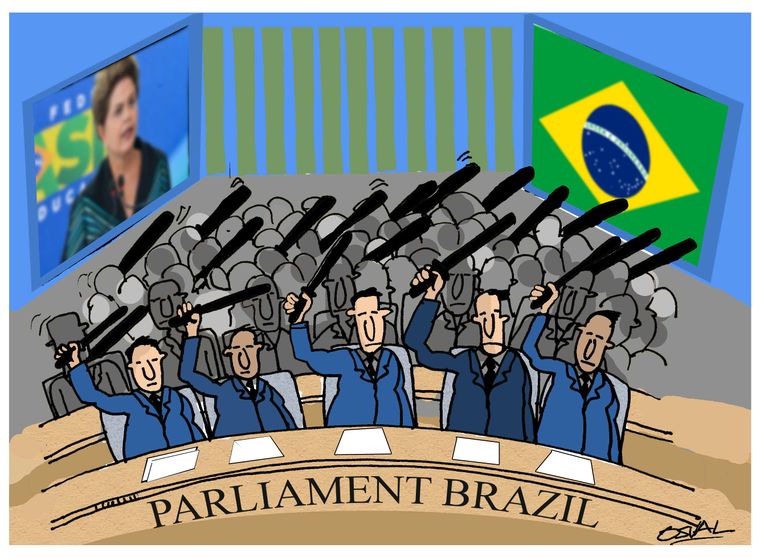
    ప్రజాస్వామ్యబద్దంగా ఎన్నికైన బ్రెజిల్‌ వామపక్ష అధ్యక్షురాలు దిల్మా రౌసెఫ్‌ ప్రజాస్వామ్య బద్దంగా పని చేయకపోవటమనే ఒక నేరాన్ని ఆపాదించి అభిశంసన ప్రక్రియ ద్వారా పదవి నుంచి తొలగించారు. ప్రపంచంలో, లాటిన్‌ అమెరికా పరిణామాలలో ఇదొక కొత్త అధ్యాయానికి నాంది.మిలిటరీ కుట్ర, మరొక కుట్ర గురించి చరిత్రలో వుందిగానీ ‘పార్లమెంటరీ ప్రజాస్వామ్య, మీడియా కుట్ర ‘ తోడు కావటం ఈ పరిణామంలో గమనించాల్సిన అంశం. అధ్యక్షురాలిపై ఎలాంటి అవినీతి, అక్రమాల కేసులు లేవు. అయినప్పటికీ అక్కడి మీడియా ఆమెను అవినీతిపరురాలిగా చిత్రించి జనాన్ని నమ్మేట్లు చేసింది. అభిమానించిన జనమే అనుమానించేట్లు చేయటాన్ని చూసి శకుని సైతం సిగ్గు పడేట్లు, తనకు ఇలాంటి ఆలోచన ఎందుకు రాలేదని తలపట్టుకునేట్లు చేసింది. ఎన్నికలను తొత్తడాన్ని చూశాము, ఎన్నికైన ప్రభుత్వాలను ఎంత సులభంగా కూలదోయవచ్చో చూస్తున్నాము. బ్రెజిల్‌ అధ్యక్షురాలిపై బాధ్యతా నిర్వహణలో వైఫల్యమనే నేరాన్ని ఆరోపించి పదవి నుంచి తొలగించటం ప్రజాస్వామ్యం, ప్రజాతీర్పును పరిహసించటమే. పార్లమెంట్‌ అనుమతి లేకుండా దిల్మా రౌసెఫ్‌ ప్రభుత్వ కార్యక్రమాలకు నిధులు ఖర్చు చేశారన్నది ప్రధాన ఆరోపణ. గతంలో అనేక సందర్భాలలో అలా ఖర్చు చేయటం తరువాత పార్లమెంట్‌ ఆమోదం పొందటం అన్నది అన్ని చోట్లా జరిగినట్లే అక్కడా జరిగింది. అటువంటి పద్దతులను నివారించాలంటే అవసరమైన నిబంధనలను సవరించుకోవచ్చు, రాజ్యాంగ సవరణలు చేసుకోవచ్చు. అసలు లక్ష్యం వామపక్ష అధ్యక్షురాలిని పదవి నుంచి తొలగించటం కనుక ఏదో ఒక సాకుతో ఆపని చేశారు. దొంగే దొంగ అని అరచి నట్లుగా అనేక అవినీతి కేసులలో ఇరుక్కున్నవారే అధ్యక్షురాలిపై కుట్ర చేసి పార్లమెంట్‌, కోర్టులను వుపయోగించుకొని పదవి నుంచి తొలగించారు.ఈ క్రమం ప్రారంభమైనపుడే అనేక మంది అంతర్జాతీయ న్యాయ నిపుణులు అభిశంసనకు ఎలాంటి ఆధారమూ లేదని ప్రకటించారు. అయినా జరిగిపోయింది.

   లాటిన్‌ అమెరికాలో తన అజెండాను అమలు జరిపేందుకు అమెరికా నాయకత్వంలోని సామ్రాజ్యవాదం ప్రజాస్వామికంగా ఎన్నికైన ప్రభుత్వాలను కూల్చి వేసేందుకు సైనిక నియంతలను గద్దెపై కూర్చుండబెట్టింది. ప్రపంచబ్యాంకు, అంతర్జాతీయ ద్రవ్యనిధి సంస్ధల ద్వారా రూపొందించిన నయా వుదారవాద విధానాలకు ఆ ప్రాంతాన్ని ప్రయోగశాలగా వుపయోగించింది. అది వికటించి సైనిక నియంతలు, అమెరికా తొత్తు ప్రభుత్వాలకు వ్యతిరేకంగా ప్రజలు పెద్ద ఎత్తున వుద్యమించారు. దాంతో నియంతల స్ధానంలో ప్రజాస్వామ్యబద్దంగా ఎన్నికలు జరిపేందుకు అనివార్యంగా పాలకవర్గాలు దిగిరావాల్సి వచ్చింది. నయా వుదారవాద విధానాలకు వ్యతిరేకంగా సాగిన పోరులో పురోగామి వైఖరులు కలిగిన క్రైస్తవ మతాధికారులతో సహా అనేక శక్తులు ఏకం కావటం, ఎన్నికలలో నయా వుదారవాద విధానాలకు వ్యతిరేకంగా పోరు సల్పిన శక్తులకు జనం పట్టం కట్టటంతో అనేక దేశాలలో వామపక్ష శక్తులు అధికారానికి వచ్చి ప్రపంచానికి కొత్త మార్గాన్ని చూపాయి. వాటికి ఎన్నిపరిమితులు వున్నప్పటికీ నయా వుదారవాద విధానాలతో సర్వం కోల్పోయిన జనానికి తక్షణ వుపశమనం కలిగించే చర్యలు తీసుకోవటంతో సామాన్యజనం వాటికి మద్దతుగా నిలిచినందున బ్రెజిల్‌, వెనెజులా,బొలీవియా వంటి చోట్ల గతదశాబ్దన్నర కాలంలో జరిగిన ఎన్నికలన్నింటిలోనూ వామపక్ష శక్తులు విజయం సాధిస్తున్నాయి. ఈ పూర్వరంగంలో సామ్రాజ్యవాదులు ఆ ప్రాంత దేశాలలో సరికొత్త కుట్రలకు తెరతీశారు. దానిలో భాగమే బ్రెజిల్‌ పరిణామాలు. దీని గురించి ఇంకా లోతుగా పరిశీలించాల్సి వుంది. అ క్రమంలో పలువురు విశ్లేషకులు తమ వైఖరుల నుంచి వెలిబుచ్చిన కొన్ని అంశాల ఆధారంగా ఏం జరిగిందో తెలుసుకోవటానికి ప్రయత్నించవచ్చు.

    సామ్రాజ్యవాదులు, వారి కనుసన్నలలో పని చేసే మీడియా స్వభావం గురించి తెలిసిన వారికి మీడియా నిరంతర కుట్రల గురించి ప్రత్యేకంగా చెప్పనవసరం లేదు. కొద్ది మంది మేథావులు, పరిశీలకులు మాత్రమే వాటిని అర్ధం చేసుకుంటే చాలదు. సామాన్యుల వరకు తీసుకుపోవాల్సి వుంది.సోవియట్‌, తూర్పు ఐరోపా సోషలిస్టు వ్యవస్ధలకు వ్యతిరేకంగా మీడియా,చర్చి ఎలా పని చేసిందీ చూశాము, ఆ వ్యవస్ధలు దశాబ్దాల తరబడి కొనసాగి కూల్చివేతకు గురైన పూర్వరంగంలో లాటిన్‌ అమెరికా పరిణామాలను కూడా చూడాల్సి వుంది. సోషలిస్టు వ్యవస్ధలను కుట్రతో కూల్చివేయటం ఒకటైతే అందుకు అవకాశం ఇచ్చిన ఆ వ్యవస్ధలను నడిపిన కమ్యూనిస్టుపార్టీల లోపం కూడా అందుకు అవకాశం ఇచ్చిందన్నది వాస్తవం. ఇప్పుడు లాటిన్‌ అమెరికాలో కూడా అధికారానికి వచ్చిన వామపక్ష శక్తులు అదే పొరపాటు చేశాయా ?

    సోషలిస్టు వ్యవస్థలను కూల్చివేసిన తరువాతే లాటిన్‌ అమెరికాలో వామపక్ష శక్తులు అధికారానికి రావటంతో కాడి పారేసిన అనేక మంది వామపక్ష కార్యకర్తలకు తిరిగి వూతం వచ్చింది. తమ కళ్ల ముందు సోషలిస్టు వ్యవస్థలను దెబ్బతీసిన శక్తులు తమను సహిస్తాయనే భ్రమలకు లోనయ్యాయా అన్నది కూడా పరిశీలించాల్సిన అంశమే. దోపిడీ శక్తులు నిరంతర కుట్రలు చేసి తమ వ్యతిరేకులను దెబ్బతీస్తారన్నది బహిరంగ రహస్యమైనప్పటికీ లాటిన్‌ అమెరికా వామపక్ష శక్తులు దానిని పట్టించుకోలేదా ? జనాన్ని చైతన్య పరచలేదా ? వారేమైనా పొరపాట్లు చేశారా అన్నది ఆలోచించాల్సిన అంశమే. ఈ సందర్భంగా నిర్ధారణలకు రాకుండా కొన్ని పరిణామాలు, ధోరణులను చర్చ, పరిశీలనకు వీలుగా ఈ వ్యాసంలో అందించటం జరుగుతున్నది.పార్లమెంటరీ ప్రజాస్వామ్యంపై విశ్వాసం వున్న వారికి ‘పార్లమెంటరీ కుట్ర’ అన్న పదమే వింతగా అనిపించవచ్చు. నమ్మక పోవచ్చు కూడా, కానీ ఇది నిజం. బ్రెజిల్‌లో అదెలా జరిగిందో చూడబోయే ముందు హొండూరాస్‌, పరాగ్వేలో ఆ ప్రహసనం ఎలా జరిగిందో ఒక్కసారి నెమరు వేసుకోవటం అవసరం.

హొండురాస్‌ అధ్యక్షుడిని పక్కదేశం కోస్టారికాలో పడేశారు

     హొండూరాస్‌లో జోస్‌ మాన్యుయల్‌ జెలయా రోసాలెస్‌ దేశాధ్యక్షుడిగా 2006లో ఎన్నికయ్యాడు. మితవాద వేదిక నుంచి అధ్యక్షుడిగా ఎన్నికైనప్పటికీ మిగతా లాటిన్‌ అమెరికా దేశాల ప్రభావంతో విదేశాంగ విధానంలో వెనెజులా, బ్రెజిల్‌,అర్జెంటీనాలతో కలసి అమెరికా వ్యతిరేక వైఖరి తీసుకొని లాటిన్‌ అమెరికా, కరీబియన్‌ దేశాల కూటమిలో చేరాలని నిర్ణయించాడు. మితవాద కూటమి నుంచి వామపక్ష వైఖరి తీసుకోవటం హొండురాస్‌ మితవాద రాజకీయ శక్తులతో పాటు వాణిజ్య, పారిశ్రామిక, మీడియా శక్తులకు అసలు మింగుడు పడలేదు. విదేశాంగ విధానంతో పాటు అందరికీ వుచిత విద్య, చిన్న రైతులకు సబ్సిడీలు, వడ్డీరేటు తగ్గింపు, కనీసం వేతనం 80శాతం పెంపు, స్కూళ్లలో మధ్యాహ్న భోజనం, వుద్యోగులకు సామాజిక భద్రత కల్పన, దారిద్య్ర నిర్మూలన వంటి చర్యలు తీసుకున్నారు. ప్రయివేటు మీడియా ప్రభుత్వ కార్యకలాపాలను దాదాపు బహిష్కరించింది.అసలేం జరుగుతోందో కూడా జనానికి తెలియకుండా అడ్డుకుంది. దాంతో రోజుకు రెండు గంటల పాటు ప్రభుత్వ కార్యక్రమాలను ప్రతి టీవీ, రేడియో ప్రసారం చేయాలనే వుత్తరువులను జెలయా జారీ చేశాడు. ప్రతిపక్షం దీనిని నిరంకుశ చర్యగా అభివర్ణించింది. దేశంలో హత్యల రేటు మూడు శాతం తగ్గిన సమయంలో పెరిగిపోయినట్లు మీడియా ప్రచారం చేసింది. జెలయాను దెబ్బతీసే కుట్రలో భాగంగా ఆయనను తీవ్రంగా విమర్శించే ఒక జర్నలిస్టును గుర్తు తెలియని వ్యక్తులు హత్య చేశారు. దానిని అవకాశంగా తీసుకొని ఇంకే ముంది జెలయానే ఆ పని చేయించాడు, జర్నలిస్టులకు రక్షణ లేదనే ప్రచారం మొదలు పెట్టారు. 2010లో జరిగే ఎన్నికలలో అధ్యక్ష, పార్లమెంట్‌, స్దానిక సంస్ధలతో పాటు దేశ రాజ్యాంగ సవరణల గురించి కూడా ఓటింగ్‌ నిర్వహించాలని జెలయా 2009లో ప్రతిపాదించాడు. ఇంతకంటే ప్రజాస్వామిక ప్రతిపాదన మరొకటి వుండదు. కానీ జెలయా తన పదవీ కాలాన్ని పొడిగించుకొనేందుకే ఈ ప్రతిపాదన తెచ్చారని, ఇది రాజ్యాంగ విరుద్ధం, రాజ్యాంగ సవరణలు చేయరాదనే నిషేధాన్ని వుల్లంఘించినందున పదవికి అనర్హుడు అంటూ అభిశంశస ప్రక్రియకు శ్రీకారం చుట్టారు.నిజానికి పార్లమెంట్‌లో మెజారిటీ వుంటే అధ్యక్షుడు రాజ్యాంగాన్ని సవరించటానికి వీలుంది. రెండవది అధ్యక్షపదవికి ఎన్నిక జరిపే సమయంలోనే రాజ్యాంగాన్ని సవరించటానికి జనం ఆమోదం కోసం ఓటింగ్‌ జరపాలని పెట్టినందున ఆ ఎన్నికలో ఓడిపోతే ఇంటికి పోవాలి, గెలిస్తే కొనసాగవచ్చు, రాజ్యాంగ సవరణ ద్వారా కొనసాగే సమస్యే అక్కడ తలెత్తలేదు.

     రాజ్యాంగ సవరణపై ప్రజాభిప్రాయ సేకరణతో సహా ప్రతిపోలింగ్‌ కేంద్రానికి నాలుగు బ్యాలట్‌ బాక్సులను తరలించేందుకు సహకరించాలని జెలయా మిలిటరీని కోరాడు. మిలిటరీ ప్రధాన అధికారి అ ధిక్కరించటంతో జెలయా అతడిని బర్తరఫ్‌ చేశాడు. మిలిటరీ అధికారికి మద్దతుగా రక్షణ మంత్రితో పాటు పలువురు మిలిటరీ అధికారులు రాజీనామా చేశారు. సైనికాధికారిని బర్తరఫ్‌ చేయటం రాజ్యాంగ విరుద్ధమంటూ పార్లమెంట్‌, సుప్రీం కోర్టు కూడా తీర్మానించాయి. అయితే బర్తరఫ్‌కు రెండు రోజుల ముందే కీలక ప్రాంతాలలో సైన్యాన్ని మోహరించటం, బర్తరఫ్‌కు ముందు రోజే ఆ పని చేసినట్లు వార్తలు వ్యాపించటాన్ని బట్టి కుట్రలో భాగంగానే ప్రధాన అధికారి ధిక్కరణ కూడా వుందని వెల్లడైంది. సైనిక దళాల ప్రధాన అధికారిని బర్తరఫ్‌ చేసిన మరుసటి రోజు జెలయాను అరెస్టు చేయాలని సుప్రీం కోర్టు ఆదేశించటం, వెంటనే సైన్యం ఆపని చేసింది. నిదుర మంచం మీద వున్న జెలయాను అరెస్టు చేసి పక్కనే వున్న కోస్టారికాలో పడేసి వచ్చారు. హింసాకాండ చెలరేగే ప్రమాదం వుందనే కారణంగా అధ్యక్షుడిని బర్తరఫ్‌ చేసినట్లు సాకు చెప్పారు. తరువాత జెలయా రాజీనామా పత్రాన్ని ఆమోదిస్తున్నట్లు పార్లమెంట్‌ తీర్మానించింది. నిజానికి జెలయా ఎలాంటి రాజీనామా పత్రంపై సంతకం చేయలేదు. ఐక్యరాజ్యసమితో సహా అంతర్జాతీయ సంస్థలు అనేకం ఖండించాయి, చివరకు కుట్ర సూత్రధారి ఒబామా కూడా తొలగింపు చట్టబద్దం కాదని ప్రకటించాల్సి వచ్చింది.తరువాత జరిగిన ఎన్నికలలో అనేక అక్రమాలు జరిగాయి. తొలుత 60శాతం ఓట్లు పోలయ్యాయని, 55శాతం ఓట్లతో కొత్త అధ్యక్షుడు ఎన్నికైనట్లు ప్రకటించారు, ఆ తరువాత అసలు పోలైంది 49శాతమే అని పేర్కొన్నారు.

Image result for parliamentary coup in paraguay

పరాగ్వేలో పేదల పక్షాన పనిచేయటమే తప్పిదమైంది

      రోమన్‌ కాథలిక్‌ బిషప్‌గా పని చేసిన ఫెర్నాండో అరిమిందో ల్యూగో మెండెజ్‌ పరాగ్వే అధ్యక్షుడిగా 2008-12 సంవత్సరాలలో పని చేశారు. చిన్నతనంలో రోడ్లపై తినుబండారాలను విక్రయించిన ల్యూగో కుటుంబానికి నియంతలను ఎదిరించిన చరిత్ర వుంది. ఆయన తండ్రిని ఇరవై సార్లు జైలులో పెట్టారు. దాంతో ల్యూగో సాధారణ విద్యనభ్యసించి ఒక గ్రామీణ ప్రాంతంలో టీచర్‌గా పని చేశారు. ఆ సందర్భంగా వచ్చిన అనుభవంతో ఆయన క్రైస్తవ ఫాదర్‌గా మారారు. ల్యూగోను ఈక్వెడార్‌లో పనిచేయటానికి పంపారు. అక్కడ పని చేసిన ఐదు సంవత్సరాల కాలంలో పేదల విముక్తి సిద్ధాంతాన్ని వంట పట్టించుకున్నారు. అది గమనించిన పరాగ్వే పోలీసులు 1982లో స్వదేశానికి తిరిగి వచ్చిన ల్యూగోను దేశం నుంచి వెలుపలికి పంపి వేయాలని చర్చి అధికారులపై వత్తిడి తెచ్చారు. దాంతో ఐదు సంవత్సరాల పాటు రోమ్‌లో చదువుకోసం పంపారు. 1994లో బిషప్‌గా బాధ్మతలు స్వీకరించారు. ఎన్నికలలో పోటీ చేయటానికి వీలుగా తనను మతాధికారి బాధ్యతల నుంచి విడుదల చేసి కొంత కాలం సెలవు ఇవ్వాలని 2005లో కోరారు. చర్చి నిరాకరించింది. తరువాత పోటీ చేసి గెలిచిన తరువాత సెలవు ఇస్తున్నట్లు ప్రకటించింది. అంతకు ముందు ఆయన భూ పోరాటాలను బలపరిచారు. అప్పటికే పేదల బిషప్పుగా పేరు తెచ్చుకున్న ల్యూగోను అంతం చేస్తామని బెదిరించినప్పటికీ లొంగలేదు. ఆయన తండ్రి నిరంకుశ పాలకులను ఎదిరించి 20 సార్లు జైలుకు వెళ్లటాన్ని ఆయన చూసి వున్నాడు. 2008లో అధ్యక్షుడిగా ఎన్నికయ్యాడు.తాను వేతనం తీసుకోనని ప్రకటించాడు.తొలిసారిగా గిరిజన తెగల నుంచి ఒకరిని వారి వ్యవహారాల మంత్రిగా నియమించారు. ఎన్నికల ప్రచారంలో పేర్కొన్న మాదిరి అవినీతి నిరోధం, భూ సంస్కరణల అమలుకు ప్రాధాన్యత ఇచ్చారు. పేదలకు ఇండ్ల నిర్మాణం, నగదు బదిలీ కార్యక్రమాలు చేపట్టారు.

    పేదలకు మద్దతు ఇచ్చి భూసంస్కరణలకు పూనుకున్న ల్యూగోను పదవి నుంచి తప్పించేందుకు కుట్ర జరిగింది. దానిలో భాగంగా భూ ఆక్రమణ చేసిన పేదలను తొలగించేందుకు పోలీసులు కాల్పులు జరిపి 17 మందిని బలిగొన్నారు.ఈ వుదంతం దేశంలో అభద్రతకు చిహ్నం అని ప్రచారం ప్రారంభించిన పార్లమెంట్‌ సభ్యులు ప్రజలకు భద్రత కల్పించాలంటే దేశాధ్యక్షుడిని తొలగించాలంటూ అభిశంసన తీర్మానం ప్రవేశపెట్టారు. వారం రోజుల్లో పార్లమెంట్‌ వుభయ సభల్లో తీర్మానాలు చేసి తొలగించారు. వున్నత న్యాయ స్ధానం కూడా దానిని సమర్ధించింది.

   పరాగ్వే, హొండూరాస్‌లలో జరిగిన కుట్రలను ఎదుర్కోవటంలో వైఫల్యం, వామపక్ష శక్తుల బలహీనతలను గమనించిన సామ్రాజ్యవాదులు, మితవాద శక్తులు లాటిన్‌ అమెరికాలో పెద్దదైన బ్రెజిల్‌లో తమ కుట్రను జయప్రదంగా అమలు జరిపారు. చైనా, రష్యా, భారత్‌, దక్షిణాఫ్రికాతో కలసి బ్రిక్స్‌ ఆర్ధిక కూటమిని ఏర్పాటు చేయటంలో బ్రెజిల్‌ ప్రధాన పాత్ర వహించటం కూడా ఈ కుట్రకు ఒక ప్రధాన కారణంగా చెప్పవచ్చు.

     మూడు దేశాలలో జరిగిన పరిణామాల వెనుక అమెరికా,అంతర్జాతీయ కార్పొరేట్ల హస్తం వుంది. గతంలో మితవాద శక్తుల మధ్య వైరుధ్యాల కారణంగా చీలి వుండేవారు. ఇప్పుడు తమ వునికికే ముప్పు రావటంతో అన్ని రకాల మితవాదులు ఒకేతాటిపైకి వచ్చి వామపక్షాలను అధికారం నుంచి తొలగించటమే ఏకైక లక్ష్యంగా పెట్టుకున్నారు. దానికి చట్ట సభలనే వేదికలుగా చేసుకున్నారు. ఇలాంటి కుట్రలను ఎక్కడైనా అమలు జరిపే అవకాశం వుంది. లాటిన్‌ అమెరికా వామపక్ష శక్తులు ఈ కుట్రల గురించి తెలిసి వుండీ వాటిని ఎదుర్కోవటంలో ఎందుకు విఫలమయ్యాయన్నదే సమస్య. లాటిన్‌ అమెరికాలో అధికారంలోకి వచ్చిన వామపక్ష శక్తులందరూ క్యూబా మాదిరి కమ్యూనిస్టులు కాదు. వారందరి మధ్య అన్ని విషయాలలోనూ ఏకీభావం వున్నవారు కాదు. పార్టీల నిర్మాణం కూడా కమ్యూనిస్టు లేదా సంఘటిత పద్దతులలో జరగలేదు.కుట్రలను ఎదుర్కొనేందుకు అవసరమైన సన్నద్దత లేదు. బ్రెజిల్‌ వర్కర్స్‌ పార్టీ తీరుతెన్నులను ఒక్కసారి చూద్దాం. బ్రెజిల్‌తో సహా వామపక్ష శక్తులు గెలిచిన మెజారిటీ దేశాల పార్లమెంట్లలో మితవాద పార్టీలు లేదా వామపక్షాలను వ్యతిరేకించే శక్తులు మెజారిటీ కలిగి వుండటం ఈ కుట్రలు అమలు జరగటానికి అనువైన అవకాశాలు కల్పించింది. దీనితో పాటు వర్కర్స్‌పార్టీ చేసిన తప్పిదాలు కూడా మితవాద శక్తులు, మీడియాకు అవకాశాలనిచ్చాయి.

     పదమూడు సంవత్సరాల వర్కర్స్‌ పార్టీ (పిటి) పాలనలో 30శాతం మంది జనాన్ని దారిద్య్ర రేఖ దిగువ నుంచి వెలుపలికి తెచ్చింది. నలభైశాతం మందిని మధ్య తరగతి స్దాయికి పెంచింది. ఇది మామూలు విషయం కాదు, అయినా జనం ఎందుకు మితవాద శక్తులకు వ్యతిరేకంగా ఎందుకు వీధులలోకి రావటం లేదు ? కుట్రలను గ్రహించలేకపోయారా లేక మీడియా, మితవాద శక్తుల ప్రచారాన్ని నమ్మి ఇతర పార్టీలు మెరుగైన పాలనను అందిస్తాయని ఆశపడుతున్నారా ? అవినీతి వ్యతిరేక పోరాట ఛాంపియన్‌గా ఒక నాడు జనం ముందున్న పార్టీ నేడు అవినీతికి నిలయమైందనే ఆరోపణలను ఎదుర్కొంటోంది. స్వతంత్ర కార్మిక సంఘాలు, విముక్తి సిద్ధాంతంతో స్పూర్తి పొందిన పురోగామి కాధలిక్‌ క్రైస్తవమతాధికారులు, నూతన వామపక్షం పేరుతో ముందుకు వచ్చిన యువతరం, భూమిలేని పేదల వుద్యమం కలయిక వర్కర్స్‌ పార్టీ విజయానికి బాటలు వేసింది. కమ్యూనిస్టు పార్టీ మాదిరి ఒకే కార్యక్రమం, ఆలోచనా ధోరణి కాకుండా బడా పెట్టుబడిదారులు కాకుండా భిన్న వైఖరులు కలిగిన, భిన్న తరగతుల వారి వేదికగా పిటి వుంది. సావోపోలో ఫోరం పేరుతో విడుదల చేసి ప్రకటనపై 46 పార్టీలు సంతకాలు చేశాయి. వాటి లక్ష్యం నయా వుదారవాద విధానాలకు వ్యతిరేకత. దాని కొనసాగింపుగా సామాజిక వేదికల సమావేశాలు జరిగాయి. ఒకే వేదికపై భిన్న అభిప్రాయాలను వెలిబుచ్చేందుకు అవకాశం ఇవ్వటంతో అన్ని తరగతులను అకర్షించాయి.

    లాటిన్‌ అమెరికాలో సంపూర్ణంగా కాకపోయినా వర్గదృక్పధం, నయా వుదారవాద వ్యతిరేక విధానాలతో ముందుకు వచ్చిన శక్తులు అధికారానికి వచ్చాయి. తరువాత అవి వ్యవహరించిన తీరు అంతకు ముందు వాటి పోరాట లక్ష్యాలకు భిన్నంగా వుండటం కూడా సామ్రాజ్యవాదుల కుట్రలు, జనం నిర్లిప్తత, వ్యతిరేకతలకు తావిచ్చి వుండాలి. బ్రెజిల్‌లో 2002లో లూలా నాయకత్వంలో పిటి విజయం సాధించినప్పటికీ పార్లమెంట్‌ వుభయ సభలలో 17, 18శాతం స్దానాలు మాత్రమే దానికి వచ్చాయి. ఎన్నికలలో వాగ్దానం చేసిన మాదిరి పేదలకు అనుకూలమైన సంక్షేమ కార్యక్రమాలను అమలు జరపాలంటే అందుకు బడ్జెట్‌, పధకాలకు పార్లమెంట్‌ ఆమోదం అవసరం. తగినంత బలం లేని పిటి పార్టీ ఇతర పార్టీల ఎంపీలకు లంచాల రూపంలో ప్రతిఫలం చెల్లించి మద్దతు కూడగట్టింది. ఒక నాడు అవినీతి వ్యతిరేక ఛాంపియన్‌గా వున్న పార్టీ అటువంటి పనులకు పాల్పడటంద్వారా విమర్శలపాలైంది. లూలా, దిల్మా వంటి నేతలు అవినీతికి పాల్పడకపోయినప్పటికీ ఎంపీలకు ముడుపులు చెల్లించటాన్ని అనుమతించారు. దాని కొనసాగింపుగా అవినీతి ముద్రపడిన వారిని కూడా కొంతమందిని అభ్యర్ధులుగా నిలిపారు. కమ్యూనిస్టు, వామపక్ష పార్టీలకు దిగువ స్ధాయి నుంచి శాఖల నిర్వహణ నిర్మాణంలో ఒక ప్రధాన అంశం. అలాంటిది 2005 నుంచి పిటీ శాఖల నిర్వహణను వదలివేసింది. దాంతో సైద్దాంతిక, రాజకీయ చర్చలు, ప్రాధమిక సభ్యుల భాగస్వామ్యం లేకుండా పోయాయి. దీనికి అనుగుణ్యంగానే సామాజిక వుద్యమాలు కూడా వెనుక పట్టు పట్టి అధికారం వుంది కనుక తమ మిలిటెన్సీని కోల్పోయాయి. భూ పోరాట వుద్యమాలు ప్రభుత్వంవైపు చూడటం మొదలు పెట్టాయి. పార్లమెంట్‌లో మెజారిటీ లేదు కనుక ప్రభుత్వం కూడా భూ సంస్కరణల గురించి అంతగా శ్రద్ధ చూపలేదు. వామపక్ష విశ్లేషకుడు పెరీ ఆండర్సన్‌ అభిప్రాయం మేరకు దారిద్య్ర నిర్మూలన పధకాలతో కూడిన మితవాద ఆర్ధిక విధానాలు, విదేశీ పెట్టుబడులకు అనుకూల వైఖరిని లూలా ప్రభుత్వం అనుసరించింది. నగదు బదిలి, స్కూలు పిల్లలకు వైద్య పరీక్షలు,ఇతర దారిద్య్రనిర్మూలన పధకాల అమలు వలన లూలా ఎంతో పేరు ప్రతిష్టలు గడించారు. పేదలు 50 నుంచి 30 మిలియన్లకు తగ్గారు. ఇదే సమయంలో సాధించిన అభివృద్ధి అందరికీ చేరేలా సంపదల పున:పంపిణీకి ఎలాంటి చర్యలూ తీసుకోలేదు. లూలా పాలనా కాలంలో వస్తువులకు డిమాండ్‌ వున్న రీత్యా ఎగుమతులు బాగా జరిగిక అనేక తరగతుల ఆదాయాలు కూడా పెరిగాయి. దాంతో 2008లో ధనిక దేశాలలో ప్రారంభమైన ఆర్ధిక మాంద్య ప్రభావం బ్రెజిల్‌పై పెద్దగా పడలేదు.కానీ 2011 నుంచి దాని ప్రభావం మొదలైంది. అప్పటి నుంచి మితవాద శక్తులు వామపక్ష పాలనపై ధ్వజమెత్తటం ప్రారంభించాయి. దానికి తోడు ప్రజల అవసరాలకు తగినట్లుగా రవాణా, వైద్య సౌకర్యాలు మెరుగుపడకపోవటం, ఆర్ధిక మాంద్యం కారణంగా అభివృద్ధి రేటు పడిపోవటం ఇదే సమయంలో ప్రపంచ కప్‌, రియో ఒలింపిక్స్‌ భారం, వాటి ఏర్పాట్లకు గాను కొన్ని చోట్ల పేదలను ఖాళీ చేయించటం, కొన్ని ప్రాజెక్టుల అమలులో అవినీతి ఆరోపణలు మొత్తం మీద దిల్మా రౌసెఫ్‌ రెండవసారి అధ్యక్ష బాధ్యతలు స్వీకరించే సమయానికి చుట్టుముట్టాయి.

    సామాజిక, వామపక్ష వుద్యమ నిర్మాణాలు వెనుక పట్టుపట్టటం, గతంలో పిటికి మద్దతు ఇచ్చిన అనేక తరగతులు దూరం కావటం, ఆ స్ధానాన్ని మిత, మతవాద శక్తులు ఆక్రమించాయి. 2000-2010 సంవత్సరాల మధ్య చర్చ్‌లలో సభ్యులుగా చేరిన వారి సంఖ్య 61శాతం పెరిగింది. చట్ట సభలలో కూడా అదే మాదిరి ఈ శక్తుల ప్రాతినిధ్యం పెరిగింది. పురోగామి అస్తిత్వ వుద్యమాల స్ధానంలో మితవాద, మతవాద ధోరణులు బాగా పెరిగాయి. ప్రభుత్వ రంగ పెట్రోలియం కంపెనీ నిర్వహణలో జరిగిన అవకతవకలకు లూలా, దిల్మాకు ఎలాంటి సంబంధం లేనప్పటికీ వారు అధినేతలుగా వున్నారు కనుక, కొందరు అధికార పార్టీ నేతలు దానిలో దొరకటం, అవినీతి సొమ్ము అధికార పార్టీ ఎన్నికల ఖర్చులకు, ఇతర అక్రమాలకు వినియోగించారని పెద్ద ఎత్తున ప్రచారం చేశారు. దీనికి మీడియా ప్రధాన పాత్ర వహించింది. అవకతవకలు జరిగిన సమయంలో దిల్మా ఆ సంస్ధ చైర్‌పర్సన్‌గా, సంబంధిత శాఖ మంత్రిగా వున్నారు. ఆ కుంభకోణం ఆమె రెండవ సారి అధికారానికి వచ్చిన తరువాత బయటకు రావటంతో మితవాద శక్తులు, మీడియా జనం ముందు ఆమెను దోషిగా నిలిపాయి. దానికి తోడు లోటు బడ్జెట్‌, ముందే చెప్పుకున్నట్లు పార్లమెంట్‌ అనుమతి లేకుండా పధకాలకు ఖర్చు చేయటం వంటి వాటిని అన్నింటినీ కలిపి ఆమెపై అభిశంసనకు కుట్ర చేశారు. అవినీతి ఆరోపణలు వెల్లువెత్తటంతో మధ్యతరగతిలో అసంతృప్తి, దూరం కావటం, ఇదే సమయంలో అభివృద్ధి రేటు పడిపోవటం, ఒలింపిక్స్‌కు మోయలేని భారం ఆర్ధిక వ్యవస్థపై పడటం, సామాజిక సేవలు, వుపాధి పధకాలపై కోత విధించటం వంటి చర్యలతో మధ్యతరగతితో పాటు పేదలలో కూడా ప్రభుత్వంపై వ్యతిరేకత పెరిగింది. దాని ఫలితమే 2014 ఎన్నికలలో దిల్మా కొద్ది మెజారిటీతో ఎన్నికయ్యారు.

    రెండవ సారి ఎన్నికైన తరువాత వెంటనే తీసుకున్న నిర్ణయాలు కూడా దిల్మాను మరింతగా జనానికి దూరం చేశాయని పరిశీలకులు చెబుతున్నారు. అభివృద్ధి పెంపుదల, నిరుద్యోగాన్ని తగ్గిస్తారని ఆశలు పెట్టుకున్న యువతపై ఎన్నికలు జరిగిన మూడురోజుల్లోనే వడ్డీ రేట్ల పెంపుదల, ప్రజానుకూల సామాజిక పధకాల ‘కోతల రాయుడి ‘గా పేరు మోసిన మితవాది లెవీని అర్ధిక మంత్రిగా, భూసంస్కరణల వ్యతిరేకిగా, పర్యావరణ రక్షణను గాలికి వదలి భూస్వాముల ప్రయోజనాలకు కొమ్ముకాయటంలో సుపరిచితమైన కతియా అబెరును వ్యవసాయ శాఖ మంత్రిగా నియమించటం వంటి చర్యలతో దిల్మా ప్రతిష్ట మరింతగా మసకబారింది. బ్రెజిల్‌ ఎదుర్కొంటున్న మాంద్యం సమస్యను పరిష్కరించటానికి నయావుదారవాద విధానాలే మార్గమనే వైఖరిని వీరి నియామకాల ద్వారా దిల్మా ప్రదర్శించినట్లు విమర్శలు వచ్చాయి. ఈ నిర్ణయాలపై పిటీ పార్టీలో చర్చ కూడా జరగలేదు.

    ప్రపంచీకరణ విధానాలకు వ్యతిరేకంగా పోరాడిన వర్కర్స్‌ పార్టీ ప్రారంభంలో ఆ విధానాలతోనే పురోగతి సాధించి చివరకు ఆ ప్రపంచీకరణ విధానాల కారణంగానే ఇబ్బందులలో కూరుకుపోయింది.దీనికి కారణం పేదలకు సంక్షేమ పధకాలు, పేదరిక నిర్మూలన పధకాలు అమలు జరపటం తప్ప ఆర్ధిక వ్యవస్ధను మెజారిటీ పౌరులకు అనుకూలంగా మార్పు చేసే విధానాలను ప్రవేశపెట్టటంపై శ్రద్ద చూపలేదు. బడా బూర్జువా, కార్పొరేట్‌ భూస్వామ్య లేదా వ్యవసాయ కంపెనీల పునాదులు అలాగే వున్నాయి. 2011 నుంచి ఆర్ధిక మాంద్యం బ్రెజిల్‌ను క్రమంగా కుంగదీస్తూ వుండటంతో లూలా హయాంలో 4-5శాతం మధ్య వున్న వృద్ధి రేటు గత నాలుగు సంవత్సరాలలో 1.3శాతానికి పడిపోయింది. ప్రస్తుతం మాంద్యలో వుంది. పన్నెండు సంవత్సరాల గరిష్ట స్థాయికి ద్రవ్యోల్బణం ఈ ఏడాది నమోదైంది. నిరుద్యోగం బాగా పెరిగింది.ఇవన్నీ కూడా మితవాదుల చేతికి అస్త్రాలుగా మారాయి. ఎవరైతే పెట్రోలియం కంపెనీలో అక్రమాలకు పాల్పడ్డారో వారే దిల్మాపై అభిశంసనకు నాయకత్వం వహించినప్పటికీ జనంలో పెద్దగా స్పందన లేదంటే వర్కర్స్‌ పార్టీ జనానికి ఎంతగా దూరమైందో అర్ధం చేసుకోవచ్చు.

   బ్రెజిల్‌లో మితవాద శక్తులకు ఇంక ఎదురు వుండదా ? ఇది వూహాజనిత ప్రశ్న. ప్రపంచ పెట్టుబడిదారీ వ్యవస్ధ ఇంకా తీవ్ర సమస్యలను ఎదుర్కొంటూనే వుంది. నాయత్వం వహిస్తున్న అమెరికా, ఐరోపా ధనిక దేశాలు ఎదుర్కొంటున్న సమస్యల నుంచి ఎలా బయట పడాలో తెలియక కొట్టుమిట్టాడుతున్నాయి. ఇటువంటి స్థితిలో బ్రెజిల్‌లో తిష్టవేసిన మితవాద శక్తులు జనాన్ని మభ్య పెట్టేందుకు అనేక ఆశలు కల్పించటం సహజం. ఆచరణలో కార్పొరేట్‌ శక్తులకు మరింతగా దోచి పెట్టేందుకు ఇప్పటి వరకు అమలు జరిపిన సంక్షేమ చర్యలకు కోతపెట్టటం తప్ప మెరుగుపరిచే అవకాశం లేదు. నయా వుదారవాద విధానాలకు వ్యతిరేకంగా పోరాడటంలో ముందున్న బ్రెజిల్‌ కార్మికవర్గం వాటిని సహిస్తుందా ? తగిన గుణపాఠాలను తీసుకొని తిరిగి పోరుబాట పట్టి తమకు అనుకూలమైన ప్రభుత్వాన్ని ఏర్పరుచుకోవటానికి ప్రయత్నిస్తుంది. తిరిగి సామాజిక శక్తులు మేలుకుంటాయి.కొత్త శక్తులు రంగంలోకి వస్తాయి, తమ ఆయుధాలకు మరింతగా పదును పెట్టుకుంటాయి. కొత్త వాటిని సమకూర్చుకుంటాయి. ఎదురు దెబ్బలు తగిలినంత మాత్రాన ఎవరూ ప్రయాణాన్ని విరమించుకోరు, తగిలిన దెబ్బ తీవ్రతను బట్టి కొంత సేపు ఆగి తిరిగి ప్రయాణం ప్రారంభిస్తారు. ప్రజా రధమైనా అంతే !

Share this:

  • Tweet
  • More
Like Loading...

“Dilma’s Mistake Was to Promote Class Conciliation”

06 Friday May 2016

Posted by raomk in Current Affairs, INTERNATIONAL NEWS, Latin America, Left politics, Opinion

≈ Leave a comment

Tags

Brazil, Dilma, Dilma Rousseff, Latin America, Latin American left, mst, neoliberalism, Parliamentary coup, Popular Brazil Front

Interview With João Pedro Stédile

The economist and leader of the Landless Workers’ Movement (MST) of Brazil, Joao Pedro Stédile, affirmed that left-wing forces won’t allow the Parliamentarian right to fulfill their wish to force Dilma Rousseff out of the presidency to reinstall neoliberalism in the country.Stédile was interviewed byLibreRed
, where this article was first published, and the English translation onThe Dawn
website.

LibreRed (LR): What will be the reaction of the Brazilian people and the MST in particular if Dilma Rousseff is destituted?

Thousands rallied in major cities across Brazil on May Day.

Thousands rallied in major cities across Brazil on May Day to support the embattled President Dilma Rousseff.

João Pedro Stédile (JPS): First of all, we’re confident that it’s possible to stop the coup in process now that it has reached the Senate. We believe that the government has a greater representation in the Senate than in the Chamber of Deputies [where the vote was in favor of the impeachment], the Senators themselves are older, more experienced in politics and know that a Parliamentary coup like the ones that took place in Honduras or Paraguay would lead Brazil to a deeper crisis.

But if this coup is consolidated in the Senate, we, as part of the movements that are organized in the Popular Brazil Front won’t hesitate in denying any kind of legitimacy to a Michel Temer–Eduardo Cunha government. It would be an illegitimate government completely stained by corruption. It’s now public that they gave out a lot of money to get the votes of the deputies. Besides denying their legitimacy, and not participating in any process, we will keep taking to the streets to exert pressure and lead people to become conscious of what will happen.

As for now, on April 29 – next Friday – there will be mobilizations in several cities and on May 1 we want there to be a massive protest action. For that, we almost certainly will coordinate with several union organizations – there are eight of them, and only one supports the coup. We are in discussions with the seven unions (that are with the people), the possibility of doing a general strike before the vote in the Senate. We want to point out to the businessmen that despite their money and their plan to impose the comeback of neoliberalism and the subordination of our economy to the interests of yankee companies, we the working-class are the ones that produce riches. And if we make a general stoppage, it will be a signal to them that says “you may want to increase your profits and your exploitation again, but those who produce the riches in this country in the industry and agriculture are we, and we won’t allow a coup that destroys democracy in our country.”

LR: Now the right is saying, in Brazil and in the rest of the continent and the world, that this is not a coup but the mere application of Constitutional laws.

JPS: Sure, that’s what they said in Honduras, as well as in Paraguay, and it’s a trap. In Brazilian law, there is a provision that says that if a President commits a crime of responsibility or corruption against the country, the Parliament can punish and expel him or her. But in fact President Dilma didn’t commit any crime at all, the accusation they used against her in the process they started in the Parliament has to do with a mechanism of public accounting that the Government uses to meet its social obligations in health, education, and seeked other funds that were in public banks or in the provision for other areas. But this is not a crime, it’s an artifice of any government, even Michel Temer did it himself when he was in the Presidency of the Republic, replacing the President, and in the states of Brazil there are 24 governors, several of them from the right, but also from the center, left and any other ideological convictions, that use that form of accounting.

Therefore, there is no crime, and if there were, then Temer would have to be ousted too, and that’s why we denounce that a single innocent person can’t be judged for an action that was made by two partners: President and Vice President. But the bottom of the issue is not removing the President or not, apart from being a true blow to democracy, the problem is that we are going through a serious economic crisis and the capitalists’ way to deal with that crisis and restore their profit rate is to return to the neoliberal model, that is, to take away workers’ rights, hand out our resources, such as oil, mining, water, and biodiversity to transnational companies and keep interest rates high – President Dilma was an obstacle to that.

Temer has already announced his government plan, which is completely neoliberal. That’s why the Brazilian people’s organizations say that Temer is to Brazil what Mauricio Macri is to Argentina, but the difference resides in that Macri earned the votes to become President and he didn’t. Not only that, but he’s so unpopular that in recent polls 80 per cent of the people said that they don’t want him, and that if he ran for President, he’d get only one per cent of the vote in Brazil. That’s the state of affairs: it’s a coup against democracy.

LR: How come President Dilma chose him as Vice President?

JPS: That’s the sort of moves that we in the MST always criticized. In reality, Lula (in both of his terms) and Dilma always proposed a formula for class conciliation, like in Chile, so there were always seats reserved for sectors of the Brazilian bourgeoisie.

When Lula was President, that strategy worked well because his Vice President was a nationalist, serious and even honest businessman from the textile industry, whose business depended also on the internal market and therefore he was interested in having wealth distribution because that way he could sell more, but Mr. Temer is a lumpen bourgeoise. His only role is to defend the bourgeoisie, but he’s not actually a bourgeoise per se, and because of that, because he’s a lumpen, he betrayed the President. When the President publicly spoke to denounce that betrayal, the right started a process in the Supreme Federal Court to prevent her speech from being broadcast on the national network, to silence her speech against this man and the whole coup that was being schemed by more than a hundred corrupt Parliamentarians, who are themselves being investigated by the Supreme Federal Court. There’s no explanation as for why, to this day, the judicial power hasn’t had the courage to accelerate those processes, because most of the Parliamentarians that voted against Dilma could even go to jail for the millions they stole from public coffers, and in the form of kickbacks from companies.

LR: As an economist, could you explain how much the current economic crisis weighed in the current political crisis of Brazil?

JPS: The economic crisis is the reason why the class conciliation ceased to be possible, because when Lula was President, he designed a conciliation that was based on three pillars: firstly, to make the economy grow through industry (which he accomplished), secondly, to recover the role of the state of making productive investments such as education and health, to better the living conditions of the population and thirdly, to distribute income through an increase in the minimum wage. What happened? With the international crisis of capitalism the economy of Brazil, as a country on the periphery of capitalism, suffered greatly, and for three years the economy hasn’t grown.

Twenty years ago industry accounted for 50 per cent of our GDP and now, due to deindustrialization and competition from Chinese and U.S. companies, national industry accounts for only 9 per cent of the GDP, and there’s a deep economic crisis that can only be solved by recovering, again, the role of the state, controlling financial capital so that instead of accumulating wealth through speculation, the state can use that money to make productive investments in the industry and agriculture sectors, oriented toward the internal market. With that, the economy would grow again, and we’d have a new role for the workforce (because nowadays we have an unemployment rate of 10 per cent) and we could have social programs again.

The political crisis we’re going through is a consequence of the elites trying to get back the state and restore neoliberalism, but the working class isn’t going to accept that. It’s going to take years to get out of this, because the only way out of a crisis of this magnitude is through an agreement between social classes – not just parties – over a new model of the country, that can be hegemonic in most of society.

And now, at this moment, there’s no project being discussed in the country, not even within any of the classes – neither the bourgeoisie nor the petite bourgeoisie, nor the working class, have a clear project for the country. This is why we’re in this confusion and why the bourgeoisie is stupid enough – because they’re subordinated to the interests of imperialism – to think it’s enough to change the President of the Republic to magically solve the problems of the economy, but that’s not true. On the contrary, that would deepen the contradictions of inequality, deepen the institutional crisis and, hopefully, send the masses back to the streets so that they, with their political force, debate a new project for the country.

LR: Have some sectors of the working class, that have benefited by the social policies of Dilma and Lula, been co-opted by the right in Brazil?

JPS: It wouldn’t be fair to say they’ve been co-opted, because in that process of mobilization there was a sector of the petite bourgeoisie that went out on the streets to defend the coup. But they are the eight per cent of the population, and we, the left, went out on the streets and even in greater numbers, but we were all militants, organized sectors, the mediation between the masses and the leaders. The masses are still silent, still afraid. They haven’t mobilized yet but they were also not co-opted by the right.

But why is it so? At that point we have to be self-critical, because during the eight years that Lula governed, there was almost no work to elevate the level of political and cultural consciousness of those masses, who got better policies and better salaries but without a change in their views, and the government did nothing to change that. Unlike Venezuela, Ecuador and Bolivia, there was no effort to break with the monopolies in communications, therefore the TV station O Globo puts garbage in people’s heads every day and they remain perplexed while they watch the political game as if it was just another soap opera.

LR: Let’s conclude with a message from you to the people of Latin America. What would you like to say to them?

JPS: Times are hard but we mustn’t be discouraged or pessimistic, as the great thinkers of Latin America told us. We have to be pessimistic in our analysis but optimistic toward the future. It’s true that our continent, as everything else, is in crisis, but that’s not the fault of a leader, a government or a party.

Capitalism is to blame – the capitalist way of organizing production and life in society is in crisis around the world and because we in Latin America are in the periphery of world capitalism, capitalists see our continent as a bigger opportunity to dominate natural resources, markets and the workforce. These are hard times because we have to confront the empire, but this brings contradictions.

It’s time to put more energy into bringing awareness and organizing people, because in the coming years we’ll see a new, rising, mass movement on our continent and in this movement there will be new liberation projects and new leaders, and we’ll surely see the dream of Chavez, Martí, and Che come to life again. A project that unifies the dreams of Latin America. We must have hope because we have to fight every day. Those who fight, always win. •

Share this:

  • Tweet
  • More
Like Loading...

Brazil’s Summer of Discontent

23 Wednesday Mar 2016

Posted by raomk in Current Affairs, Economics, INTERNATIONAL NEWS, Latin America, Left politics

≈ Leave a comment

Tags

Bolsa Família, Brazil, Class War, CORRUPTION, coups, Dilma Rousseff, Lula, neoliberalism, Workers’ Party

by VIJAY PRASHAD

  • shutterstock_260916803

Filipe Frazao | Shutterstock.com

Brazil’s modernist plazas have been filled with protesters over the course of the past week. They have come to ask for the resignation of the President — Dilma Rousseff of the Workers’ Party (PT). Crowds on Avenue Paulista in São Paulo held aloft a massive sign that read, “Impeachment já!” It is the slogan of this protest — if President Rousseff does not resign, then she should be impeached.

Why do these thousands of people want Ms. Rousseff to leave office? An eruption of corruption scandals that implicate the entire political elite comes at a time of Brazil’s economic stagnation. Brazil currently suffers its worst recession in half a century, with economic growth shrinking. Low commodity prices and slack demand from China are the main authors of this downturn. No relief is on the horizon, since China is not likely to expand its purchases. Nor, therefore, will commodity prices rise higher. Reliant upon both, an exit for Brazil’s crisis in that direction is closed. The PT, in power from 2002, had not been able to diversify the economy and so was vulnerable to commodity prices. Economist Alfredo Saad-Filho calls this a “confluence of dissatisfactions,” drawing in those with immediate worries — rising bus fares— and those with much greater anxieties — the loss of power of the dominant classes.

Angering the elite

What is striking about the protests against the Rousseff government is that these are not coming mainly from the slums — the favelas — of Brazil or from the industrial working class. In March last year, Brazil’s college educated, upper middle class went out onto the streets for a series of marches against the government. Luiz Carlos Bresser-Pereira, a former Finance Minister from the 1980s, characterised these protests as “collective hatred on the part of the elites, of the rich, against a party and a president.” What motivated the demonstrators, he said, was not worry, but “hatred.” What do the Brazilian elite hate about the government of the PT?

The PT has pushed a broad agenda to give capitalism a human face. Wretched poverty in parts of Brazil had to be ameliorated by a social welfare programme known as Bolsa Família. The World Bank said that this programme has “changed the lives of millions in Brazil.” For cash payments, Brazil’s impoverished families pledge to keep their children in school and take them for regular medical check-ups. The government argued that Bolsa Família would enhance the immediate lives of the poor — with the cash payments — and would break the cycle of intergenerational poverty — through education and health care.

Almost 50 million Brazilians — a quarter of the population — have benefited from Bolsa Família. Last year, the Brazilian Institute of Geography and Statistics announced that extreme poverty has been eradicated in the country. But, at that announcement, the institute pointed out that the budgetary cuts to the programme would reverse the trend. A third of the funds allocated to Bolsa Família had been removed from the 2016 budget. This is an indicator of the financial trials of the government.

What the elite hated was the rise in minimum wages, the expansion of rights to workers and the privileges now given to the working class for entry into public universities. Benefits to the working class in Brazil open up the social question of racial inequality. Brazil, a former slave state, has never really come to terms with the legacies of slavery and racism. Under the PT, issues of racial discrimination and the costs of racism on the workers became part of the national conversation. This was anathema to the elite.

Habits of coups

Over the course of the past century, at regular intervals, populist political movements have come to the fore in Brazil to challenge the iron grip of the elite. Each time, the people rally behind these leaders, the elite — with the assistance of the military and the United States — has undermined the revolt of the favelas and the countryside. Presidents Getúlio Vargas and João Goulart became standard-bearers of this popular frustration, but both had to be removed — Vargas by suicide in 1954 and Goulart by military coup in 1964. In both cases, the combination of the established dominant classes, the military and the U.S. created a crisis that overwhelmed the country and dispatched the populist leaders. Fear that this is part of the equation in Brazil today is not unfounded. It is etched into Brazil’s history.

Coups need not come from the barracks any longer. The media is sufficient. In Brazil, the Globo network — 50 years old — now controls more than half of the media — television networks and influential newspapers — including O Globo. “There is no other means of communication with similar influence in the country,” Professor Beatriz Bissio of the Universidade Federal do Rio de Janeiro tells me. The owner of the network, Dr. Roberto Marinho, has a very close alliance with the military regime. His channels have been fulminating against the Rousseff government, urging on the protests in the service not of anti-corruption but against the PT.

Issue of corruption

In Brazil, a familiar refrain is “the system is not corrupt; corruption is the system.” Systematic corruption has eaten into wide swathes of Brazil’s politicians, not only from among the prominent leaders of the PT but also of its opposition, including Aécio Neves who ran for president against Ms. Rousseff in 2014. Vast profits in the major government utilities, Eletrobras and Petrobras, provided opportunities to politicians for bribes. Politicians from PT did not resist the temptation. But they are not alone.

The media went after the PT as if it was the only one which was complicit in the corruption scandals. They ignored the corruption scandals of the right-wing opposition. Datafolha has done regular surveys of dissatisfaction in Brazil. Over a third of the population finds that corruption is their major grouse, although the rest of those surveyed complained about a lack of access to health care and education as well as jobs. The media is not interested in these complaints. They come to the heart of the PT programme. Much easier to poke a finger at “corruption,” an idea with an emotional appeal to people whose livelihood weakens as they see the elite becoming immune from the crisis.

The Lula factor

Ms. Rousseff, unlike Mr. Lula, did not cultivate a close link with the people. Compelled to make budgetary changes, she did not reach out to the public to explain the problems. Attacked by the media, Ms. Rousseff isolated herself from her supporters. Confusion led to disillusionment. Mr. Lula, from the factory, and Ms. Rousseff, from the prison, developed a party — the PT — that grew from Brazil’s powerful social movements, such as the Landless Workers’ Movement (Movimento dos Trabalhadores Rurais Sem Terra, or MST). Ms. Rousseff reached out to Mr. Lula to revive connections to the social movements. He is temperamentally of the trade unions, a salty man with popularity among the working class and peasantry.

But Mr. Lula had been under investigation as part of the Petrolão (Car Wash) scandal — money laundering around Petrobras. His role here is small scale compared to the other outrages. The detention of Mr. Lula and the release of taped phone conversations between him and Ms. Rousseff suggest a wider conspiracy at work here. It is in the habit of Brazil’s elite to foment such discord to prevent any threat to its stability. Mr. Lula’s return in a time of economic crisis might have signalled a sharp left turn from the PT. It had no other choice but to move in that direction. It would be suicidal for the PT to become the party of austerity. Mr. Lula’s brief was to help Ms. Rousseff change course. This is what the elite found abominable. Ms. Rousseff’s offer of a cabinet post to Mr. Lula would have immunised him from prosecution. A judge has now blocked the appointment.

On Friday, a million people joined the Popular Front of Brazil to repeat Mr. Lula’s call — não vai ter golpe, there’ll be no coup. The people, as the MST put it, went to the streets to defend democracy. This protest stands against the coup. Whether the emergence of these popular protests will change the ugly dynamic in Brazil is to be seen. Much is at stake in this important South American country.

This article originally appeared in The Hindu 

Share this:

  • Tweet
  • More
Like Loading...

Overthrowing Dilma Rousseff

23 Wednesday Mar 2016

Posted by raomk in Current Affairs, Economics, INTERNATIONAL NEWS, Latin America, Left politics

≈ Leave a comment

Tags

Brazil, Class War, Dilma Rousseff, Lula, neoliberalism, Workers’ Party

It’s Class War, and Their Class is Winning

Alfredo Saad Filho

Every so often, the bourgeois political system runs into crisis. The machinery of the state jams; the veils of consent are torn asunder and the tools of power appear disturbingly naked. Brazil is living through one of those moments: it is dreamland for social scientists; a nightmare for everyone else.

Supporters of former Brazilian president Lula da Silva confront police

Supporters of former Brazilian president Lula da Silva confront police officers in front of Lula’s apartment in Sao Bernardo do Campo, Brazil, 4 March 2016.

Dilma Rousseff was elected President in 2010, with a 56-44 per cent majority against the right-wing neoliberal PSDB (Brazilian Social Democratic Party) opposition candidate. She was reelected four years later with a diminished yet convincing majority of 52-48 per cent, or a majority of 3.5 million votes.

Dilma’s second victory sparked a heated panic among the neoliberal and U.S.-aligned opposition. The fourth consecutive election of a President affiliated to the centre-left PT (Workers’ Party) was bad news for the opposition, because it suggested that PT founder Luís Inácio Lula da Silvacould return in 2018. Lula had been President between 2003 and 2010, and when he left office his approval ratings hit 90 per cent, making him the most popular leader in Brazil’s history. This likely sequence suggested that the opposition could be out of federal office for a generation. The opposition immediately rejected the outcome of the vote. No credible complaints could be made, but no matter; it was resolved that Dilma Rousseff would be overthrown by any means necessary. To understand what happened next, we must return to 2011.

Booming Economy

Dilma inherited from Lula a booming economy. Alongside China and other middle-income countries, Brazil bounced back vigorously after the global crisis. GDP expanded by 7.5 per cent in 2010, the fastest rate in decades, and Lula’s hybrid neoliberal-neodevelopmental economic policies seemed to have hit the perfect balance: sufficiently orthodox to enjoy the confidence of large sections of the internal bourgeoisie, and heterodox enough to deliver the greatest redistribution of income and privilege in Brazil’s recorded history, thereby securing the support of the formal and informal working class. For example, the minimum wage rose by 70 per cent and 21 million (mostly low-paid) jobs were created in the 2000s. Social provision increased significantly, including the world-famousBolsa Família conditional cash transfer programme, and the government supported a dramatic expansion of higher education, including quotas for blacks and state school pupils. For the first time, the poor could access education as well as income and bank loans. They proceeded to study, earn and borrow, and to occupy spaces previously monopolized by the upper middle class: airports, shopping malls, banks, private health facilities and roads, that were clogged up by cheap cars purchased in 72 easy payments. The government coalition enjoyed a comfortable majority in a highly fragmented Congress, and Lula’s legendary political skills managed to keep most of the political elite on side.

Then everything started to go wrong. Dilma Rousseff was chosen by Lula as his successor. She was a steady pair of hands and a competent manager and enforcer. She was also the most left-wing President of Brazil since João Goulart, who was overthrown by a military coup in 1964. However, she had no political track record and, it would later become evident, lacked essential qualities for the job.

Once elected, Dilma shifted economic policies further away from neoliberalism. The government intervened in several sectors seeking to promote investment and output, and put intense pressure on the financial system to reduce interest rates, which lowered credit costs and the government’s debt service, releasing funds for consumption and investment. A virtuous circle of growth and distribution seemed possible. Unfortunately, the government miscalculated the lasting impact of the global crisis. The U.S. and European economies stagnated, China’s growth faltered, and the so-called commodity supercycle vanished. Brazil’s current account was ruined. Even worse, the U.S., UK, Japan and the Eurozone introduced quantitative easing policies that led to massive capital outflows toward the middle income countries. Brazil faced a tsunami of foreign exchange, that overvalued the currency and bred deindustrialization. Economic growth rates fell precipitously.

The government doubled its interventionist bets through public investment, subsidised loans and tax rebates, which ravaged the public accounts. Their frantic and seemingly random interventionism scared away the internal bourgeoisie: the local magnates were content to run government through the Workers’ Party, but would not be managed by a former political prisoner who overtly despised them. And she despised not only the capitalists: the President had little inclination to speak to social movements, left organizations, lobbies, allied parties, elected politicians, or her own ministers. The economy stalled and Dilma’s political alliances shrank, in a fast-moving dance of destruction. The neoliberal opposition scented blood.

The Opposition

For years, the opposition to the PT had been rudderless. The PSDB had nothing appealing to offer while, as is traditional in Brazil, most mainstream parties were gangs of bandits extorting the government for selfish gain. The situation was so desperate that the mainstream media overtly (!) took the mantle of opposition, and started driving the anti-PT agenda, literally instructing the politicians on what to do next. In the meantime, the radical left remained small and relatively powerless. It was despised by the hegemonic ambitions of the PT.

The confluence of dissatisfactions became an irresistible force in 2013. The mainstream media is rabidly neoliberal and utterly ruthless: as the equivalent would be if Fox News and its clones dominated the entire U.S. media, including all TV chains and the main newspapers. The upper middle class was their obliging target, as they had economic, social and political reasons to be unhappy. Upper middle class jobs were declining, with 4.3 million posts paying between 5 and 10 minimum wages vanishing in the 2000s. In the meantime, the bourgeoisie was doing well, and the poor advanced fast: even domestic servants got labour rights. The upper middle class felt both squeezed and excluded from their privileged spaces, as was explained above. It was also dislocated from the state. Since Lula’s election, the state bureaucracy had been populated by thousands of cadres appointed by the PT and the left, to the detriment of ‘better educated’, whiter and, presumably, more deserving upper middle class competitors. Mass demonstrations erupted for the first time in June 2013, triggered by left-wing opposition against a bus fare increase in São Paulo. Those demonstrations were fanned by the media and captured by the upper middle-class and the right, and they shook the government – but, clearly, not enough to motivate them to save themselves. The demonstrations returned two years later. And then in 2016.

Now, reader, follow this. After the decimation of the state apparatus by the pre-Lula neoliberal administrations, the PT sought to rebuild selected areas of the bureaucracy. Among them, for reasons that Lula may soon have plenty of time to review, the Federal Police and the Federal Prosecution Office (FPO). In addition, for overtly ‘democratic’ reasons, but more likely related to corporatism and capacity to make media-friendly noise, the Federal Police and the FPO were granted inordinate autonomy; the former through mismanagement, while the latter has become the fourth power in the Republic, separately – and checking – the Executive, the Legislature and the Judiciary. The abundance of qualified jobseekers led to the colonization of these well-paying jobs by upper middle class cadres. They were now in a Constitutionally secure position, and could chew up the hand that that fed them, while loudly demanding, through the media, additional resources to maul the rest of the PT’s body.

Corruption was the ideal pretext. Since it lost the first democratic presidential elections, in 1989, the PT moved steadily toward the political centre. In order to lure the upper middle class and the internal bourgeoisie, the PT neutralized or expelled the party’s left wing, disarmed the trade unions and social movements, signed up to the neoliberal economic policies pursued by the previous administration, and imposed a dour conformity that killed off any alternative leadership. Only Lula’s sun can shine in the party; everyone else was incinerated. This strategy was eventually successful and, in 2002, ‘Little Lula Peace and Love’ was elected President. (I kid you not, reader: this was one of his campaign slogans.)

For years the PT had thrived in opposition as the only honest political party in Brazil. This strategy worked, but it contained a lethal contradiction: in order to win expensive elections, manage the Executive and build a workable majority in Congress, the PT would haveto get its hands dirty. There is no other way to ‘do’ politics in Brazilian democracy.

We only need one more element, and our mixture will be ready to combust. Petrobras is Brazil’s largest corporation and one of the world’s largest oil companies. The firm has considerable technical and economic capacity, and it was responsible for the discovery, in 2006, of gigantic ‘pre-salt’ deep sea oilfields hundreds of miles from the Brazilian coast. Dilma Rousseff, as Lula’s Minister of Mines and Energy, was responsible for imposing exploration contracts in these areas including large privileges for Petrobras. This legislation was vigorously opposed by PSDB, the media, the oil majors and the U.S. government.

The Investigation

In 2014, Sergio Moro, a previously unknown judge in Curitiba, a Southern state capital, started investigating a currency dealer suspected of tax evasion. This case eventually spiralled into a deathly threat against Dilma Rousseff’s government. Judge Moro is good-looking, well-educated, white and well paid. He is also very close to the PSDB. His Lavajato (Carwash) operation unveiled an extraordinary tale of large-scale bribery, plunder of public assets and funding for all major political parties, centred on the relationship between Petrobras and some of its main suppliers – precisely the stalwarts of the PT in the oil, shipbuilding and construction industries. It was the perfect combination, at the right time. Judge Moro’s cause was picked up by the media, and he obligingly steered it to inflict maximum damage to the PT, while shielding the other parties. Politicians connected to the PT and some of Brazil’s wealthiest businessmen were jailed summarily, and would remain locked up until they agreed a plea bargain implicating others. A new phase ofLavajato would ensnare them, and so on. The operation is now in its 25th phase; many have already collaborated, and those who refused to do so have received long prison sentences, to coerce them back into line while their appeals are pending. The media turned Judge Moro into a hero; he can do no wrong, and attempts to contest his sprawling powers are met with derision or worse. He is now the most powerful person in the Republic, above Dilma, Lula, the speakers of the Chamber of Deputies and the Senate (both sinking in corruption and other scandals), and the Ministers of the Supreme Court, which have either been silenced or quietly support Moro’s crusade.

Petrobras has been paralyzed by the scandal, bringing down the entire oil chain. Private investment has collapsed because of political uncertainty and an investment strike against Dilma’s government. Congress has turned against the government, and the Judiciary is overwhelmingly hostile. After years of sniping, the media has been delighted to see Lula fall under the Lavajato juggernaut, even if the allegations seem stretched: does he actually own a beach-side apartment which his family does not use, is that small farm really his, who paid for the lake and the mobile phone masts nearby, and how about those pedalos? No matter: Moro detained Lula for questioning on 4 March. He was taken to São Paulo airport and would have been flown to Curitiba, but the Judge’s plan was halted by fear of the political fallout. Lula was questioned at the airport, then released. He was livid.

In order to shore up her crumbling administration and protect Lula from prosecution, Dilma Rousseff appointed Lula her Chief of Staff (the President’s Chief of Staff has ministerial status and can be prosecuted only by the Supreme Court). The right-wing conspiracy went into overdrive. Moro (illegally) released the (illegal) recording of a conversation between President Dilma and Lula, pertaining to his investiture. Once suitably misinterpreted, their dialogue was presented as ‘proof’ of a conspiracy to protect Lula from Moro’s canine determination to jail him. Large right-wing upper middle class masses poured into the streets, furiously, on 13 March. Five days later, the left responded with large – but not quite as large – demonstrations of its own against the unfolding coup. In the meantime, Lula’s appointment was suspended by a judicial measure, then restored, then suspended again. The case is now in the Supreme Court. At the moment, he is not a Minister, and his head is well-positioned on the block. Moro can arrest him at short notice.

The Coup

Why is this a coup? Because despite aggressive scrutiny, no Presidential crime warranting an impeachment has emerged. Nevertheless, the political right has thrown the kitchen sink at Dilma Rousseff. They rejected the outcome of the 2014 elections and appealed against her alleged campaign finance violations, which would remove from power both Dilma and the Vice-President – now, chief conspirator – Michel Temer (strangely enough, his case has been parked). The right simultaneously started impeachment procedures in Congress. The media has attacked the government viciously for years, the neoliberal economists plead for a new administration to ‘restore market confidence’, and the right will resort to street violence if it becomes necessary. Finally, the judicial charade against the PT has broken all the rules of legality, yet it is cheered on by the media, the right and even by Supreme Court Justices.

Yet… the coup de grâce is taking a long time coming. In the olden days, the military would have already moved in. Today, the Brazilian military are defined more by their nationalism (a danger to the neoliberal onslaught) than by their right-wing faith and, anyway, the Soviet Union is no more. Under neoliberalism, coups d’état must follow legal niceties, as was shown in Honduras, in 2009, and in Paraguay, in 2012.

Brazil is likely to join their company, but not just now: large sections of capital want to restore the hegemony of neoliberalism; those who once supported the PT’s national development strategy have fallen into line; the media is howling so loudly it has become impossible to think clearly, and most of the upper middle class has descended into a fascist hatred for the PT, the left, the poor, and the black. Their disorderly hatred has become so intense that even PSDB politicians are booed in anti-government demonstrations. And, despite the relentless attack, the left remains reasonably strong, as was demonstrated on 18th March. The right and the elite are powerful and ruthless – but they are also afraid of the consequences of their own daring.

There is no simple resolution to the political, economic and social crises in Brazil. Dilma Rousseff has lost political support and the confidence of capital, and she is likely to be removed from office in the coming days. However, attempts to imprison Lula could have unpredictable implications and, even if Dilma and Lula are struck off the political map, a renewed neoliberal hegemony cannot automatically restore political stability or economic growth, or secure the social prominence that the upper middle class craves. Despite strong media support for the impending coup, the PT, other left parties and many radical social movements remain strong. Further escalation is inevitable. Watch this space. •

Alfredo Saad Filho is Professor of Political Economy at the SOAS Department of Development Studies. His research interests include the political economy of neoliberalism, industrial policy, alternative macroeconomic policies, and the labour theory of value and its applications.

Share this:

  • Tweet
  • More
Like Loading...

Recent Posts

  • చైనాతో చిప్‌ యుద్దం 2.0లో గెలుపెవరిది -భారత్‌ను పక్కన పెట్టిన అమెరికా !
  • చైనాపై జపాన్‌ తప్పుడు ఆరోపణలకు అమెరికా దన్ను !
  • నరేంద్రమోడీ అభివృద్ధి ఓ అంకెల గారడీ – జిడిపి సమాచార గ్రేడ్‌ తగ్గించిన ఐఎంఎఫ్‌ !
  • యుద్ధం వద్దని పోప్‌ హితవు : ఏ క్షణమైనా వెనెజులాపై దాడికి డోనాల్డ్‌ ట్రంప్‌ సన్నాహం !
  • అరుణాచల్‌ ప్రదేశ్‌ వివాదం ఎందుకు, 1962లో చైనాతో యుద్ధ కారణాలేమిటి !

Recent Comments

Venugopalrao Nagumothu's avatarVenugopalrao Nagumot… on విత్తనాల ముసాయిదా బిల్లు …
Raj's avatarRaj on న్యూయార్క్‌ మేయర్‌గా సోషలిస్టు…
Aravind's avatarAravind on సిజెఐ బిఆర్‌ గవాయిపై దాడి యత్న…
Arthur K's avatarArthur K on CPI(M) for proportional repres…
Pratapa Chandrasekhar's avatarPratapa Chandrasekha… on బొమ్మా బొరుసూ : ప్రపంచ జిడిపిల…

Archives

  • December 2025
  • November 2025
  • October 2025
  • September 2025
  • August 2025
  • July 2025
  • June 2025
  • May 2025
  • April 2025
  • March 2025
  • February 2025
  • January 2025
  • December 2024
  • November 2024
  • October 2024
  • September 2024
  • August 2024
  • July 2024
  • June 2024
  • May 2024
  • April 2024
  • March 2024
  • February 2024
  • January 2024
  • December 2023
  • November 2023
  • October 2023
  • September 2023
  • August 2023
  • July 2023
  • June 2023
  • May 2023
  • April 2023
  • March 2023
  • February 2023
  • January 2023
  • December 2022
  • November 2022
  • October 2022
  • September 2022
  • August 2022
  • July 2022
  • June 2022
  • May 2022
  • April 2022
  • March 2022
  • February 2022
  • January 2022
  • December 2021
  • November 2021
  • October 2021
  • September 2021
  • August 2021
  • July 2021
  • June 2021
  • May 2021
  • April 2021
  • March 2021
  • February 2021
  • January 2021
  • December 2020
  • November 2020
  • October 2020
  • September 2020
  • August 2020
  • July 2020
  • June 2020
  • May 2020
  • April 2020
  • March 2020
  • February 2020
  • January 2020
  • December 2019
  • November 2019
  • October 2019
  • September 2019
  • August 2019
  • July 2019
  • June 2019
  • May 2019
  • April 2019
  • March 2019
  • February 2019
  • January 2019
  • December 2018
  • November 2018
  • October 2018
  • September 2018
  • August 2018
  • July 2018
  • June 2018
  • May 2018
  • April 2018
  • March 2018
  • February 2018
  • January 2018
  • December 2017
  • November 2017
  • October 2017
  • September 2017
  • August 2017
  • July 2017
  • June 2017
  • May 2017
  • April 2017
  • March 2017
  • February 2017
  • January 2017
  • December 2016
  • November 2016
  • October 2016
  • September 2016
  • August 2016
  • July 2016
  • June 2016
  • May 2016
  • April 2016
  • March 2016
  • February 2016
  • January 2016
  • December 2015
  • November 2015
  • October 2015

Categories

  • Africa
  • AP
  • AP NEWS
  • Asia
  • BJP
  • BRS
  • CHINA
  • Communalism
  • Congress
  • COUNTRIES
  • CPI(M)
  • Current Affairs
  • Economics
  • Education
  • employees
  • Environment
  • Europe
  • Farmers
  • Filims
  • Germany
  • Greek
  • Gujarat
  • Health
  • History
  • imperialism
  • INDIA
  • International
  • INTERNATIONAL NEWS
  • Japan
  • Latin America
  • Left politics
  • Literature.
  • Loksabha Elections
  • NATIONAL NEWS
  • Opinion
  • Others
  • Pensioners
  • Political Parties
  • Politics
  • Prices
  • Readers News Service
  • RELIGION
  • Religious Intolarence
  • RUSSIA
  • Science
  • Social Inclusion
  • Sports
  • STATES NEWS
  • tdp
  • TDP
  • Telangana
  • Telugu
  • UK
  • Uncategorized
  • USA
  • WAR
  • Women
  • Women
  • Ycp

Meta

  • Create account
  • Log in
  • Entries feed
  • Comments feed
  • WordPress.com

Recent Posts

  • చైనాతో చిప్‌ యుద్దం 2.0లో గెలుపెవరిది -భారత్‌ను పక్కన పెట్టిన అమెరికా !
  • చైనాపై జపాన్‌ తప్పుడు ఆరోపణలకు అమెరికా దన్ను !
  • నరేంద్రమోడీ అభివృద్ధి ఓ అంకెల గారడీ – జిడిపి సమాచార గ్రేడ్‌ తగ్గించిన ఐఎంఎఫ్‌ !
  • యుద్ధం వద్దని పోప్‌ హితవు : ఏ క్షణమైనా వెనెజులాపై దాడికి డోనాల్డ్‌ ట్రంప్‌ సన్నాహం !
  • అరుణాచల్‌ ప్రదేశ్‌ వివాదం ఎందుకు, 1962లో చైనాతో యుద్ధ కారణాలేమిటి !

Recent Comments

Venugopalrao Nagumothu's avatarVenugopalrao Nagumot… on విత్తనాల ముసాయిదా బిల్లు …
Raj's avatarRaj on న్యూయార్క్‌ మేయర్‌గా సోషలిస్టు…
Aravind's avatarAravind on సిజెఐ బిఆర్‌ గవాయిపై దాడి యత్న…
Arthur K's avatarArthur K on CPI(M) for proportional repres…
Pratapa Chandrasekhar's avatarPratapa Chandrasekha… on బొమ్మా బొరుసూ : ప్రపంచ జిడిపిల…

Archives

  • December 2025
  • November 2025
  • October 2025
  • September 2025
  • August 2025
  • July 2025
  • June 2025
  • May 2025
  • April 2025
  • March 2025
  • February 2025
  • January 2025
  • December 2024
  • November 2024
  • October 2024
  • September 2024
  • August 2024
  • July 2024
  • June 2024
  • May 2024
  • April 2024
  • March 2024
  • February 2024
  • January 2024
  • December 2023
  • November 2023
  • October 2023
  • September 2023
  • August 2023
  • July 2023
  • June 2023
  • May 2023
  • April 2023
  • March 2023
  • February 2023
  • January 2023
  • December 2022
  • November 2022
  • October 2022
  • September 2022
  • August 2022
  • July 2022
  • June 2022
  • May 2022
  • April 2022
  • March 2022
  • February 2022
  • January 2022
  • December 2021
  • November 2021
  • October 2021
  • September 2021
  • August 2021
  • July 2021
  • June 2021
  • May 2021
  • April 2021
  • March 2021
  • February 2021
  • January 2021
  • December 2020
  • November 2020
  • October 2020
  • September 2020
  • August 2020
  • July 2020
  • June 2020
  • May 2020
  • April 2020
  • March 2020
  • February 2020
  • January 2020
  • December 2019
  • November 2019
  • October 2019
  • September 2019
  • August 2019
  • July 2019
  • June 2019
  • May 2019
  • April 2019
  • March 2019
  • February 2019
  • January 2019
  • December 2018
  • November 2018
  • October 2018
  • September 2018
  • August 2018
  • July 2018
  • June 2018
  • May 2018
  • April 2018
  • March 2018
  • February 2018
  • January 2018
  • December 2017
  • November 2017
  • October 2017
  • September 2017
  • August 2017
  • July 2017
  • June 2017
  • May 2017
  • April 2017
  • March 2017
  • February 2017
  • January 2017
  • December 2016
  • November 2016
  • October 2016
  • September 2016
  • August 2016
  • July 2016
  • June 2016
  • May 2016
  • April 2016
  • March 2016
  • February 2016
  • January 2016
  • December 2015
  • November 2015
  • October 2015

Categories

  • Africa
  • AP
  • AP NEWS
  • Asia
  • BJP
  • BRS
  • CHINA
  • Communalism
  • Congress
  • COUNTRIES
  • CPI(M)
  • Current Affairs
  • Economics
  • Education
  • employees
  • Environment
  • Europe
  • Farmers
  • Filims
  • Germany
  • Greek
  • Gujarat
  • Health
  • History
  • imperialism
  • INDIA
  • International
  • INTERNATIONAL NEWS
  • Japan
  • Latin America
  • Left politics
  • Literature.
  • Loksabha Elections
  • NATIONAL NEWS
  • Opinion
  • Others
  • Pensioners
  • Political Parties
  • Politics
  • Prices
  • Readers News Service
  • RELIGION
  • Religious Intolarence
  • RUSSIA
  • Science
  • Social Inclusion
  • Sports
  • STATES NEWS
  • tdp
  • TDP
  • Telangana
  • Telugu
  • UK
  • Uncategorized
  • USA
  • WAR
  • Women
  • Women
  • Ycp

Meta

  • Create account
  • Log in
  • Entries feed
  • Comments feed
  • WordPress.com

Social

  • View mannem.koteswararao’s profile on Facebook
  • View mannemkoteswara’s profile on Twitter

Recent Posts

  • చైనాతో చిప్‌ యుద్దం 2.0లో గెలుపెవరిది -భారత్‌ను పక్కన పెట్టిన అమెరికా !
  • చైనాపై జపాన్‌ తప్పుడు ఆరోపణలకు అమెరికా దన్ను !
  • నరేంద్రమోడీ అభివృద్ధి ఓ అంకెల గారడీ – జిడిపి సమాచార గ్రేడ్‌ తగ్గించిన ఐఎంఎఫ్‌ !
  • యుద్ధం వద్దని పోప్‌ హితవు : ఏ క్షణమైనా వెనెజులాపై దాడికి డోనాల్డ్‌ ట్రంప్‌ సన్నాహం !
  • అరుణాచల్‌ ప్రదేశ్‌ వివాదం ఎందుకు, 1962లో చైనాతో యుద్ధ కారణాలేమిటి !

Recent Comments

Venugopalrao Nagumothu's avatarVenugopalrao Nagumot… on విత్తనాల ముసాయిదా బిల్లు …
Raj's avatarRaj on న్యూయార్క్‌ మేయర్‌గా సోషలిస్టు…
Aravind's avatarAravind on సిజెఐ బిఆర్‌ గవాయిపై దాడి యత్న…
Arthur K's avatarArthur K on CPI(M) for proportional repres…
Pratapa Chandrasekhar's avatarPratapa Chandrasekha… on బొమ్మా బొరుసూ : ప్రపంచ జిడిపిల…

Archives

  • December 2025
  • November 2025
  • October 2025
  • September 2025
  • August 2025
  • July 2025
  • June 2025
  • May 2025
  • April 2025
  • March 2025
  • February 2025
  • January 2025
  • December 2024
  • November 2024
  • October 2024
  • September 2024
  • August 2024
  • July 2024
  • June 2024
  • May 2024
  • April 2024
  • March 2024
  • February 2024
  • January 2024
  • December 2023
  • November 2023
  • October 2023
  • September 2023
  • August 2023
  • July 2023
  • June 2023
  • May 2023
  • April 2023
  • March 2023
  • February 2023
  • January 2023
  • December 2022
  • November 2022
  • October 2022
  • September 2022
  • August 2022
  • July 2022
  • June 2022
  • May 2022
  • April 2022
  • March 2022
  • February 2022
  • January 2022
  • December 2021
  • November 2021
  • October 2021
  • September 2021
  • August 2021
  • July 2021
  • June 2021
  • May 2021
  • April 2021
  • March 2021
  • February 2021
  • January 2021
  • December 2020
  • November 2020
  • October 2020
  • September 2020
  • August 2020
  • July 2020
  • June 2020
  • May 2020
  • April 2020
  • March 2020
  • February 2020
  • January 2020
  • December 2019
  • November 2019
  • October 2019
  • September 2019
  • August 2019
  • July 2019
  • June 2019
  • May 2019
  • April 2019
  • March 2019
  • February 2019
  • January 2019
  • December 2018
  • November 2018
  • October 2018
  • September 2018
  • August 2018
  • July 2018
  • June 2018
  • May 2018
  • April 2018
  • March 2018
  • February 2018
  • January 2018
  • December 2017
  • November 2017
  • October 2017
  • September 2017
  • August 2017
  • July 2017
  • June 2017
  • May 2017
  • April 2017
  • March 2017
  • February 2017
  • January 2017
  • December 2016
  • November 2016
  • October 2016
  • September 2016
  • August 2016
  • July 2016
  • June 2016
  • May 2016
  • April 2016
  • March 2016
  • February 2016
  • January 2016
  • December 2015
  • November 2015
  • October 2015

Categories

  • Africa
  • AP
  • AP NEWS
  • Asia
  • BJP
  • BRS
  • CHINA
  • Communalism
  • Congress
  • COUNTRIES
  • CPI(M)
  • Current Affairs
  • Economics
  • Education
  • employees
  • Environment
  • Europe
  • Farmers
  • Filims
  • Germany
  • Greek
  • Gujarat
  • Health
  • History
  • imperialism
  • INDIA
  • International
  • INTERNATIONAL NEWS
  • Japan
  • Latin America
  • Left politics
  • Literature.
  • Loksabha Elections
  • NATIONAL NEWS
  • Opinion
  • Others
  • Pensioners
  • Political Parties
  • Politics
  • Prices
  • Readers News Service
  • RELIGION
  • Religious Intolarence
  • RUSSIA
  • Science
  • Social Inclusion
  • Sports
  • STATES NEWS
  • tdp
  • TDP
  • Telangana
  • Telugu
  • UK
  • Uncategorized
  • USA
  • WAR
  • Women
  • Women
  • Ycp

Meta

  • Create account
  • Log in
  • Entries feed
  • Comments feed
  • WordPress.com

Create a free website or blog at WordPress.com.

Privacy & Cookies: This site uses cookies. By continuing to use this website, you agree to their use.
To find out more, including how to control cookies, see here: Cookie Policy
  • Subscribe Subscribed
    • vedika
    • Join 247 other subscribers
    • Already have a WordPress.com account? Log in now.
    • vedika
    • Subscribe Subscribed
    • Sign up
    • Log in
    • Report this content
    • View site in Reader
    • Manage subscriptions
    • Collapse this bar
 

Loading Comments...
 

    %d