• About
  • Farmers

vedika

~ your forum for critical and constructive writings

vedika

Tag Archives: Venezuela

వెనెజులా సాకుతో సోషలిజంపై ట్రంప్‌ దాడి – అమెరికాలో పెద్ద చర్చ !

21 Thursday Feb 2019

Posted by raomk in Current Affairs, History, INTERNATIONAL NEWS, Latin America, Left politics, Opinion, USA

≈ Leave a comment

Tags

46th President of Venezuela, Donald Trump attack on socialism, Donald Trump on Socialism, Juan Guaidó, Nicolás Maduro, Nicolás Maduro Moros, Socialists United of Venezuela (PSUV), Venezuela

Image result for donald trump attack on socialism

ఎం కోటేశ్వరరావు

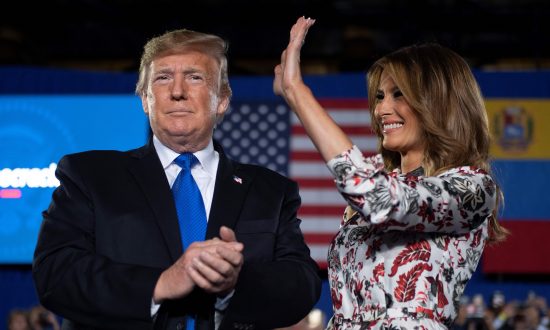
వెనెజులాలో నికొలస్‌ మదురోను అంగీకరించం, ఈ విషయంలో వెనక్కు పోయేది లేదు, ప్రజాస్వామ్యం మినహా సోషలిజాన్ని మనం అంగీకరించేదిలేదు, మిలిటరీ జోక్యంతో సహా అన్ని అవకాశాలను పరిశీలిస్తున్నాం, మదురో క్యూబా తొత్తు అంటూ అమెరికా అధ్యక్షుడు డోనాల్డ్‌ ట్రంప్‌ నిప్పులు చెరుగుతూ పిడుగులు కురిపించాడని ఒక పత్రిక సోమవారం నాటి ప్రసంగాన్ని వర్ణించింది. అమెరికాలోని ఫ్లోరిడాలో స్ధిరపడిన వెనెజులా సంతతి, వలస పౌరుల నుద్దేశించి ట్రంప్‌ మాట్లాడారు. మదురోను వదలి వేసి పార్లమెంట్‌ నేత జువాన్‌ గువైడోకు మద్దతివ్వాలని పౌరులు, మిలిటరీని కోరాడు. అక్కడ సోషలిస్టు ప్రభుత్వం వున్న కారణంగానే పదిలక్షల శాతం ద్రవ్యోల్బణం, ఆకలితాండవిస్తున్నదని, ప్రపంచంలో అత్యధిక చమురు నిల్వలున్న దేశం దారిద్య్రంలో చిక్కుకున్నదని, కొలంబియాద్వారా పంపదలచిన ఆహార సాయాన్ని మిలిటరీ అడ్డుకుంటున్నదని ఆరోపించాడు. ఫ్లోరిడాలోని మియామీ అంతర్జాతీయ విశ్వవిద్యాలయలో భార్య, కుమార్తెతో సహా పాల్గన్న సభలో మదురో ప్రభుత్వంపై బెదిరింపులు, సోషలిస్టు వ్యతిరేక చిందులు వేస్తూ వూగిపోయాడు. వెనెజులా స్వయంప్రకటిత అధ్యక్షుడు గువైడో రాజకీయ భవిష్యత్‌, సోషలిజానికి వ్యతిరేకతను ట్రంప్‌ ఫ్లోరిడా పర్యటనలో వక్కాణించాడు. సోషలిజం, కమ్యూనిజాల భయానక చర్యలను ప్రత్యక్షంగా భరించిన వారు వాటికి వ్యతిరేకంగా ధైర్యంగా మాట్లాడిన ప్రతి ఒక్కరికి మరియు ప్రతి ఒక్క రాజకీయ ఖైదీకి, వ్యతిరేకత ప్రకటించిన ప్రతి ఒక్కరికి తాము ఘన స్వాగతం పలుకుతామన్నాడు. అమెరికా యువతలో పెరుగుతున్న సోషలిస్టు భావాల వ్యాప్తిని అరికట్టేందుకు వెనెజులాను బలిచేయాలన్న కుట్ర కోణాన్ని తోసిపుచ్చలేము.

జనవరి 23న గువైడో వెనెజులా తాత్కాలిక అధ్యక్షుడిగా ప్రకటించుకున్నప్పటి నుంచి చట్టబద్దంగా ఎన్నికైన అధ్యక్షుడు నికోలస్‌ మదురోను అధ్యక్షుడిగా గుర్తించేందుకు నిరాకరించటమేగాక ప్రభుత్వాన్ని కూల్చివేసేందుకు అమెరికా చేయని ప్రయత్నం లేదు.సాయం ముసుగులో మదురో వ్యతిరేకులకు ఆయుధాలను చేరవేస్తున్న వాహనాలను కొలంబియా సరిహద్దులో వెనెజులా మిలిటరీ పట్టుకున్న విషయం తెలిసినదే. రోనాల్డ్‌ రీగన్‌ 37 సంవత్సరాల క్రితం మార్క్సిజం, లెనినిజం చరిత్ర బూడిద కుప్పలో కలసినట్లు నోరుపారవేసుకున్నాడు. ఫిబ్రవరి ఐదున అనూహ్యంగా అమెరికన్‌ పార్లమెంట్‌ వుభయసభలనుద్ధేశించి చేసిన ప్రసంగంలో వెనెజులా పరిణామాలను ప్రస్తావించి సోషలిజంపై దండెత్తి అమెరికాలో అనుమతించేది లేదన్నాడు. పదమూడు రోజుల తరువాత మరోసారి మియామీలో అదేపని చేశాడు. గత నెల రోజుల్లో అమెరికా-వెనెజులా పరిణామాలను చూసినట్లయితే ట్రంప్‌ స్వయంగా చెప్పినట్లు మిలిటరీ జోక్యానికి ఆఖరి అస్త్రంగా తగిన అవకాశం, సాకుకోసం అమెరికా చూస్తున్నది.

ఐక్యరాజ్యసమితిలోని భద్రతా మండలిని వినియోగించుకొని అమెరికన్లు గనుక వెనెజులాపై సైనిక చర్యకు వుపక్రమిస్తే శాశ్వత సభ్యరాజ్యాలైన చైనా, రష్యా వీటో ఆయుధాన్ని ప్రయోగిస్తాయి. మదురో ప్రభుత్వాన్ని అమెరికాతో అంటగాకే కొన్ని మినహా ఆ రెండు దేశాలతో పాటు మన దేశంతో సహా అన్నీ గుర్తించాయి. ప్రపంచ రాజకీయాలు, ఆర్ధిక పరిణామాలు ఇందుకు దోహదం చేస్తున్నాయి. రష్యన్‌ క్షిపణులు, ఎయిర్‌ క్రాఫ్ట్‌ , ఇతర ఆయుధాలను కొనుగోలు చేసి దానికి బదులుగా చౌకధరకు వెనెజులా చమురు సరఫరా చేస్తోంది. అమెరికా బెదిరింపులను సహించేది లేదంటూ రష్యాతో కలసి సైనిక విన్యాసాలు చేస్తోంది. అవసరమైతే తమ జెట్‌ బాంబర్లు, యుద్ధనావలు బాసటగా నిలుస్తాయంటూ ఇటీవలి కాలంలో తరచుగా వెనెజులా తీరాలు, విమానాశ్రయాలకు రష్యా నౌకలు, జెట్‌లు వచ్చి ఆగివెళుతున్నాయి. గత పది సంవత్సరాలలో చైనా 70బిలియన్‌ డాలర్ల మేరకు వివిధ వెనెజులా పధకాలలో పెట్టుబడులు పెట్టింది. లాటిన్‌ అమెరికాలో ప్రధాన రాజకీయ మద్దతుదారుగా క్యూబా వుంది. అమెరికా కుట్రలను ఎదుర్కోవటంలో, చిత్తు చేయటంలో ఎంతో అనుభవం గడించిన క్యూబన్లు భద్రతా, మిలిటరీ సలహాదారులను సరఫరా చేయటమే గాక తమకు అందిన సమాచారాన్ని మదురో సర్కార్‌కు అందిస్తోంది. తన వద్ద వున్న వైద్యులు, నర్సులు, ఇంజనీర్లవంటి నిపుణులను పదిహేను వేల మందిని పంపింది. దీనికి ప్రతిగా చౌకధరలకు వెనెజులా చమురు సరఫరా చేస్తోంది.

చమురు విక్రయాలను అడ్డుకొంటూ అనేక సమస్యలను సృష్టిస్తున్న అమెరికా చర్యల కారణంగా వెనెజులాలో అనేక వస్తువులకు కొరత ఏర్పడింది. దీన్ని సాకుగా చూపి సోషలిస్టు మదురో పాలన కారణంగానే ఇలాంటి పరిస్ధితి అంటూ సోషలిజానికి లంకెపెట్టి డోనాల్డ్‌ ట్రంప్‌ ఒక పధకం ప్రకారం పెద్ద ఎత్తున సోషలిస్టు వ్యతిరేక ప్రచారానికి శ్రీకారం చుట్టాడు. దానిలో భాగమే అమెరికా ఎన్నడూ సోషలిస్టు దేశంగా వుండబోదన్న ప్రకటనకు పార్లమెంట్‌ వుభయసభల ప్రసంగాన్ని ఎంచుకున్నాడు. అప్పటి నుంచి అమెరికా మీడియాలో సోషలిజం గురించి పెద్ద ఎత్తున చర్చ జరుగుతోంది. సహజంగానే వక్రీకరణలు చోటు చేసుకుంటాయని వేరే చెప్పనవసరం లేదు. అమెరికా జనానికి ఇప్పటి వరకు అక్కడి మీడియా ద్వారా సోషలిజం గురించి వక్రీకరణలు, వైఫల్యం చెందినదిగానే సమాచారాన్ని మెదళ్లకు ఎక్కించారు. ఇప్పుడు సోషలిజం గురించి వివరించటానికి, పెట్టుబడిదారీ విధాన వైఫల్యం గురించి చెప్పేవారికి మీడియాలో కాస్తయినా చోటివ్వకతప్పటం లేదు. అందువలన యువతరంలో సోషలిజం మీద ఆసక్తిని పెంచటానికి ఇది దోహదం చేసే అవకాశం వున్నందున ఒక విధంగా సానుకూల పరిణామంగా చెప్పవచ్చు. మారిన పరిస్ధితుల్లో అమెరికాలో పెట్టుబడిదారీ విధాన వైఫల్యం గురించి చర్చ మొదలు కావటం విశేషం. నిజానికి నాలుగైదు వందల సంవత్సరాల పెట్టుబడిదారీ వ్యవస్ధ చరిత్రలో ఆ వర్గానికి చెందిన వారి నోటే దాని వైఫల్యం గురించి పదే పదే వినిపిస్తోంది. ఈ పూర్వరంగంలో సోషలిజంపై ట్రంప్‌ దాడి గురించి రాసిన విశ్లేషణలకు పెట్టిన కొన్ని శీర్షికలు ఇలా వున్నాయి.’ సోషలిజంపై ట్రంప్‌ దాడి పెట్టుబడిదారీ విధానానికి సాయపడదు : చికాగో ట్రిబ్యూన్‌ ‘ ‘ భయ పడాలనా? భయపడవద్దనా-డెమోక్రాట్‌ గజెట్‌’ ‘

చికాగో ట్రిబ్యూన్‌ విశ్లేషణలో కొన్ని అంశాల సారాంశం ఇలా వుంది. అమెరికాలో సోషలిజానికి ఎన్నడూ ఆదరణ లేదు, ఇరవయ్యవ శతాబ్దంలో పశ్చిమ దేశాలలో సోషలిస్టు పార్టీలు గణనీయమైన ఆదరణ పొందాయి, ఇక్కడ కొద్ది మందికే పరిమితమైంది.1932లో మహా మాంద్యం సమయంలో సోషలిస్టు పార్టీ అధ్యక్ష అభ్యర్ధి ఇక్కడ కేవలం రెండుశాతం ఓట్లు మాత్రమే పొందారు. అయితే ఆలశ్యంగా అవకాశాలు మెరుగయ్యాయి.2016లో డెమోక్రటిక్‌ పార్టీ అధ్యక్ష అభ్యర్ధి ఎన్నికలలో బెర్నీశాండర్స్‌ 13 రాష్ట్రాలు, బృందాలలో మద్దతు సంపాదించారు.గతేడాది అలెగ్జాండ్రియా ఒకాసియో కోర్టెజ్‌ పార్లమెంట్‌కు ఎన్నికయ్యారు. ఇద్దరూ సోషలిస్టులమనే ముద్రను గర్వంగా తగిలించుకున్నారు.ఇప్పుడు అధ్య క్షుడు డోనాల్డ్‌ ట్రంప్‌ అనే ప్రముఖ రాజకీయవేత్తను ంచి సోషలిస్టులు ఒక శక్తిని పొందారు. ‘ మన దేశం సోషలిజాన్ని అనుసరించాలనే కొత్త పిలుపులు మనల్ని మేలుకొల్పాయి. అమెరికా ఎన్నడూ సోషలిస్టు దేశంగా వుండదని ఈ రాత్రి మన సంకల్పాన్ని పునరుద్ఘాటిస్తున్నా ‘ అని ట్రంప్‌ చెప్పారు. ఇంతకంటే మెరుగ్గా పెట్టుబడిదారీ విధానాన్ని సమర్ధించేవారు అవసరం. సోషలిజంపై దాడి చేయటం ద్వారా ఓటర్లలో ప్రత్యేకించి యువ ఓటర్లలో ట్రంప్‌ చిన్నబోయారు. వామపక్షానికి పెద్ద బహుమతి ఇది, పెట్టుబడిదారీ విధాన అభిమానులకు సంకట స్ధితి కలిగించుతుంది. డెమోక్రాట్లు వుదారవాదులుగా మారటానికి వారేమీ కారల్‌ మార్క్స్‌తోవలో నడవటం లేదు. వారిలో కొందరికి ఆర్ధికాంశాల గ్రహణ శక్తి పట్టుతప్పింది, దాని ఇబ్బంది కలిగించే వాస్తవాలు జుగుప్స కలిగించటం ఒక పాక్షిక కారణం. స్వేచ్చామార్కెట్‌ను సమర్ధించే ఆ పార్టీ నేతలు కొన్ని సామాజిసమస్యలను పరిష్కరించలేకపోవటం కూడా ఒక కారణం. ఆచరణాత్మక పరిష్కారాలకు సిద్ధపడకుండా మితవాదులు మరింత కఠినమైన భావజాలానికి కట్టుబడి వుండటం కూడా పాక్షికంగా అందుకు తోడ్పడింది. బరాక్‌ ఒబామా ప్రతిపాదించిన ఆరోగ్య సంరక్షణ పధకానికి ఒక రిపబ్లికన్‌ కూడా ఓటువేయలేదు, అదొక సోషలిస్టు చర్యగా చూశారు.

భయపడాలనా ? భయపడకూడదనా అనే శీర్షికతో డెమోక్రాట్‌ గజెట్‌ వ్యాఖ్యను మంచి మనుషులు లేదా మంచి భావజాలం మీద బురద చల్లటానికి ప్రత్యేకించి ముద్రలు వేస్తారు, వాటిని తాను ద్వేషిస్తానంటూ రచయిత దానిని ప్రారంభించాడు. ఈ రోజు అమెరికా రాజకీయాల్లో కొంత మంది డెమోక్రాట్లు అవలంభించిన దాని ముద్ర సోషలిజం. వుదారవాదులను చూసి మితవాదులు భయపడేందుకు అదే పదాన్ని రిపబ్లికన్‌ పార్టీ వుపయోగిస్తోందని చెబుతూ మధ్యలో సోషలిజం, కమ్యూనిజం గురించి తన అభిప్రాయాలను వెల్లడించిన తరువాత ముగింపులో చెప్పిన అంశాలు అమెరికా సమాజంలో జరుగుతున్న సోషలిజం-పెట్టుబడిదారీ విధానాల మంచి చెడ్డల మధన పూర్వరంగంలో ఎంతో ముఖ్యమైనవి.వివిధ సర్వేలు తేల్చిన సారం ఏమంటే ఈ భూమ్మీద సంతోషంగా వున్న జనం నివశిస్తున్న దేశాలు ఏవంటే సోషలిస్టు ప్రజాస్వామిక వ్యవస్ధలు కలిగినవే. కొన్ని ప్రభుత్వ విధానాలు మరియు కార్యక్రమాలు నాణ్యమైన జీవితానికి అవసరమైన లబ్దికి హామీ ఇచ్చేవి, అంటే అందుబాటులో ఆరోగ్య రక్షణ, వ్యక్తిగతంగా తగినంత సెలవు దొరకటం, అందుబాటులో గృహవసతి, స్వచ్చమైన పర్యావరణం వంటివి. అయితే ప్రజాప్రాతినిధ్య ప్రజాస్వామిక వ్యవస్ధలలో కోరుకున్నంత వ్యక్తిగత ఆస్ధి లేదా సంపదలను ఎంచుకోవటానికి స్వేచ్చ వుంటుంది. ఈ దేశాలు మౌలికంగా పెట్టుబడిదారీ విధానం మరియు సోషలిజంతో మిళితమై ఎంతో ప్రభావంతంగా మరియు ఆకర్షణీయంగా వుంటాయి. మనం సోషలిజం గురించి భయపడనవసరం లేదు. దాని కొన్ని సంకల్పాలతో మానవాళి లబ్ది పొందిందని మనసారా మనం గుర్తించాలి. ఆ తరువాత ఆ భావజాలాన్ని మన స్వంత దేశంలో వృద్ధి పొందించటానికి మనం పూనుకోవాలి.

Image result for a big debate on socialism in US

న్యూయార్క్‌టైమ్స్‌, లాస్‌ ఏంజల్స్‌ టైమ్స్‌, వాషింగ్టన్‌ పోస్టు వంటి బడా కార్పొరేట్ల పత్రికలు ఈ చర్చను విస్మరించలేకపోయాయి. స్ధలాభావం రీత్యా అన్నింటి సారం అందించటం సాధ్యం కాదు. గత కొద్ది సంవత్సరాలుగా అమెరికాలో జరుగుతున్న సోషలిస్టు మధనం గురించి శత్రువులు ముందే గ్రహించారు. ప్రపంచమంతటా కారల్‌మార్క్సు 200వ జయంతిని జరుపుకుంటున్న సమయంలో ఆయన భావజాలాన్ని అరికట్టే బాధ్యతను తలకెత్తుకున్నామని చెప్పుకొనే అమెరికా సర్కార్‌ 2018 అక్టోబరు 23న సోషలిజం ఎంత ఖర్చుతో కూడుకున్నదో వివరిస్తూ ఒక పెద్ద పత్రాన్ని విడుదల చేసింది. అమెరికా గనుక సోషలిస్టు విధానాలను అమలు జరిపితే భవిష్యత్‌లో సంభవించబోయే నష్టాలను దానిలో ప్రస్తావించారంటే సోషలిజాన్ని కోరుకుంటున్న యువతను సూటిగా వ్యతిరేకించకుండా మరోమార్గంలో వారి మెదళ్లను చెడగొట్టే ప్రయత్నం తప్ప వేరు కాదు. వెనెజులాలో ప్రస్తుతం అధికారంలో వున్న వామపక్ష శక్తులు తప్ప అక్కడ అమలు జరుపుతున్నది కొన్ని సంక్షేమ పధకాలతో కూడిన ప్రజాపాలన తప్ప శాస్త్రీయ సోషలిస్టు సమాజ నిర్మాణం కాదు. అలాగే ఐరోపాలో నోర్డిక్‌ దేశాలుగా వున్న డెన్మార్క్‌, స్వీడన్‌, ఫిన్లండ్‌, ఐస్‌లాండ్‌, నార్వేలలో వున్న మెరుగైన సంక్షేమ పధకాలను చూపి నిజమైన సోషలిస్టు దేశాలుగా చిత్రిస్తూ ఆ పత్రంలో చర్చించారు. వెనెజులా సోషలిస్టు పధకాలను అమెరికాలో అమలు జరిపితే దీర్ఘకాలంలో కనీసం 40శాతం జిడిపి తగ్గిపోతుందని ఆ పత్రంలో పేర్కొన్నారు.నోర్డిక్‌ దేశాల విధానాలను అనుసరిస్తే అమెరికాలో జిడిపి కనీసం 19శాతం తగ్గిపోతుందని ఏడాదికి రెండు నుంచి ఐదువేల డాలర్లు అదనంగా పన్ను విధించాల్సి వుంటుందని, అమెరికాతో పోల్చితే ఈ దేశాల్లో జీవన ప్రమాణాలు పదిహేనుశాతం తక్కువగా వున్నాయని పేర్కొన్నారు. అమెరికాలోని సోషలిస్టులు కోరుతున్న విధంగా ఆరోగ్యఖర్చునున నోర్డిక్‌ దేశాలలో మాదిరి పూర్తిగా ప్రభుత్వమే భరిస్తే 2022నాటికి జిడిపి తొమ్మిదిశాతం తగ్గిపోతుందని పేర్కొన్నారు. అరచేతిని అడ్డుపెట్టి సూర్యకాంతిని ఆపటం ఎలా సాధ్యం కాదో వక్రీకరణలతో సోషలిజం గురించి తెలుసుకోకుండా జనాన్ని నివారించటం కూడా అంతే !

Share this:

  • Tweet
  • More
Like Loading...

Is South America’s ‘Progressive Cycle’ At an End?

04 Friday Mar 2016

Posted by raomk in Current Affairs, Economics, INTERNATIONAL NEWS, Latin America, Left politics, Opinion

≈ Leave a comment

Tags

Argentina, ‘Progressive Cycle’, Bolivarian process, Bolivia, Brazil, Chavista, Ecuador, Latin America, Latin American left, neoliberal, right-wing governments, South America’s, U.S. interventionism, Venezuela

Neo-Developmentalist Attempts and Socialist Projects

Claudio Katz

Summary

The progressive cycle emerged from popular rebellions that altered power relations in South America. There were social improvements and democratic conquests, and imperialist aggression was curbed. But export-oriented extractivism increased and trade became more balkanized. The agreements with China made by each country reveal fractures in continental integration that have facilitated the reappearance of free trade treaties. Progressivism has suffered from unsuccessful neo-developmentalist attempts that failed to channel agro-export rents into productive activities. Social spending helped to ease protest but discontent has expanded under the centre-left governments. The Right has won the Presidency in Argentina because of the inconsistencies of Kirchnerism, has been strengthened in Brazil by the conservative mutation of the Workers’ Party (PT), and is gaining new life in Ecuador owing to the deceitfulness of the official discourse. The conservatives conceal the corruption, drug trafficking and inequality that continue to be associated with their governments.

Venezuela is battling the U.S. attempt to regain control of its oil. A Chavista counter-attack requires communal power if it is to eradicate the foreign exchange fraud that enriches the bureaucracy. The Bolivarian process will be radicalized or it will regress. Characterizations of the progressive cycle as a post-liberal period omit the continuities with the previous phase and ignore the conflicts with the popular movement. But the pre-eminence of extractivism does not make all governments the same or convert the centre-left administrations into repressive regimes. Socialist projects offer the best outcome in the current stage.


The year 2015 ended with significant advances of the Right in South America. Mauricio Macri was elected President in Argentina, the opposition gained a majority in the Venezuelan parliament, and Dilma Rousseff is being hounded relentlessly in Brazil. Then there are the conservatives’ campaigns in Ecuador, and it remains to be seen whether Evo Morales will obtain a new mandate in Bolivia.[1]

What is the nature of the period in the region? Has the period of governments taking their distance from neoliberalism come to an end? The answer requires that we describe the particular features of the last decade.

Causes and Effects

The progressive cycle arose in popular rebellions that brought down neoliberal governments (Venezuela, Bolivia, Ecuador, Argentina) or eroded their continuity (Brazil, Uruguay). These uprisings modified the power relations but did not alter South America’s economic insertion in the international division of labour. On the contrary, in a decade of rising prices for raw materials all countries reinforced their status as exporters of primary products.

The right-wing governments (Sebastián Piñera in Chile, Álvaro Uribe-Juan Manuel Santos in Colombia, Vicente Fox-Enrique Peña Nieto in Mexico) used the foreign exchange bonanza to consolidate the model based on openness to free trade and privatizations. The centre-left administrations (Néstor and Cristina Kirchner in Argentina, Inácio Lula da Silva-Dilma Rousseff in Brazil, Tabaré Vázquez-José “Pepe” Mujica in Uruguay, Rafael Correa in Ecuador) promoted increased internal consumption, subsidies to local business owners and social welfare programs. The radical presidents (Hugo Chávez-Nicolás Maduro in Venezuela, Evo Morales in Bolivia) applied models of improved redistribution of income and contended with sharp conflicts with the ruling classes.

The affluence of dollars, the fear of new uprisings and the impact of expansive policies in the region avoided the severe neoliberal adjustments that prevailed in other regions. The classic abuses suffered in the New World were transferred to the Old Continent, Europe. Greece’s surgery has had no parallel in Latin America nor have we suffered the financial agonies visited on Portugal, Iceland or Ireland.

This relief was also an effect of the defeat of the FTAA. The project to create a continental free trade area was suspended and this paved the way for a productive respite and social improvements.[2]

During the decade there was a serious limitation of U.S. interventionism. The Marines and the Fourth Fleet continued to operate but did not carry out the invasions typical of Washington. This restraint was confirmed in the decline of the OAS. That Ministry of Colonies lost influence while new organizations (UNASUR, CELAC) intervened in the major conflicts (as in Colombia).

U.S. recognition of Cuba reflected this new scenario. For 53 years the United States had been unable to vanquish the island. It now opted for negotiations and diplomacy, hoping to restore its image and regain hegemony in the region.

This cautious approach of the State Department contrasts with its virulence in other parts of the world. To note the difference, it is enough to observe the sequence of massacres suffered by the Arab world, where the Pentagon ensures U.S. control of oil, destroying states and upholding governments that crush the democratic springs. This demolition (or the wars of plunder in Africa) were absent in South America.

The progressive cycle allowed democratic conquests and constitutional reforms (Bolivia, Venezuela, Ecuador) introducing rights that had been denied for decades by the ruling elites. And greater tolerance was displayed toward social protest. In this respect, the contrast with the more repressive regimes (Colombia, Peru) or with governments that have used the war on drugs to terrorize people (Mexico) is quite striking.

The progressive period also included the recovery of anti-imperialist ideological traditions. This reappropriation was visible in the commemorations of the independence bicentennials, now updated as the agenda of a Second Independence. In a number of countries this atmosphere contributed to the reappearance of the socialist horizon.

The progressive cycle involved transformations that drew international appreciation from the social movements. South America became a reference for popular agendas. But now the limits of the changes occurring during this stage have surfaced.

Frustrations with Integration

During 2015 Latin American exports declined for the third consecutive year. China’s slower growth, the lesser demand for agrofuels, and the return of speculation in financial assets tend to downgrade the market value of raw materials.

The fall in prices will be reinforced if shale co-exists with traditional oil and other substitute sources are developed for basic resources. This is not the first time that capitalism has developed new techniques to counteract the rise in prices of raw materials. These tendencies tend to seriously undermine all of the Latin American economies tied to agro-mineral exports.

The difficulties in the new situation are confirmed in the reduced growth. Since the public debt is lower than in the past the traditional collapses are not yet cause for concern. But fiscal resources are now declining and the margin for developing policies to reactivate the economy is narrowing.

The progressive cycle has not managed to alter regional vulnerability. This fragility persists in the expansion of raw materials deals to the detriment of integration and productive diversification. The South American association projects have been overcome again through national export activities that promote commercial balkanization and the deterioration of manufacturing processes.

After the defeat of the FTAA many initiatives were taken to forge common structures throughout the area. These included shared industrialization goals, energy loops and communications networks. But those programs have languished year after year.

The regional bank, reserve fund and coordinated currency exchange system have never materialized. Norms to minimize the use of the dollar in commercial transactions as well as priority regional infrastructure projects have remained on the drawing boards.

No concerted protection against the fall in export prices has been set in motion. Each government has opted to negotiate with its own customers, shelving plans to create a regional bloc.

This impotence is synthesized by the freezing of the Bank of the South. It was obstructed in particular by Brazil, which promotes instead its BNDES[3] and even a BRICS bank. The absence of any common financial institution has undermined the programs for exchange convergence and a common currency.

The negotiations with China reveal the same regional fracture. Each government unilaterally signs agreements with the new Asian power which monopolizes purchases of raw materials, sales of manufactured goods, and the granting of credit.

China prioritizes dealings in commodities and is grudging in transferring technology. The asymmetry that it has established with the region is surpassed only by the subordination it imposes in Africa.

The consequences of this inequality began to be noted last year, when China reduced its growth and its acquisitions in Latin America. Furthermore, it began to devalue the yuan in order to increase its exports and adapt its exchange parity to the exigencies of a global currency. Those measures accentuated its position as the source of cheap merchandise in South America.

Up to now China has been expanding without exhibiting geopolitical or military ambitions. Some analysts identify this conduct with friendly policies toward the region. Others see in it a neocolonial strategy of appropriation of natural resources. In any case the result has been a geometric increase in South American dependency on raw materials exports.

Instead of establishing intelligent links with the Asian giant as a counter to U.S. domination, the progressive governments have opted for indebtedness and trade restriction. In UNASUR or CELAC there has never been any discussion on how to negotiate with China as a bloc in order to sign more equitable agreements.

The failures in integration explain the new impetus that has been given to the Trans-Pacific Treaty. The FTAs reappear with an intensity rivalled only by the decline in South American cohesiveness. The United States has objectives that are clearer than they were at the time of the FTAA. It promotes an agreement with Asia (TPP) and another with Europe (TTIP)[4] in order to secure its pre-eminence in strategic activities (research labs, computing, medicine, the military). In the wake of the 2008 collapse it has been promoting free trade with renewed intensity.

South America is a market that is coveted by all transnational enterprises. These companies want treaties with greater labour flexibility and explicit advantages in litigating lawsuits over environmental pollution. The United States and China rival each other in their use of those tools to ease trade restrictions.

Chile, Peru and Colombia have already signed on to the free-trade requirements of the TPP in matters of intellectual property, patents and public procurement. They simply want to obtain better markets for their agro-mineral exports. But the big novelty is the readiness of the new Argentine government to participate in this type of negotiations.

Macri claims he will loosen up the agreement with the European Union and induce Brazil to participate in some way in the Pacific Alliance. He has noted that Dilma’s cabinet includes agribusiness representatives more responsive to trade liberalization than they are to the industrialism of MERCOSUR.

The FTAs will be put to the test in the bargaining over another deal being negotiated in secret by 50 countries, which contains far-reaching provisions for liberalization of services (the TISA, or Trade in Services Agreement). This initiative has already been rejected in Uruguay, but there are continuing attempts. The progressive cycle is directly threatened by the avalanche of free trade sponsored by the Empire.

Failures in Neo-Developmentalism

The limits of progressivism have been most visible in the national attempts to implement neo-developmentalist policies. Those efforts were aimed at turning again to industrialization using strategies based on greater state intervention, imitating the development of South-East Asia. Unlike the classic developmentalism they have promoted alliances with agribusiness and look to a long period in which to reverse the deterioration in the terms of trade.

After a decade, they have not managed to achieve any of the industrialization goals. The expectation of equalling the Asian advance has dissolved in the face of the higher profits generated by exploitation of workers in the Far East. The hope of entrepreneurship by local business people has faded as they continue to require state assistance. The promotion of an efficient civil service has been neutralized by the re-creation of inept bureaucracies.

The major neo-developmentalist attempt was carried out in Argentina during the decade that followed the social explosion of 2001. That experiment was eroded by many imbalances. Attempts to administer the agrarian surplus in a productive way through state management of foreign trade were abandoned. Instead, trust was placed in business owners who used the subsidies for capital flight rather than meaningful investment. Furthermore, they hoped for a virtuous circle of demand based on contributions of the capitalists, but the latter preferred to mark up prices.

The model preserved all of the structural imbalances of the Argentine economy. It heightened dependency on raw materials, fostered stagnation in energy supply, perpetuated a concentrated industrial structure and sustained a financial system that was hostile to investment. The maintenance of a regressive tax system stood in the way of modifying the pillars of social inequality.

The accumulated tensions led to a regressive turn that the Kirchnerist candidate (Daniel Scioli) eluded by losing the election. He proposed a gradual adjustment program through taking on new debt, devaluating the currency, reaching a settlement with the vulture funds claimants, and imposing higher fees and cutbacks in social spending.

In Brazil the debate has been over whether the PT government is managing a conservative variant of neo-developmentalism or a regulated version of neoliberalism. As it did not have to contend with the crisis and popular rebellion that convulsed Argentina, the changes in economic policy were more limited.

But at the end of a decade the results are similar in both countries. The Brazilian economy has stagnated and the expansion in consumption has not reduced social inequality or increased the size of the middle class. There is greater dependency on commodity exports and a major downturn in industry. Finance capital retains its privileges and agribusiness stifles any hope of agrarian reform.

Dilma introduced the conservative turn that progressivism avoided in Argentina. She won the election disputing the adjustment advocated by her rival (Aecio Neves) and then disowned those promises under pressure of the markets. She appointed an ultra-liberal Finance minister (Joaquim Levy[5]), a replay of the first Lula presidency that began with personalities of the same type (Antonio Palocci[6]).

During 2015 this orthodox management generated increased rates and fees. Dilma justified the cutback in social policies and maintained the advantages enjoyed by financiers as they build their fortunes. But as the new year opened she replaced the bankers’ man with a more heterodox economist (Nelson Barbosa) who promises a slower fiscal adjustment to cushion the recession. This turn does not portend an exit from the mess created by the conservative policies.

Ecuador has experienced the same regression from neo-developmentalism. Correa began with a reorganization of the state that strengthened the internal market. He increased tax revenues, provided improved social programs, and channelled part of the rent into public investment.

But later he faced all the limits of analogous experiments and opted for increased debt and export promotion. He signed a FTA with Europe, facilitated privatization of highways, and awarded fully developed oil reserves to the major companies.

The failings of neo-developmentalism have blocked the progressive cycle. That model attempted to channel export surpluses into productive activities. But it encountered resistance from the economic power and gave in to those pressures.

A New Type of Protests

During the last decade explosions of popular discontent have become more infrequent. All of the governments count on using increased fiscal revenues as a significant buffer in the face of social demands. The Right resorted to welfarism, the Centre-Left improved existing programs without affecting powerful interests, and the radical processes facilitated conquests of greater importance.

Throughout the region there was a relaxation in social tensions and the major conflicts were expressed in the political sphere, as in the big resistance mounted against rightist attempts to remove Left governments and the huge mobilizations backing candidates in election battles. But there were no uprisings equivalent to those in the preceding period. Only the heroic response to the coup in Honduras came close.

The fighting spirit of the masses was expressed in other fields, as in the mass demonstrations of Chilean students for free education, the outstanding general strike in Paraguay, or the energetic demands of the peasants, indigenous and environmentalists in Colombia and Peru.

But the principal novelty in this period was the social protests in the countries governed by the Centre-Left. In a context of strong political pressures from the Right, this outburst from below highlighted popular dissatisfaction.

The defiance was quite striking in Argentina. First there was the extended wave of strikes by teachers and public sector workers, followed by the refusal to pay a tax imposed on higher-income wage-earners. This discontent set off four general strikes in 2014-2015. The size of these actions surprised the leaders of the official trade unions, who opposed the protest.

In Brazil, the discontent emerged in the July days of 2013. The huge demonstrations demanding improvements in public transportation and education convulsed the major cities. These were not just “second generation” claims over and above what was already achieved; they expressed a frustration with the conditions of life. This discontent was manifested in the questioning of the superfluous expenditures associated with the financing of the World Cup that could have gone instead toward investment in education.

Finally, in Ecuador the social and indigenous mobilizations became more frequent in the streets and in the past year reached a peak in terms of numbers involved. Correa responded in a harsh and authoritarian manner, widening the rift separating the government from broad sectors of the masses.

Why is the Right Advancing?

Macri’s arrival in the presidency represents the first electoral overturn of a Centre-Left administration by its conservative opponents. This turn is not comparable to what occurred in Chile with Piñera’s victory over Michelle Bachelet. That was a substitution of government within the limits of the same neoliberal rules.

Macri is a crude exponent of the Right. He resorted to demagogy, depoliticization and illusions of concord. With vacuous promises he transformed the powerful cacerolazos [pot-banging street protests by predominantly middle-class sectors] into a surge of votes.

The new President has appointed a cabinet of managers to administer the state as if it was a business. He has initiated a drastic and regressive transfer of incomes through devaluation and increased prices. He is issuing decrees criminalizing social protest and is preparing to repeal recently won democratic rights.

Macri’s triumph was no accident. It was preceded by the Kirchner government’s refusal to accept many demands from below that the Right took up in a distorted and demagogic way. The Kirchner followers fail to acknowledge their responsibility.

Some progressives see the victory of the PRO, Macri’s party, as a transient misfortune and hope to retake the government in a few years. They do not understand the modifications in the political map that are probable in the interval. Others argue that the election was lost through bad luck or because of an erosion in support over 12 years, as if that weariness adhered to some fixed chronology.

Those who attribute the election outcome to the harangue – effective, no doubt – of the hegemonic news media do not accept that the alternative mounted by the official propaganda failed as well. This applies as well to those who banter about Macri’s “post-politics” discourse without noting the declining credibility of the Kirchner discourse. Macri’s victory is ascribable to the frustration with corruption, clientelism, and the Peronist culture of top-down control and loyalty.

The reactionary offensive in pursuit of Dilma has not achieved the results it did in Argentina, but it did disrupt the Brazilian government throughout 2015. The Rightists began with big demonstrations in March that they were unable to sustain in August, and even less in December. The social mobilizations against the institutional coup followed instead an opposite course and grew as time went by.

The Supreme Court has blocked the political trial for now, and the government has gained a respite that it is using to reorganize alliances in exchange for a certain fiscal relief. But Dilma has only achieved a truce with her opponents in the Congress and the media.

As in Argentina, the progressive forces evade any explanation of this retreat. They simply manoeuvre to secure the government’s survival through new agreements with the business lobby, the provincial elites and the partidocracia, the bureaucratic party structures.

They don’t bother to investigate the regression of the PT, which has eroded its social base by agreeing to the adjustments. In the last election Dilma won by a slim margin, compensating her losses in the south with votes in the northeast. Support from the old working-class base of the PT has declined and been supplanted by traditional clientelism.

Furthermore, the government is tarnished by serious corruption scandals. Shady deals with the industrial elite have come to light that portray the consequences of governing in alliances with the affluent. Instead of analyzing this tragic mutation, the theorists of progressivism repeat their timeless messages in opposition to conservative restoration.

A similar regression is observed in Ecuador. Correa’s management is marked by a big divorce between his belligerent rhetoric and hisstatus quo administration. The President polemicizes against Rightists and is implacable in his denunciations of imperialist interference. But day by day he crosses a new barrier in his acceptance of free trade and his confrontation with the social movements.

Here too the analyses of progressivism are limited to redoubled warnings against the Right. They overlook the disillusionment created by a president who is compromised with the establishment agenda. This turn explains Correa’s recent decision not to seek a new mandate.

The Centrality of Venezuela

The outcome of the progressive cycle is at stake in Venezuela. What is happening there is not equivalent to what is going on in other countries. These differences are not appreciated by those who compare the recent triumphs of the Right in Venezuela and Argentina. The two situations are not comparable.

In Venezuela the election unfolded amidst an economic war, with shortages, hyperinflation, and smuggling of subsidized commodities. It was a campaign full of bullets, paramilitaries, conspiratorial NGOs, and criminal provocations.

The Right prepared its usual denunciations of fraud in order to discredit an adverse election result. But it won, and was then unable to explain how it could achieve this victory under a “dictatorship.” For the first time in 16 years it obtained a majority in the parliament and will now try to call a vote to revoke Maduro’s mandate.

Since they are unwilling to wait until 2018, when his term expires, a huge conflict looms with the Executive power. In the National Assembly they will promote unacceptable demands – free the convicted coup plotters, expose speculation, overturn the social conquests – explicitly aimed at harassing the President.

None of these features is present in Argentina. Not only does Capriles have priorities that are quite distinct from Macri’s, but Chavismo differs significantly from Kirchnerism. The first arose out of a popular rebellion and declared its intention to achieve socialist objectives. The latter limited itself to capturing the effects of an uprising and consistently glorified capitalism.

In Venezuela there was a redistribution of the rent, undermining the privileges of the dominant classes. In Argentina this surplus was distributed without significantly altering the advantages enjoyed by the bourgeoisie. The popular empowerment that Chavismo unleashed bears no comparison with the expansion of consumerism promoted by Kirchnerism. And the anti-imperialist project of the ALBA is quite unlike the conservatism of the MERCOSUR (Cieza, 2015; Mazzeo, 2015; Stedile, 2015).

But the principal singularity of Venezuela is derived from the place it occupies in the system of imperialist domination. The United States has targeted this country, hoping to regain control of the largest oil reserves in the continent. It maintains a strategy of permanent aggression.

The war the Pentagon waged in the Middle East – demolishing Iraq and Libya – is sufficient to show the importance it assigns to control of crude oil. The State Department may recognize Cuba and discuss with opposing presidents, but Venezuela is a non-negotiable prey.

That is why the hegemonic news media hammer away day and night against this country, portraying a disaster that must be rescued from afar. The coup plotters are presented as innocent victims of persecution, omitting the fact that Leopoldo López was convicted for the murders that were committed during the guarimbas [violent street protests]. Any U.S. court would have handed down much harsher sentences for such outrages. The media demonization is designed to isolate Chavismo and encourage further condemnation of it by the Social Democracy.

This campaign had been unsuccessful until the recent election victory of the Right. Now they are resolved to dust off the plans to overthrow Maduro, combining the erosion in support promoted by Capriles with the violent removal favoured by López. They are trying to push the government into a chaotic situation in order to stage a repetition of the institutional coup perpetrated against Fernando Lugo in Paraguay.

Macri is the international coordinator of this conspiracy. He heads up all the challenges to Venezuela, while he criminalizes protest in Argentina. He governs his own country by decree but demands respect for parliamentarians in another nation.

Macri has already called for sanctions against Venezuela, a new partner in MERCOSUR, but he does not talk about Guantánamo or mention the ordeals of the political prisoners in U.S. penitentiaries. He has postponed his call for sanctions in Venezuela as he waits for Dilma to take a firmer stance. But he will revert to a hard line if he thinks it fits well with the provocations of López.

Unpostponable Decisions

Chavismo has faced major assaults because of the radicalism of its process, the rage of the bourgeoisie, and the U.S. determination to control oil production. The contrast with Bolivia is striking. There too a radical anti-imperialist government prevails. But the Altiplano lacks the strategic relevance of Venezuela and drags with it a much higher level of underdevelopment.

Evo Morales retains political hegemony and has achieved significant economic growth. He has forged a plurinational state, displacing the old racist elites, and asserted for the first time the real authority of this organism throughout the territory.

Up to this point the Right has been unable to mount a successful challenge for government, but a battle has now opened over the issue of Morales’ re-election. In any case, Bolivia does not confront the unpostponable decisions that Chavismo must now make.

Since the fall in the oil price, Venezuela has suffered a drastic cutback in revenues that threatens its access to the imports required for the day-to-day functioning of the economy. Added to this are the huge surge in the fiscal deficit and the failure to control the foreign exchange rate, inflation and the money supply.

It’s not enough to simply note the existence of an economic war. It must also be said that the government has failed to confront these abuses. Maduro has lacked the firmness that Fidel displayed during Cuba’s “special period.” The economic sabotage is effective because the state bureaucracy continues to uphold with PDVSA dollars a foreign exchange system that facilitates the organized embezzlement of public resources (Gómez Freire, 2015; Aharonian, 2016; Colussi, 2015).

This lack of control accentuates the stagnation of the distributionist model that initially channelled the oil rent into social welfare programs but failed subsequently to jumpstart the creation of a productive economy.

The current situation offers a new (and perhaps final) opportunity to reorganize the economy. This unavoidably entails cutting off the use of U.S. dollars for the smuggling of merchandise and entry of overpriced imports. This fraud enriches the bourgeoisified civil service and infuriates the people. It is not enough to reorganize PDVSA, control the borders or jail a few offenders. Unless the corrupt officials are removed altogether, the Bolivarian process will condemn itself to decline.

Chavismo needs to counterattack if it is to regain popular support. Various economists have developed detailed programs to implement an alternative management of the exchange rate, based on nationalization of the banks and foreign trade. Since there are no longer enough dollars to pay for imports and pay the debt, there is a need as well to look into auditing those liabilities.

Maduro has declared he will not surrender. But in the present delicate situation measures from above are not enough. The survival of the Bolivarian process requires building popular power from below. Legislation already exists defining the attributes of communal power. Those institutions [the communal councils and communes] alone can sustain the battle against capitalists who frustrate exchange controls and recapture surplus oil profits.

The exercise of communal power has been impeded for some years by a bureaucracy that is impoverishing the state. That sector would be the first to be adversely affected by a democracy from below. Maduro has now installed a national assembly of communal power. But the verticalist functioning of the PSUV[7] and the hostility toward more radical currents [within Chavismo] impede this initiative (Guerrero, 2015; Iturriza, 2015; Szalkowicz, 2015; Teruggi, 2015).

Any boost given to communal organization will bring redoubled denunciations in the international media about the “violation of democracy” in Venezuela. That kind of propaganda will be spread by the likes of those who were behind the U.S. coup in Honduras or the institutional farce that overthrew Lugo in Paraguay.

These same personalities say nothing about the state terrorism that is rampant in Mexico or Colombia. They had to put up with Cuba’s membership in the OAS and CELAC, but they are not prepared to tolerate Venezuela’s challenge. Confronting that media establishment is a priority in the continent as a whole.

What the Rightists Conceal

The new situation in South America has emboldened the Right. It thinks its time has come and it promises to end the “populist” cycle and replace “interventionism” with “the market” and “authoritarianism” with “freedom.”

What these messages conceal is the Right’s direct responsibility in the devastation suffered during the 1980s and ‘90s. The progressive governments the Right is challenging came into being because of the economic collapse and the social blood-letting produced by the neoliberals. The Right not only portrays that past as a process unrelated to their regimes, it covers up what actually happened in the countries it governs.

It would seem that the only problems in Latin America are located outside of that radius. This deception has been constructed by the hegemonic news media, which overlook any information considered adverse to right-wing administrations.

The cover-up is shameless and most people are kept in ignorance of any news related to those countries targeted by the dominant press. The media describe the inflation and the currency tensions existing under these governments, but do not mention the unemployment and lack of job security prevalent in the neoliberal economies.

They also highlight the “loss of opportunities” caused by capital controls while remaining silent about the upheavals produced by deregulation. They rant against “mindless consumerism” but hide the damage caused by inequality.

But the grossest omission concerns the functioning of the state. The Right objects to the “discretionary paternalism” practiced by the progressive regimes but ignores the social collapse in the narco-states that has occurred in conjunction with free trade and financial deregulation. Three economies known for their openness and attractiveness to capital – Mexico, Colombia and Peru – are now suffering this corrosion of the state.

Mexico has the highest level of violence in the region. No high-ranking official has been jailed and many territories are controlled by criminal gangs. In Colombia the drug cartels finance presidents, parties and sections of the army. In Peru official complicity with drug trafficking has gone to the point that sentences have been commuted for 3,200 people convicted of that offence.

None of this information is reported with the persistence given to the reports of Venezuela’s misadventures. This duality in reporting extends to matters of corruption. The Right presents it as a gangrene typical of progressivism, overlooking the protagonistic participation of the capitalists in the major incidents of embezzlement in all countries.

The major media expose the dark details of the official handling of public money in Venezuela, Brazil or Bolivia. But they do not mention the more scandalous cases involving their protégés. The collective outrage that precipitated the recent resignation of Guatemala’s president did not make the headlines.

The Right resorts to the same media one-sidedness in embellishing Chile’s economic model, which is praised for its privatizations, with no mention of the stifling household debt, job insecurity, and miserable private retirement pensions, or the slowing growth and rising corruption that are jeopardizing the education reforms and social security promised by Bachelet.

The contrast between the neoliberal paradise and the progressive hell also entails silence about the only case of default in 2015. Puerto Rico ran out of money to finance the plunder of its human resources (emigration), natural resources (replacement of local agriculture by imported food), and economic resources (relocation of industry and tourism).

There is no space for the consequences of neoliberalism in the newspapers or news bulletins. The Right discusses the end of the progressive cycle while failing to mention what is happening outside of that universe.

A Post-Liberal Period?

The Right’s misleading view of the progressive cycle contrasts with the important debate now unfolding among Left theorists as to whether this cycle is continuing or is exhausted.

Those who support the continuity thesis point to the solidity of the transformations of the last decade. They emphasize the socio-economic accomplishments, the advances in continental integration, the geopolitical successes and the election victories (Arkonada, 2015a; Sader, 2015a).

The consistency that they see in the changes carried out is established through the use of the adjective “post-liberal” to describe this cycle. They hold that a “post” stage has left the preceding phase behind through the thoroughgoing nature of the changes registered. This is their focus in polemics against those who emphasize the decline in that process (Itzamná, 2015; Sader, 2016b; Rauber, 2015).

The triumph of Macri, the advance of Capriles-López, and the paralysis of Dilma or Correa have moderated these assessments and induced certain criticisms. Some cite the harmful effects of bureaucracy or shortcomings in the cultural battle (Arana, 2015; Arkonada, 2015b).

But in general they maintain their characterization of the period and emphasize the limitations of the conservative offensive. They highlight the weakness of that project, the transitory nature of its successes or the proximity of major social resistance (Puga Álvarez, 2015; Arkonada, 2015b).

This view fails to register the degree to which the deepening of the extractivist pattern has undermined the progressive cycle. The link between this economic pattern and right-wing governments is not extended to include its peers on the Centre-Left. These governments are adversely affected by the consequences of a model that reduces employment and inhibits productive development. This contradiction is much more serious in the radical processes.

The assumption of a post-liberal period omits those tensions. Not only does it forget that overcoming neoliberalism means beginning to reverse the region’s dependency on raw materials exports, it entails a serious lack of clarity in the characterization of the period. It is never explained whether post-liberalism is referring to the governments or to the patterns of accumulation.

It is sometimes suggested that what is involved is a period counterposed to the Washington Consensus. But in that case it is the political turn to autonomy that is emphasized, while ignoring the persistence of the pattern of raw materials exports.

Or it is argued that a more substantial change in the economic model would go beyond what it is possible to do in Latin America. Such a turn would involve more significant changes in the direction of a multipolar capitalist world that is said to be developing. However, no one explains how those transformations would alter the traditional physiognomy of the region. What occurred in the last decade illustrates a course of raw materials development counterposed to the steps that would have to be taken in the region to forge an industrialized, diversified and integrated economy.

Those sympathetic to progressivism defend the neo-developmentalist economic base of the last decade, noting its contrast with neoliberalism. But they do not register the many areas of complementarity between the two models. Nor do they note that no attempt at greater state regulation has reversed the privatizations, eradicated job insecurity or modified the payments on the debt.[8]

These insufficiencies do not constitute the “price to pay” for the development of a post-liberal scenario. They perpetuate dependency and primary export specialization.

In the last decade, of course, there have been social improvements, greater consumption and some growth. But that kind of recovery has occurred in other cycles of business recovery and higher export prices. What has not changed is the profile of regional capitalism and its adaptation to the current requirements of globalization.

When this fact is ignored there is a tendency to see advances where there is stagnation and enduring achievements where mistakes are prevalent. The backdrop to the problem is the sanctification of capitalism as the only feasible system. The theorists of progressivism rule out the implementation of socialist programs or at best concede their possibility in a distant future.

With that premise, they imagine the viability of heterodox, inclusive or productive schemas of a Latin American capitalism. Each proof of failure of this model is replaced by another hope of the same type, which ends in similar disappointments.

Unthinking Oficialismo

The real problems afflicting progressivism are frequently eluded, and criticism is focused exclusively on the bureaucracy, corruption, or inefficiency. It is forgotten that those problems can occur at any time in all economic models and do not constitute a peculiar feature of the last decade.

And since it is supposed that the sole alternative to those governments is a conservative return, conduct is justified that ends up facilitating the right-wing restoration.

This conduct has been exposed during the protests that have erupted under the centre-left governments. Their supporters respond with the allegation that the right wing is behind the protests. They question the “ungrateful ones” who have taken to the streets but ignore the mistakes made by the progressive governments.

During the Argentine strikes in 2014 and 2015, progressivism repeated the traditional establishment arguments. It decried the “political” nature of the strikes, as if that reduced their legitimacy. It attacked the “extortion by the picketers,” overlooking the fact that it is the bosses, not the activists, who engage in blackmail, and that gestures like these roadblocks are tactics used by workers in the informal sector, lacking the right to protest, in order to protect themselves.

Other progressives try to discredit the strikes, saying that “tomorrow everything will remain the same,” as if an act of force by the workers will not improve their bargaining power. And they present the strike as an act of “egotism” by the better-off workers, even though that advantage has helped to generate some of the biggest social acts of resistence in Argentine history.

In Brazil, the reaction of the PT was similar. It did not participate when the protests began in 2013. It expressed a lack of trust toward the demonstrators and only conceded the validity of the marches when they became a mass movement. The government limited itself to accusing the Right of encouraging discontent instead of noting the popular disillusionment with an administration that appoints neoliberal ministers.

This hostility toward the actions in the streets was a result of the PT’s regression. The party has lost its sensitivity to popular demands as a result of its close links with the business interests and bankers. Its leadership manages the economy in the interests of the capitalists and is surprised when its social base asks for what it has always demanded.

The same tensions emerged in Ecuador in the face of numerous petitions by the social movements in defense of the land and water. Since their marches coincided with the Right’s rejection of the government’s moves to tax the highest incomes, government officials pointed to the convergence of both actions as the same process of conservative restoration. Instead of favouring an approach to the social protesters in order to forge a common front in opposition to the reactionaries, progressivism blindly lined up with Correa.

What is happening in the face of the protests in these three countries governed by the Centre-Left illustrates how the progressive administrations distance themselves from the popular movement. That is how they pave the way for a return of the Right.

Enduring distinctions

Objecting to the post-liberal thesis are other authors who identify an exhaustion of the progressive cycle as a consequence of extractivism. In their view, mega-mining undertakings (Tipnis, Famaitina, Yasuni, Aratiri)[9] and the primacy of soy or hydrocarbons development have blocked reduction in social inequality. And they argue that all the governments in Latin America converge in a “commodities consensus” that accentuates dependency on raw materials production and export (Svampa, 2014; Zibechi, 2016, Zibechi, 2015a).

This is a correct description of the consequences of a model that privileges raw materials exports. But it is wrong in postulating the pre-eminence of a uniform physiognomy in the region. It fails to note the significant differences that separate the right-wing, centre-left and radical governments in all respects other than extractivism.

Venezuela has not eradicated its dependence on oil, Bolivia has not liberated itself from the centrality of gas production, and Cuba maintains its reliance on nickel production or tourism. But this dependency does not convert Maduro, Evo or Raúl Castro into leaders similar to Peña Nieto, Santos or Piñera. Raw materials exports prevail throughout the Latin American economy without defining the profile of the governments.

By highlighting the damaging effects of extractivism, the critics avoid the naive post-liberal perspective. But the limitations of progressivism cannot be reduced to the reinforcement of the agro-mining pattern, nor can neo-developmentalism be defined by this feature. If extractivism were to constitute the principal feature of that model, it would have no significant differences with neoliberalism.

The new developmentalists have tried to channel the agro-mining rents toward the internal market and industrial recomposition. They have failed in that objective, but they had a goal that is absent in their free-trade adversaries.

It is important to explain these distinctions if we are to develop alternatives. The answers do not emerge from a contrast with extractivism alone. Against the post-liberal capitalism promoted by the theorists of the continuity of the progressive cycle, these critics do not advance the socialist option. Instead, they issue generic calls for projects centred on increasing the number of self-managed communities.

This localist horizon tends to obviate the need for a state administered by the popular majorities, and which harmonizes protection of the environment with industrial development. Latin America needs to nationalize the mainsprings of its economy if it is to finance productive undertakings using the rent from agricultural production and mining.

The beneficiaries would then be the labouring majorities and not the capitalist minorities. There lies the main difference between socialism and neo-developmentalism.

The theoreticians of the decline of progressivism question the authoritarianism of the neo-developmentalist governments. They point to restrictions on public freedoms, assaults on the indigenous movement and the trend toward centralizing powers in the hands of presidents. And they denounce the substitution of dynamics of hegemony by coercive logics and the silencing of voices independent of the official discourse (Svampa, 2015; Gudynas, 2015; Zibechi, 2015b).

But none of these tendencies has converted a centre-left administration into a government of reaction. The only such case might be the President of Peru, Ollanta Humala, who posed as a Chavista but has operated as president with a heavy hand and neocolonial subordination.

It is important to recognize these differences if we are to take our distance from the messages spread by the Right against “authoritarianism” and “populism.” While the conservative politicians seek to amalgate criticism of progressivism in a deceitful common discourse, the Left needs to take its distance. Explicitly repudiating the arguments and posturing of the reactionaries is the best way to avoid that trap.

It is worth remembering that radicalizing the processes that are bogged down by the hesitations of progressivism is a task that is counterposed to the neoliberal regression. Areas of convergence with the Centre-Left can exist, but never with the Right. Confronting the reactionaries is a requisite of mass-based political action.

These distinctions apply in all respects and have particular validity in the exercise of democracy. Progressivism can adopt coercive approaches but repressive patterns are not part of its basic structure. That is why a passage from hegemonic forms of rule (by consensus) to dominant forces (coercion) in the administration of the state is usually accompanied by changes in the type of government. The differences between the Centre-Left and the Right that appeared at the outset of the progressive cycle persist today.

Concrete Controversies

All of these current debates now take on an urgent content in Venezuela. In that country the discussion is not about generic diagnoses of continuity or exhaustion of a stage but of specific proposals over radicalization or regression of the Bolivarian process.

The revolutionists advocate radicalization. They reject agreements with the bourgeoisie, promote effective actions against speculators and favour consolidation of the communal power. These initiatives reflect the audacity that characterized the successful revolutions of the 20th century. They call for going on the offensive before the Right comes out on top. (Conde, 2015; Valderrama, Aponte, 2015; Aznárez, 2015; Carcione, 2015).

The second approach is advocated by the Social Democrats and officials who are feathering their nests with the status quo. Their theorists do not advance a clear program. Nor do they openly dispute the radical theses. They simply emphasize the objectives, suggesting that the government will know how to find the correct road.

They tend to lay the blame on imperialism for all the difficulties Venezuela is experiencing, but they contribute no ideas on how to defeat those attacks. They call for renewed efforts to fight “inefficiency” or “lack of control” but do not mention nationalization of the banks, the expropriation of those engaged in capital flight, or an audit of the debt.

Merely defending the Bolivarian process (and the following it maintains) will not solve any problems in the present dilemma. Without an open discussion of why Chavismo lost votes among its supporters, there is no way to overcome the bigger predicament posed by the Right. Nor is there any point in elliptically noting that the government “did not or could not” adopt the appropriate policies.

It is even more unwise to blame the people for “forgetting” what Chavismo brought to them. This line of reasoning assumes that improvements paternally granted by a government should be applauded without hesitation. It is the polar opposite of communal power and the protagonism of workers who are building their own future.

The projects of post-liberal capitalism collide with the reality of Venezuela. This proves the fanciful nature of that model and the need to open anticapitalist routes in order to head off the conservative restoration. Rejecting that approach with a recipe book of impossibilities simply amounts to crossing one’s arms in futility.

Some thinkers agree with this characterization, but they think “the time has passed” to advance in that direction. But how is this timing determined? What is the barometer that can establish the end of a transformative process?

The loss of enthusiasm, the retreat to private life, and proclamations of “good-bye to Chavismo” are current today. But the people often react to situations of extreme adversity. It would not be the first time that divisions and errors of the Right precipitated a Bolivarian counter-attack.

Socialist Identity

The persistence, renewal or extinction of the progressive cycle in the region depends on the popular resistance. Without this dimension it is impossible to ascertain whether it is the continuation or the close of that period. It is a huge error to assess changes in governments without reference to the levels of struggle, organization or consciousness of the oppressed.

The Right has the initiative for now, but the nature of the period as a whole will be defined in the social battles that the conservatives themselves will surely precipitate. And the outcome of those conflicts does not depend solely on the preparedness to struggle. A key factor will be the influence of socialist, anti-imperialist and revolutionary currents.

In the last decade the traditions of these currents have been brought up to date through social movements and radical political processes. In particular, a new generation of militants has renewed with the legacy of the Cuban revolution and Latin American Marxism.

Chávez played a key role in this recovery, and his death severely affected the renaissance of socialist ideology. The impact was so great that it inspired a search for substitute references. An example is the centrality assigned to Pope Francis, which tends to confuse roles of mediation with roles of leadership.

Some personalities are of course useful for negotiating with enemies. The first Latin American to accede to the Papacy has a strong record as an intermediary with imperialism. His presence can serve to break the economic blockade of Cuba, oppose the sabotage of the peace negotiations in Colombia, or intercede against the criminal gangs operating in the region. It would be foolish to squander Francis’s usefulness as a bridge in any of those negotiations.

However, that function does not mean the Pope is a protagonist in the battles against neoliberal capitalism. Many people assume that Francis leads that confrontation thanks to his messages in opposition to inequality, financial speculation or environmental devastation.

They fail to note that these proclamations stand in contradiction to the ongoing lavishness of the Vatican and its financing through obscure banking operations. The divorce between sermon and reality has been a classic feature of ecclesiastical history.

The Pope also adopts various precepts of the social doctrine of the Church that promote models of capitalism with greater state intervention. Those schemes are designed to regulate markets, raise compassion among the wealthy and guarantee the submission of the dispossessed. They expand on an ideology forged during the 20th century in polemics with Marxism and its influential ideas of emancipation.

The Church’s conceptions have not changed. Francis is attempting to resurrect them in order to overcome the loss of members that Catholicism has experienced at the hands of rival creeds. The latter have modernized, are more accessible to the popular classes and are less identified with the interests of the ruling elites.

The Vatican’s campaign counts on the approval of the news media, which exalt the image of Francis, overlooking his questionable past under the Argentine dictatorship. Bergoglio maintains his old hostility to Liberation Theology, rejects sexual diversity, denies the rights of women and avoids the penalization of pedophiles. And he covers for bishops challenged by their communities (Chile), canonizes missionaries who enslaved indigenous peoples (California), and facilitates assaults on secularism.

It is an error to assume that the Latin American Left will be built in an environment shared with Francis. Not only is there a lasting and huge counterposition of ideas and objectives. While the Vatican continues to recruit believers in order to deter the struggle, the Left is organizing protagonists of the resistance.

It is as important to reinforce this combative attitude as it is to strengthen the political identity of the socialists. The Left of the 21st century is defined by its anticapitalist profile. Fighting for the communist ideals of equality, democracy and justice is the best way to contribute to a positive outcome of the progressive cycle. •

This article was first published on Life on the Left

Share this:

  • Tweet
  • More
Like Loading...

Can People’s Power Save the Bolivarian Revolution?

25 Monday Jan 2016

Posted by raomk in Current Affairs, International, INTERNATIONAL NEWS, Latin America, Left politics, Readers News Service

≈ Leave a comment

Tags

Bolivarian Revolution, Chavez, Chavista, Venezuela

Rightists’ election victory poses major threat to Venezuela’s advances

Richard Fidler

Seventeen years after Hugo Chávez was elected Venezuela’s President for the first time, the supporters of his Bolivarian Revolution, now led by President Nicolás Maduro, suffered their first major defeat in a national election in the December 6 elections to the country’s parliament, the National Assembly.

President Nicolás Maduro addresses Chavista supporters.

President Nicolás Maduro addresses Chavista supporters on December 7, following election defeat the previous day.

Coming only two weeks after the victory of right-wing candidate Mauricio Macri in Argentina’s presidential election, it was a stunning setback to the “process of change” in Latin America that Chávez had spearheaded until his premature death from cancer in 2013. The opposition majority in the new parliament threatens to undo some of the country’s major social and economic advances of recent years as well as Venezuela’s vital support to revolutionary Cuba and other neighboring countries through innovative solidarity programs like PetroCaribe and the ALBA fair-trade alliance.

The election result is an important gain for Washington as it mounts renewed efforts to restore neoliberal hegemony in Latin America and fracture the new continental alliances (UNASUR, CELAC) that Chávez was instrumental in initiating as alternatives to the U.S.-dominated Organization of American States (OAS).

A Decisive Majority for the Opposition Rightists

Under Venezuela’s mixed electoral system, which combines direct election of deputies with proportional representation of parties, the right-wing opposition coalition Democratic Unity Roundtable (MUD, by its Spanish acronym), with 56.2% of the popular vote, won 109 seats. With the support of three indigenous deputies, elected separately, the MUD could have a two-thirds majority in the 167-seat unicameral Assembly.

The vote for President Maduro’s United Socialist Party (PSUV), which campaigned in alliance with smaller parties in the Gran Polo Patriótico Simón Bolívar (GPP), was 5,622,844, just under 41% of the total. The GPP won a total of 55 seats: 52 for the PSUV plus 3 for its allies, including 2 for the Communist party.[1] (After the election, Venezuela’s Supreme Court (TSJ) suspended the swearing in of four incoming legislators – three opposition, one PSUV – pending investigations of voting irregularities in Amazonas state. More on this below.)

With a “super majority” of two-thirds of the seats, the opposition MUD has the constitutional and legislative power to, among other things:

  • Block government spending and ministerial appointments;
  • Unseat Supreme Court justices;
  • Remove the Vice-President;
  • Convene a National Constituent Assembly, and initiate a recall referendum for President Maduro (although under article 72 of the Constitution, a call for a referendum to remove a public official from office requires the signatures of 20 per cent of the electorate);
  • Submit international treaties, conventions or agreements to referendums; and
  • Pass or modify any draft organic law (laws enacted to develop constitutional rights, which serve as a normative framework for other laws, or which are identified as such by the Constitution).

In short, writes Lucas Koerner in Venezuelanalysis.com,

“a two-thirds majority gives the opposition all of the institutional weapons necessary to reverse many of the key transformations of the Venezuelan state achieved by the Bolivarian Revolution over the last seventeen years.”

They will now be empowered to revoke critical revolutionary legislation such as the Organic Law of Communes, the Organic Work and Workers’ Law (LOTTT), among numerous others, repeal international treaties such as the ALBA-TP and PetroCaribe, as well as pack the Supreme Court with an eye toward impeaching President Nicolás Maduro.

Why the Opposition Victory?

Whether the MUD will do all or any of these things, of course, depends on a number of factors that are not necessarily within its control – above all, how the social and class forces in Venezuela react in the changed political landscape. The MUD itself is not a cohesive political party, and has many divisions among its components. It is composed of 18 parties, 13 of which are now represented in the National Assembly! They are united primarily by their opposition to Chavismo, the spirit and program of the Bolivarian Revolution championed by Hugo Chávez and his successors. But can the election result be interpreted as a vote against Chavismo as such?

With a voter turnout of 74.5% (up from 66.4% registered in the previous legislative election, in 2010), the PSUV gained more than 350,000 votes over its result in 2010. However, it lost almost 2 million votes from the more than 7.5 million for Nicolás Maduro, the PSUV candidate in the 2013 presidential election. Where were those losses registered? Gabriel Hetland, a U.S. professor specializing in Venezuelan politics and a first-hand observer of the election, notes that the opposition vote in affluent districts “was nearly identical to what it was in the 2010 National Assembly election.” It is clear, he writes in The Nation,

“that the MUD’s overwhelming victory was due to widespread support among popular sectors that have traditionally favored Chavismo. The MUD won 18 of 24 states, including Hugo Chávez’s home state of Barinas and erstwhile Chavista strongholds in Caracas such as 23 de Enero, Catia, and Caucaguita, a very poor district that abuts Petare, one of the largest barrios in Latin America.”[2]

Hetland reports on his conversations with voters on election day:

“In the popular-sector voting centers I visited I encountered numerous people planning to vote for the opposition. In one barrio in the city of Porlamar… only two of the 18 people I spoke with planned to vote for the PSUV. None of the voters supporting the opposition mentioned liberty or democracy as a reason for doing so. All of them said they were supporting the opposition because of the material difficulties they faced. ‘I want change,’ a woman told me. Pointing to the baby she was holding she said, ‘I can’t buy formula, and my father, who is 60 years old, had to go to another country for medical treatment’ because the medicine he needed was unavailable in Venezuela. Over and over I was told of people’s frustrations with long lines and shortages of food and basic goods. Another young woman holding a baby said, ‘I get up at 4 am to stand in line and I can’t even buy food. I want change.’ As she said this, the women standing next to her nodded their heads vigorously.”

Hetland concludes:

“The sentiments expressed by these voters suggest that it’s more accurate to think of the election result less as a victory for the opposition and more as a rejection of the government.”

As Hetland indicates, voter disaffection with the PSUV reflected the harsh effects of the country’s current economic crisis on the conditions of ordinary Venezuelans, including many who in the past have voted by large majorities in support of the Chavista government. It was a “voto castigo,” a punishment vote.

Economic Crisis

The shortages of basic goods, the high inflation, and the currency devaluation now afflicting millions of Venezuelans are directly linked in one way or another to the country’s dependency on hydrocarbons production. Oil accounts for more than 95 per cent of Venezuelan exports, and almost half of its fiscal income. High oil prices made it possible for the government to invest heavily in social programs, education and efforts to diversify the economy.

However, the international price of oil has dropped precipitously in recent years with the outbreak of the global capitalist crisis in 2008 and the recent exponential increase in North American production as a result of new, environmentally disastrous techniques like fracking and tar sands production. The increase in U.S. production alone has drastically cut the demand for foreign oil by the world’s biggest consumer – and now biggest producer – of petroleum. The dependent oil-producing countries have failed to develop a common strategy in response – Saudi Arabia, fearful of losing market share, has rejected pressure from Venezuela and others to raise prices – and OPEC, revived in 1999 by Hugo Chávez, has ceased to be a serious player in international markets.

The drop in the international price – from $100 (U.S.) or more per barrel to less than $30 today – has cut deeply into Venezuelan state revenues. Although the government has maintained spending on social programs and continued to provide inexpensive oil to its Caribbean neighbors, it has had to borrow to cover budget deficits; its total foreign debt increased from 10% of GDP in 2006 to 25% of GDP in 2014 (although this is still a relatively low debt to GDP ratio compared to the rest of Latin America).

When the government curtailed access to dollars at the official exchange rate,[3] the black market exchange rate shot up, increasing exponentially in 2014-15. While the official rate has been fixed at 6.3 bolivars to the dollar since 2013, by the end of 2015 the black market was offering 800 bolivars to the dollar. This in turn played havoc with the price controls the government had imposed for most essential goods in order to counter retailers’ tendency to sell at the black market rate instead of the official rate. This meant that over time more and more products were priced far below the price they could obtain in neighboring countries.

More and more Venezuelans will acquire dollars at the official rate, purchase goods at the subsidized prices for many necessary products, then export them across the border for an enormous profit. Some major companies, writes Telesur correspondent Gregory Wilpert,[4] are involved in this process too, “claiming that they need to import essential goods, and then either not importing these or re-exporting them to acquire dollars. In mid-2014 Maduro estimated that up to 40 per cent of all goods imported into Venezuela (at the official exchange rate) were smuggled right back out again.”

The state has found itself forced to use its dollar currency reserves to import massive amounts of basic products, which it then sells at subsidized prices through state-owned distribution channels. This allows Venezuelans access to a limited amount of basic foodstuffs at low prices. But since these products are scarce, the black market increases exponentially and prices reach many times the regulated price.

“The situation has now become truly untenable,” writes Jorge Martin. “Ordinary working people are forced to queue for hours on end to be able to access small amounts of products at regulated prices in the state-owned supermarkets and distribution chains, and then pay extortionate prices to cover the rest of their basic needs.”

Martin notes that Venezuela’s GDP contracted 4% in 2014, and is forecast to fall by a further 7% to 10% in 2015. “President Maduro has said that inflation this year will be 85%, but many basic products have already risen by an annual inflation rate of over 100%. The IMF forecasts an inflation rate of 159% for the whole year in 2015.”

Corruption and Inaction

While oil income from royalties and taxes has until recently brought extraordinary state revenues, also extraordinary are the amounts that are effectively embezzled through the joint collaboration of corrupt Venezuelan capitalists and a section of the state bureaucracy, often linked together through interlocking directorships in banks, insurance companies, firms that contract with the state, and even family members located abroad, using a variety of techniques: import fraud, speculative manoeuvres with sovereign debt certificates, negotiation in marginal markets of currencies and debt certificates of the state oil corporation PDVSA, etc.

In one of a series of in-depth exposés of this process, which it describes as a “mafia-like accumulation of capital,” the left pro-Chavistatendency Marea Socialista has documented net capital flight by the “Boliburgesía” (the new “Bolivarian” bourgeoisie) of almost $260-billion (U.S.) between 1998 and 2013 alone. This, it notes, is equivalent to 25 times the cost of Brazil’s World Cup expenditures, 10 times the fall in state income caused by the anti-Chávez oil industry shutdown in 2002-03, the construction of 6 million new homes under the government’s current housing mission, or 37 times the difference between subsidized gasoline sales prices and the cost of production.[5]

There were of course other reasons for the government defeat, as TeleSUR correspondent Tamara Pearson explains: among them, disinformation by the opposition media (still predominant in Venezuela); recent setbacks for the left elsewhere in Latin America themselves linked to the global capitalist crisis; and the alienation of many younger voters who “don’t remember what it was like in Venezuela before Chávez was elected in 1998.” But she notes as well that

“while the opposition has attracted some of the less politically aware social sectors to its anti-Chavismo discourse, the government has also lost some ground from conscientious and solid revolutionaries, partly due to its lack of a solid response to the opposition’s ‘economic war.’ Although it’s easier said than done to combat a rentier state, capitalist system, historical corruption, and big business’s campaign of economic sabotage, Maduro has only announced things like national commissions to deal with the situation.

“While people spend up to seven hours a week lining up for food, and while many of them understand that the government isn’t directly responsible for the situation, the lack of a serious response and significant measures hasn’t helped support for the government.”

Further, says Pearson,

“while the government clearly sides with the poor, for multiple reasons including more right-wing attacks, it has becoming increasingly distanced from the organized grassroots…. [W]ith the way the government communicates with the people, the way it gets information out and involves people in serious decision making – there has been a step back in recent times. This aspect of the Bolivarian revolution is perhaps the most important, so the significance of it and its impact on people shouldn’t be underestimated.”

Some Immediate Responses to Election Verdict

President Maduro promptly accepted the official election results but pledged to continue defending the progressive laws and social programs adopted and implemented during the last decade and a half. A new stage is opening in the Bolivarian Revolution, he said in his election night address, a stage in which the central task is to deepen the revolution by building the country’s productive capacity at all levels – “communal, communitarian, industrial and regional.” Venezuelans, he added, should see the current difficulties in the oil industry as “warnings… and as opportunities to replace the rentist petroleum system with a self-sustaining, self-sustainable productive economic system.”

(This would require some major changes in the present program of the PSUV, the Plan de la Patria or Plan for the Fatherland. Although it lists as one of its five major historical objectives “going beyond the capitalist petroleum rentist model,” it also calls for doubling Venezuelan oil production from 3.3 million barrels per day in 2014 to 6 million in 2019.)

Following Maduro’s election night speech, hundreds of Chavista activists from various popular movements marched in solidarity the next morning through the streets of Caracas to the presidential palace (Miraflores). Maduro invited the crowd to send in representatives to meet with him to discuss the next steps. In this and two subsequent meetings, 185 voceros or spokespersons of communes, commandos, brigades, etc. hammered out some lengthy documents outlining what they considered key objectives to be pursued in the coming months.[6] In addition to proposals for greater government control over foreign trade, banking and finance, more effective tax collection and a sustained fight against bureaucracy and corruption, a central theme was the need to strengthen the role and productive capacities of the communal councils and communes, the territorially based grassroots organizations that the Chavistas see as the foundational units for the eventual creation of a “communal state” of direct democracy “from below” to replace the top-down bureaucratic administration of the capitalist state.[7]

A theme heard more and more in the extensive public debate now underway in radio and TV, on web sites and in the social media is the need to move toward nationalization of the major banks and financial institutions, and possibly to establish a state monopoly over foreign trade – essential measures, in my view, if Venezuela is to establish public control over the speculators and protect itself from the worst vagaries of uncontrollable world prices.

Maduro has established work teams to systematize these and other such grassroots proposals in a “central document of the Bolivarian Revolution” as a guide to action in its new stage. And he has convened an organizing committee to meet January 23 to prepare a “Congress of the Fatherland,” although providing few details on what he has in mind.

Communal Parliament

On December 15 Diosdado Cabello, PSUV deputy leader and president of the outgoing National Assembly, presided over the first gathering of the National Communal Parliament. This legislative body was provided for in the Organic Law of Communes, adopted in 2012, but it was only recently that there was a sufficient critical mass of municipal and regional communes to convene it. The communes had begun electing delegates (voceros) to this body in August 2015. It was originally intended that it would function as an adjunct to the National Assembly. “Now it’s up to you in the National Communal Parliament, to discuss and present proposals that you consider necessary to help President Nicolas Maduro,” Cabello told the delegates. He said this grassroots parliament would help to shield the country’s laws of Popular Power from right-wing attempts to rescind them in the new National Assembly.

The Communal Parliament has met several times since, and in early January announced that its voceros from Venezuela’s 24 states would meet February 4 to adopt their internal rules of functioning, which will then be published in a new monthly publication, the Gacetas Comunales.

In a parallel development, the outgoing National Assembly hastily adopted in late December a spate of pending legislation that was promptly ratified by Maduro in accordance with the Constitution. A major one, the Law of Presidential Councils of the People’s Power, will provide a means for direct citizen input in decision-making by the government (in this case, the President). The purpose, as the introduction to the law proclaims, is “to strengthen the System of Popular Government” by establishing a basic network that “addresses in a profound way the concrete problems of the population through policies, plans, programs and projects for sectoral development… based on the principles and values enshrined in the Constitution….”

Also adopted was a ground-breaking Anti-GMO and Anti-Patenting Seed Law, the result of an ongoing grassroots campaign by environmental and campesino social movements over the past two years. “The law is a victory for the international movements for agroecology and food sovereignty,” write the authors of the linked article, “because it bans transgenic (GMO) seed while protecting local seed from privatization.

“The law is also a product of direct participatory democracy – the people as legislator – in Venezuela, because it was hammered out through a deliberative partnership between members of the country’s National Assembly and a broad-based grassroots coalition of eco-socialist, peasant, and agroecological oriented organizations and institutions.”

The new opposition-dominated National Assembly may very well attempt to reverse some or all of these legislative gains, of course. However, PSUV deputy Diosdado Cabello, the former Assembly president, notes that the Constitutional Division of the Supreme Court may disallow national laws “which are in conflict with this Constitution, including omissions… in failing to promulgate rules or measures essential to guaranteeing compliance with the Constitution.”[8]

On January 6 President Maduro reshuffled his cabinet and created several new ministerial departments as part of an “economic counter-offensive.” He said the new leadership team would prioritize agricultural production as part of a plan for economic recovery.

MUD Aims for Destabilization – and Overthrow of Maduro

Maduro was scheduled to present a detailed report on his plans to the new National Assembly on January 12, although he acknowledged that there was no assurance it would accept them.

However, on January 12 the Assembly session was adjourned in confusion, followed soon after by a humiliating backdown by the MUD majority. As mentioned earlier, three of the MUD deputies had been suspended by the Supreme Court for alleged irregularities in their election. However, when the new Assembly first met, the MUD swore in the three, in defiance of the Court. The Court responded by declaring that the Assembly proceedings would then be of no force or effect. Now, with the PSUV absent and only a handful of MUD deputies present, the Assembly president Henry Ramos Allup (himself an old-line politician[9] elected president in a private session of the MUD, contrary to Assembly rules) then found there was no quorum and adjourned the proceedings.

However, amidst the ensuing public outcry at these shenanigans, the three suspended deputies wrote to the leadership of the Assembly asking that their swearing-in be reversed. The next day, Ramos Allup called the Assembly to order, had the Supreme Court ruling read aloud, then stated that the Assembly leaders would “abide by the ruling of the Supreme Court.” But Maduro has yet to give his promised report.

The opposition’s climbdown probably reflects strategic divisions within their ranks between a relatively moderate faction led by Henrique Capriles, which is said to favour posing as a credible alternative to the government with proposals to solve the economic crisis, and a more confrontationist faction, apparently dominant, which is led by virulent opponents of the government. Its main leader is Leopoldo López, currently serving a 13-year prison sentence for his involvement in the guarimba street protests in 2014 that resulted in 43 deaths, as well as other violent actions. Both Capriles and López have links to the coup plotters of 2002.

The opposition’s initial defiance of the Supreme Court underscored its determination to steer toward an outright confrontation with President Maduro, with the goal of destabilizing his government as much as possible. Ramos Allup says he hopes to prepare Maduro’s ouster within the next six months. Another primary goal is passage of an amnesty law to free what the opposition terms “political prisoners,” that is, all those who have been involved in violent protests (including Leopoldo López).

Among other promised or rumoured measures favoured by the anti-government majority in the Assembly, writes Greg Wilpert, are a law

“to give ownership titles to the beneficiaries of the housing mission. Over the past five years the government has constructed one million public homes, which it has essentially leased to families in perpetuity, but without giving them a title that can be bought and sold. The reasoning behind this is to avoid the development of a speculative housing market of homes built with public funds. The opposition is betting that most public housing beneficiaries would prefer a saleable ownership title, so that they can sell the home and thereby possibly make a profit from it.

“… a rumored project to dollarize the economy. It is obvious to everyone in Venezuela that the current economic situation of high inflation, frequent shortages of basic goods, long lines at supermarkets, and a massive black market for price-controlled products, is not sustainable. One ‘solution’ to these problems that some opposition leaders have favored it to simply get rid of the local currency, the bolivar, and base the entire economy on dollars, just as Ecuador did in 2001. Aside from undermining the country’s economic sovereignty, such a move would also almost definitely mean major painful displacements for economy, leading to increased inequality and unemployment. …

“Other major projects on the opposition docket,” reports Wilpert, “include the repeal of a wide variety of progressive laws that were passed during the Chavez and Maduro presidencies, beginning with the land reform, [and including] re-privatization of key industries and the dismantling of price controls, among other things.”

Capriles has also proposed a “padlock law” to “put an end to oil diplomacy” and “stop the government from giving away and wasting the country’s resources” – a threat clearly aimed at the PetroCaribe initiative that has provided Caribbean countries including Cuba with much-needed oil at preferential repayment rates.

Needless to say, little of this was mentioned in the MUD election platform.

Basically, the virulence of the opposition majority in the legislature – they have even removed portraits of Hugo Chávez (and Simón Bolívar!) from the Assembly precincts – reflects the visceral determination of the class they represent to avenge and reverse not only the laws but the very foundations of the Bolivarian regime initiated by Chávez and his original Movement for the Fifth Republic. No wonder this opposition holds the 1999 Constitution and its institutions in such contempt. That Constitution effectively terminated the institutional setup underlying the rule of the bourgeois elites who had monopolized political power for generations, characterized by the sham alternance of two similar capitalist parties cemented in the infamous “Punto Fijo” accord. In its place the new Constitution outlined the creation of a real sovereign democracy in which the great mass of the population were to be the “protagonists,” the living actors, of their destiny as implemented through a variety of grassroots-operated institutional forms that are only now beginning to become reality.

A New Stage – and a Challenge

Apart from the role of the Supreme Court (itself threatened by the opposition-dominated National Assembly) in trying to restrain the Assembly within constitutional limits, there are now three powers contending in this conflictual context: the President, head of state and supported by the military, who have confirmed their loyalty to the Constitution and the Bolivarian Revolution; the National Assembly, at loggerheads with the President and determined to replace him and all he stands for as soon as possible; and what is commonly referred to as the People’s Power, the grassroots mobilizations of ordinary citizens organized territorially in communal councils and communes or politically in support of the “process of change” – a force that is diffuse and still lacking a coherent structured national leadership. It is unclear at this point what role this relatively new force can play in helping to overcome the current economic and political crisis. The governing party, the PSUV, is largely an electoral machine and somewhat discredited by the implication of some leaders in corruption and bureaucratic manoeuvres. It needs a fundamental overhaul.

There is much talk among Chavistas of answering the crisis by “deepening the revolution,” taking a “qualitative leap” as Chávez himself advocated in his Golpe de Timón speech.

In a remarkable essay, Venezuelan militant José Roberto Duque of Misión Verdad issues a challenge. If, he says, the Presidency and the Assembly are determined to prevent each other from fulfilling its role, “then it will be technically and procedurally impossible to to legislate (the Assembly’s mission) or to govern (the executive’s mission) in Venezuela.

“As such, we will be on the threshold of a situation in which a third actor, the most important and decisive amongst state subjects (popular power, citizens, you and I) must take a position with respect to the legitimacy of the actions of our representatives….

“Today we Chavistas unanimously support the ‘Communal State’ project proposed by Chávez. How many of us are prepared to keep building that Communal State even when the National Assembly eliminates the Law of Communal Councils and the Law of the Communes in one foul stroke? Will we have the stamina to keep building the other society clandestinely and illegally? Or will we submit to bourgeois laws that order us to give the entire productive apparatus up to private business?”

Duque explores these and related questions and concludes:

“The communes should be structures that are capable of surviving at the margins of the state and government, even functioning as areas of rearguard and resistance at the moment of an institutional collapse – when the Bolivarian government ceases its functions because of either legal or illegal means.

“We must be capable then of creating and consolidating self-sustainable and self-sufficient structures. We are in a very early stage of our communard history, and that is the reason why a ministry still exists that is in charge of financing the launch of productive projects in the communes. But in the future it would be an aberration for the communes and other organisations and means of production to continue to be dependent on state financing and other entities.”

I think this is the fundamental challenge facing the Bolivarian Revolution in the coming period. But it must be accompanied by measures at the level of the existing state to overcome the economic crisis – through implementation of an emergency program that can provide immediate relief to the masses of Venezuelan workers and campesinos. •

Richard Fidler is an Ottawa member of the Socialist Project. This article first appeared on his blog Life on the Left
.

Share this:

  • Tweet
  • More
Like Loading...

Can People’s Power Save the Bolivarian Revolution?

14 Thursday Jan 2016

Posted by raomk in Current Affairs, INTERNATIONAL NEWS, Left politics

≈ Leave a comment

Tags

Bolivarian Revolution, Chavista, Hugo Chávez, Latin American left, Nicolás Maduro, People’s Power, Venezuela

Rightists’ election victory poses major threat to Venezuela’s advances

image

President Nicolás Maduro addresses Chavista supporters on December 7, following election defeat the previous day.

By Richard Fidler

Seventeen years after Hugo Chávez was elected Venezuela’s President for the first time, the supporters of his Bolivarian Revolution, now led by President Nicolás Maduro, suffered their first major defeat in the December 6 elections to the country’s parliament, the National Assembly.

Coming only two weeks after the victory of right-wing candidate Mauricio Macri in Argentina’s presidential election, it was a stunning setback to the “process of change” in Latin America that Chávez had spearheaded until his premature death from cancer in 2013. The opposition majority in the new parliament threatens to undo some of the country’s major social and economic advances of recent years as well as Venezuela’s vital support to revolutionary Cuba and other neighboring countries through innovative solidarity programs like PetroCaribe and the ALBA fair-trade alliance.

The election result is an important gain for Washington as it mounts renewed efforts to restore neoliberal hegemony in Latin America and fracture the new continental alliances (UNASUR, CELAC) that Chávez was instrumental in initiating as alternatives to the US-dominated OAS.

A parliamentary ‘super-majority’ for the opposition Rightists

Under Venezuela’s mixed electoral system, which combines direct election of deputies with proportional representation of parties, the right-wing opposition coalition Democratic Unity Roundtable (MUD, by its Spanish acronym), with 56.2% of the popular vote, won 109 seats. With the support of three indigenous deputies, elected separately, the MUD will have a two-thirds majority in the 167-seat unicameral Assembly.

President Maduro’s United Socialist Party (PSUV) which campaigned in alliance with smaller parties in the Gran Polo Patriótico Simón Bolívar (GPP), took just under 42% of the vote. The GPP won a total of 55 seats: 52 for the PSUV plus 3 for its allies, including 2 for the Communist party.[1] (After the election, Venezuela’s Supreme Court (TSJ) suspended the swearing in of four incoming legislators — three opposition, one PSUV — pending investigations of voting irregularities in Amazonas state. But MUD leaders defied the Court by swearing in the suspended MUD deputies when the National Assembly opened January 5.)

With a “super majority” of two-thirds of the seats, the opposition MUD has the constitutional and legislative power to, among other things:

  • Block government spending and ministerial appointments;
  • Unseat Supreme Court justices;
  • Remove the Vice-President;
  • Convene a National Constituent Assembly, and initiate a recall referendum for President Maduro (although under article 72 of the Constitution, a call for a referendum to remove a public official from office requires the signatures of 20% of the electorate);
  • Submit international treaties, conventions or agreements to referendums; and
  • Pass or modify any draft organic law (laws enacted to develop constitutional rights, which serve as a normative framework for other laws, or which are identified as such by the Constitution).

In short, writes Lucas Koerner in Venezuelanalysis.com,

a two-thirds majority gives the opposition all of the institutional weapons necessary to reverse many of the key transformations of the Venezuelan state achieved by the Bolivarian Revolution over the last seventeen years.

They will now be empowered to revoke critical revolutionary legislation such as the Organic Law of Communes, the Organic Work and Workers’ Law (LOTTT), among numerous others, repeal international treaties such as the ALBA-TP and PetroCaribe, as well as pack the Supreme Court with an eye towards impeaching President Nicolás Maduro.

what_will_venezuelas_new_government_do_jpg_1250606894

Why the opposition victory?

Whether the MUD will do all or any of these things, of course, depends on a number of factors that are not necessarily within its control — above all, how the social and class forces in Venezuela react in the changed political landscape. The MUD itself is not a cohesive political party, and has many divisions among its components. It is composed of 18 parties, 13 of which are now represented in the National Assembly! They are united primarily by their opposition to Chavismo, the spirit and program of the Bolivarian Revolution championed by Hugo Chávez and his successors. But can the election result be interpreted as a vote against Chavismo as such?

With a voter turnout of 74.5% (up from 66.4% registered in the previous legislative election, in 2010), the MUD’s proportion of the popular vote rose by 77% from its vote in 2010, while the PSUV share fell by 44%, some 2 million votes in all. Where did those new MUD votes come from? Gabriel Hetland, a US professor specializing in Venezuelan politics and a first-hand observer of the election, notes that the opposition vote in affluent districts “was nearly identical to what it was in the 2010 National Assembly election.” It is clear, he writes in The Nation,

“that the MUD’s overwhelming victory was due to widespread support among popular sectors that have traditionally favored Chavismo. The MUD won 18 of 24 states, including Hugo Chávez’s home state of Barinas and erstwhile Chavista strongholds in Caracas such as 23 de Enero, Catia, and Caucaguita, a very poor district that abuts Petare, one of the largest barrios in Latin America.”[2]

Hetland reports on his conversations with voters on election day:

“In the popular-sector voting centers I visited I encountered numerous people planning to vote for the opposition. In one barrio in the city of Porlamar… only two of the 18 people I spoke with planned to vote for the PSUV. None of the voters supporting the opposition mentioned liberty or democracy as a reason for doing so. All of them said they were supporting the opposition because of the material difficulties they faced. “I want change,” a woman told me. Pointing to the baby she was holding she said, “I can’t buy formula, and my father, who is 60 years old, had to go to another country for medical treatment” because the medicine he needed was unavailable in Venezuela. Over and over I was told of people’s frustrations with long lines and shortages of food and basic goods. Another young woman holding a baby said, “I get up at 4 am to stand in line and I can’t even buy food. I want change.” As she said this, the women standing next to her nodded their heads vigorously.”

Hetland concludes:

“The sentiments expressed by these voters suggest that it’s more accurate to think of the election result less as a victory for the opposition and more as a rejection of the government.”

As Hetland indicates, voter disaffection with the PSUV reflected the harsh effects of the country’s current economic crisis on the conditions of ordinary Venezuelans, including many who in the past have voted by large majorities in support of the Chavista government. It was a “voto castigo,” a punishment vote. (Although some Chavistas note that in the December 6 legislative election the MUD vote rose by only 4.8% over the vote of MUD candidate Henrique Capriles in the 2013 presidential election, the latter election was more in the nature of a plebiscite on President Maduro as the successor to the recently-deceased Chávez.)

Economic crisis

The shortages of basic goods, the high inflation, and the currency devaluation now afflicting millions of Venezuelans are directly linked in one way or another to the country’s dependency on hydrocarbons production. Oil accounts for more than 95% of Venezuelan exports, and almost half of its fiscal income. High oil prices made it possible for the government to invest heavily in social programs, education and efforts to diversify the economy.

However, the international price of oil has dropped precipitously in recent years with the outbreak of the global capitalist crisis in 2008 and the recent exponential increase in North American production as a result of new, environmentally disastrous techniques like fracking and tar sands production. The increase in US production alone has drastically cut the demand for foreign oil by the world’s biggest consumer — and now biggest producer — of petroleum. The dependent oil-producing countries have failed to develop a common strategy in response — Saudi Arabia, fearful of losing market share, has rejected pressure from Venezuela and others to raise prices — and OPEC, revived in 1999 by Hugo Chávez, has ceased to be a serious player in international markets.

The drop in the international price — from US$100 or more per barrel to less than $30 today — has cut deeply into Venezuelan state revenues. Although the government has maintained spending on social programs and continued to provide inexpensive oil to its Caribbean neighbors, it has had to borrow to cover budget deficits; its total foreign debt increased from 10% of GDP in 2006 to 25% of GDP in 2014 (although this is still a relatively low debt to GDP ratio compared to the rest of Latin America).

When the government curtailed access to dollars at the official exchange rate,[3] the black market exchange rate shot up, increasing exponentially in 2014-15. While the official rate has been fixed at 6.3 bolivars to the dollar since 2013, by the end of 2015 the black market was offering 800 bolivars to the dollar. This in turn played havoc with the price controls the government had imposed for most essential goods in order to counter retailers’ tendency to sell at the black market rate instead of the official rate. This meant that over time more and more products were priced far below the price they could obtain in neighboring countries.

More and more Venezuelans will acquire dollars at the official rate, purchase goods at the subsidized prices for many necessary products, then export them across the border for an enormous profit. Some major companies, writes Telesur correspondent Gregory Wilpert,[4] are involved in this process too, “claiming that they need to import essential goods, and then either not importing these or re-exporting them to acquire dollars. In mid-2014 Maduro estimated that up to 40 per cent of all goods imported into Venezuela (at the official exchange rate) were smuggled right back out again.”

The state has found itself forced to use its dollar currency reserves to import massive amounts of basic products, which it then sells at subsidized prices through state-owned distribution channels. This allows Venezuelans access to a limited amount of basic foodstuffs at low prices. But since these products are scarce, the black market increases exponentially and prices reach many times the regulated price.

“The situation has now become truly untenable,” writes Jorge Martin. “Ordinary working people are forced to queue for hours on end to be able to access small amounts of products at regulated prices in the state-owned supermarkets and distribution chains, and then pay extortionate prices to cover the rest of their basic needs.”

Martin notes that Venezuela’s GDP contracted 4% in 2014, and is forecast to fall by a further 7% to 10% in 2015. “President Maduro has said that inflation this year will be 85%, but many basic products have already risen by an annual inflation rate of over 100%. The IMF forecasts an inflation rate of 159% for the whole year in 2015.”

Corruption and inaction

While oil income from royalties and taxes has until recently brought extraordinary state revenues, also extraordinary are the amounts that are effectively embezzled through the joint collaboration of corrupt Venezuelan capitalists and a section of the state bureaucracy, often linked together through interlocking directorships in banks, insurance companies, firms that contract with the state, and even family members located abroad, using a variety of techniques: import fraud, speculative maneuvers with sovereign debt certificates, negotiation in marginal markets of currencies and debt certificates of the state oil corporation PDVSA, etc.

In one of a series of in-depth exposés of this process, which it describes as a “mafia-like accumulation of capital,” the left pro-Chavista tendency Marea Socialista has documented net capital flight by the “Boliburgesía” (the new “Bolivarian” bourgeoisie) of almost $260 billion (US) between 1998 and 2013 alone. This, it notes, is equivalent to 25 times the cost of Brazil’s World Cup expenditures, 10 times the fall in state income caused by the anti-Chávez oil industry shutdown in 2002-03, the construction of 6 million new homes under the government’s current housing mission, or 37 times the difference between subsidized gasoline sales prices and the cost of production.[5]

There were of course other reasons for the government defeat, as TeleSUR correspondent Tamara Pearson explains: among them, disinformation by the opposition media (still predominant in Venezuela); recent setbacks for the left elsewhere in Latin America themselves linked to the global capitalist crisis; and the alienation of many younger voters who “don’t remember what it was like in Venezuela before Chávez was elected in 1998.” But she notes as well that

“while the opposition has attracted some of the less politically aware social sectors to its anti-Chavismo discourse, the government has also lost some ground from conscientious and solid revolutionaries, partly due to its lack of a solid response to the opposition’s ‘economic war.’ Although it’s easier said than done to combat a rentier state, capitalist system, historical corruption, and big business’s campaign of economic sabotage, Maduro has only announced things like national commissions to deal with the situation.

“While people spend up to seven hours a week lining up for food, and while many of them understand that the government isn’t directly responsible for the situation, the lack of a serious response and significant measures hasn’t helped support for the government.”

Further, says Pearson,

“while the government clearly sides with the poor, for multiple reasons including more right-wing attacks, it has becoming increasingly distanced from the organized grassroots…. [W]ith the way the government communicates with the people, the way it gets information out and involves people in serious decision making — there has been a step back in recent times. This aspect of the Bolivarian revolution is perhaps the most important, so the significance of it and its impact on people shouldn’t be underestimated.”

Some immediate responses to election verdict

President Maduro promptly accepted the official election results but pledged to continue defending the progressive laws and social programs adopted and implemented during the last decade and a half. A new stage is opening in the Bolivarian Revolution, he said in his election night address, a stage in which the central task is to deepen the revolution by building the country’s productive capacity at all levels — “communal, communitarian, industrial and regional.” Venezuelans, he added, should see the current difficulties in the oil industry as “warnings… and as opportunities to replace the rentist petroleum system with a self-sustaining, self-sustainable productive economic system.”

(This would require some major changes in the present program of the PSUV, the Plan de la Patria or Plan for the Fatherland. Although it lists as one of its five major historical objectives “going beyond the capitalist petroleum rentist model,” it also calls for doubling Venezuelan oil production from 3.3 million barrels per day in 2014 to 6 million in 2019.)

Following Maduro’s election night speech, hundreds of Chavista activists from various popular movements marched in solidarity the next morning through the streets of Caracas to the presidential palace (Miraflores). Maduro invited the crowd to send in representatives to meet with him to discuss the next steps. In this and two subsequent meetings, 185 voceros or spokespersons of communes, commandos, brigades, etc. hammered out some lengthy documents outlining what they considered key objectives to be pursued in the coming months.[6] In addition to proposals for greater government control over foreign trade, banking and finance, more effective tax collection and a sustained fight against bureaucracy and corruption, a central theme was the need to strengthen the role and productive capacities of the communal councils and communes, the territorially based grassroots organizations that the Chavistas see as the foundational units for the eventual creation of a “communal state” of direct democracy “from below” to replace the top-down bureaucratic administration of the capitalist state.[7]

A theme heard more and more in the extensive public debate now underway in radio and TV, on web sites and in the social media is the need to move toward nationalization of the major banks and financial institutions, and possibly to establish a state monopoly over foreign trade — essential measures, in my view, if Venezuela is to establish public control over the speculators and protect itself from the worst vagaries of uncontrollable world prices.

Maduro has established work teams to systematize these and other such grassroots proposals in a “central document of the Bolivarian Revolution” as a guide to action in its new stage. And he has convened an organizing committee to meet January 23 to prepare a “Congress of the Fatherland,” although providing few details on what he has in mind.

Communal Parliament

On December 15 Diosdado Cabello, PSUV deputy leader and president of the outgoing National Assembly, presided over the first gathering of the National Communal Parliament. This legislative body was provided for in the Organic Law of Communes, adopted in 2012, but it was only recently that there was a sufficient critical mass of municipal and regional communes to convene it. The communes had begun electing delegates (voceros) to this body in August 2015. It was originally intended that it would function as an adjunct to the National Assembly. “Now it’s up to you in the National Communal Parliament, to discuss and present proposals that you consider necessary to help President Nicolas Maduro,” Cabello told the delegates. He said this grassroots parliament would help to shield the country’s laws of Popular Power from right-wing attempts to rescind them in the new National Assembly.

The Communal Parliament has met several times since, and in early January announced that itsvoceros from Venezuela’s 24 states would meet February 4 to adopt their internal rules of functioning, which will then be published in a new monthly publication, the Gacetas Comunales.

In a parallel development, the outgoing National Assembly hastily adopted in late December a spate of pending legislation that was promptly ratified by Maduro in accordance with the Constitution. A major one, the Law of Presidential Councils of the People’s Power, will provide a means for direct citizen input in decision-making by the government (in this case, the President). The purpose, as the introduction to the law proclaims, is “to strengthen the System of Popular Government” by establishing a basic network that “addresses in a profound way the concrete problems of the population through policies, plans, programs and projects for sectoral development… based on the principles and values enshrined in the Constitution….”

Also adopted was a ground-breaking Anti-GMO and Anti-Patenting Seed Law, the result of an ongoing grassroots campaign by environmental and campesino social movements over the past two years. “The law is a victory for the international movements for agroecology and food sovereignty,” write the authors of the linked article, “because it bans transgenic (GMO) seed while protecting local seed from privatization.

“The law is also a product of direct participatory democracy — the people as legislator — in Venezuela, because it was hammered out through a deliberative partnership between members of the country’s National Assembly and a broad-based grassroots coalition of eco-socialist, peasant, and agroecological oriented organizations and institutions.”

The new opposition-dominated National Assembly may very well attempt to reverse some or all of these legislative gains, of course. However, PSUV deputy Diosdado Cabello, the former Assembly president, notes that the Constitutional Division of the Supreme Court may disallow national laws “which are in conflict with this Constitution, including omissions… in failing to promulgate rules or measures essential to guaranteeing compliance with the Constitution.”[8]

On January 6 President Maduro reshuffled his cabinet and created several new ministerial departments as part of an “economic counter-offensive.” He said the new leadership team would prioritize agricultural production as part of a plan for economic recovery.

MUD aims for destabilization – and overthrow of Maduro

Maduro was scheduled to present a detailed report on his plans to the new National Assembly on January 12, although he acknowledged that there was no assurance it would accept them.

However, on January 12 the Assembly session was suspended in confusion followed soon after by a humiliating backdown by the MUD majority. As mentioned earlier, when the new Assembly first met, the MUD had sworn in three of their deputies who had been suspended by the Supreme Court for alleged irregularities in their election. The Court had responded by declaring the Assembly proceedings void. Now, with the PSUV absent and only a handful of MUD deputies present, the Assembly president Henry Ramos Allup (himself an old-line politician[9] elected president in a private session of the MUD, contrary to Assembly rules) then found there was no quorum and suspended the proceedings.

However, amidst the ensuing public outcry at these shenanigans, the three suspended deputies wrote to the leadership of the Assembly asking that their swearing-in be reversed. The next day, Ramos Allup called the Assembly to order, had the Supreme Court ruling read aloud, then stated that the Assembly leaders would “abide by the ruling of the Supreme Court.” But Maduro has yet to give his promised report.

The opposition’s climbdown probably reflects strategic divisions within their ranks between a relatively moderate faction led by Henrique Capriles, which is said to favour posing as a credible alternative to the government with proposals to solve the economic crisis, and a more confrontationist faction, apparently dominant, which is led by virulent opponents of the government. Its main leader is Leopoldo López, currently serving a 13-year prison sentence for his involvement in the guarimbastreet protests in 2014 that resulted in 43 deaths, as well as other violent actions. Both Capriles and López are former presidential candidates against Maduro and Chávez, respectively, and both have links to the coup plotters of 2002.

The opposition’s defiance of the Supreme Court underscored its determination to steer toward an outright confrontation with President Maduro, with the goal of destabilizing his government as much as possible. Ramos Allup says he hopes to prepare Maduro’s ouster within the next six months. Another primary goal is passage of an amnesty law to free what the opposition terms “political prisoners,” that is, all those who have been involved in violent protests (including Leopoldo López).

Among other promised or rumoured measures favoured by the anti-government majority in the Assembly, writes Greg Wilpert, are a law

“to give ownership titles to the beneficiaries of the housing mission. Over the past five years the government has constructed one million public homes, which it has essentially leased to families in perpetuity, but without giving them a title that can be bought and sold. The reasoning behind this is to avoid the development of a speculative housing market of homes built with public funds. The opposition is betting that most public housing beneficiaries would prefer a saleable ownership title, so that they can sell the home and thereby possibly make a profit from it.

“… a rumored project to dollarize the economy. It is obvious to everyone in Venezuela that the current economic situation of high inflation, frequent shortages of basic goods, long lines at supermarkets, and a massive black market for price-controlled products, is not sustainable. One ‘solution’ to these problems that some opposition leaders have favored it to simply get rid of the local currency, the bolivar, and base the entire economy on dollars, just as Ecuador did in 2001. Aside from undermining the country’s economic sovereignty, such a move would also almost definitely mean major painful displacements for economy, leading to increased inequality and unemployment. …

“Other major projects on the opposition docket,” reports Wilpert, “include the repeal of a wide variety of progressive laws that were passed during the Chavez and Maduro presidencies, beginning with the land reform, [and including] re-privatization of key industries and the dismantling of price controls, among other things.”

Capriles has also proposed a “padlock law” to “put an end to oil diplomacy” and “stop the government from giving away and wasting the country’s resources” — a threat clearly aimed at the PetroCaribe initiative that has provided Caribbean countries including Cuba with much-needed oil at preferential repayment rates.

Needless to say, little of this was mentioned in the MUD election platform.

Basically, the virulence of the opposition majority in the legislature — they have even removed portraits of Hugo Chávez (and Simón Bolívar!) from the Assembly precincts — reflects the visceral determination of the class they represent to avenge and reverse not only the laws but the very foundations of the Bolivarian regime initiated by Chávez and his original Movement for the Fifth Republic. No wonder this opposition holds the 1999 Constitution and its institutions in such contempt. That Constitution effectively terminated the institutional setup underlying the rule of the bourgeois elites who had monopolized political power for generations, characterized by the sham alternance of two similar capitalist parties cemented in the infamous “Punto Fijo” accord. In its place the new Constitution outlined the creation of a real sovereign democracy in which the great mass of the population were to be the “protagonists,” the living actors, of their destiny as implemented through a variety of grassroots-operated institutional forms that are only now beginning to become reality.

A new stage — and a challenge

Apart from the role of the Supreme Court (itself threatened by the opposition-dominated National Assembly) in trying to restrain the Assembly within constitutional limits, there are now three powers contending in this conflictual context: the President, head of state and supported by the military, who have confirmed their loyalty to the Constitution and the Bolivarian Revolution; the National Assembly, at loggerheads with the President and determined to replace him and all he stands for as soon as possible; and what is commonly referred to as the People’s Power, the grassroots mobilizations of ordinary citizens organized territorially in communal councils and communes or politically in support of the “process of change” — a force that is diffuse and still lacking a coherent structured national leadership. It is unclear at this point what role this relatively new force can play in helping to overcome the current economic and political crisis. The governing party, the PSUV, is largely an electoral machine and somewhat discredited by the implication of some leaders in corruption and bureaucratic maneuvers. It needs a fundamental overhaul.

There is much talk among Chavistas of answering the crisis by “deepening the revolution,” taking a “qualitative leap” as Chávez himself advocated in his Golpe de Timón speech.

In a remarkable essay, Venezuelan militant José Roberto Duque of Misión Verdad issues a challenge. If, he says, the Presidency and the Assembly are determined to prevent each other from fulfilling its role, “then it will be technically and procedurally impossible to to legislate (the Assembly’s mission) or to govern (the executive’s mission) in Venezuela.

“As such, we will be on the threshold of a situation in which a third actor, the most important and decisive amongst state subjects (popular power, citizens, you and I) must take a position with respect to the legitimacy of the actions of our representatives….

“Today we Chavistas unanimously support the ‘Communal State’ project proposed by Chávez. How many of us are prepared to keep building that Communal State even when the National Assembly eliminates the Law of Communal Councils and the Law of the Communes in one foul stroke? Will we have the stamina to keep building the other society clandestinely and illegally? Or will we submit to bourgeois laws that order us to give the entire productive apparatus up to private business?”

Duque explores these and related questions and concludes:

“The communes should be structures that are capable of surviving at the margins of the state and government, even functioning as areas of rearguard and resistance at the moment of an institutional collapse — when the Bolivarian government ceases its functions because of either legal or illegal means.

“We must be capable then of creating and consolidating self-sustainable and self-sufficient structures. We are in a very early stage of our communard history, and that is the reason why a ministry still exists that is in charge of financing the launch of productive projects in the communes. But in the future it would be an aberration for the communes and other organisations and means of production to continue to be dependent on state financing and other entities.”

I think this is the fundamental challenge facing the Bolivarian Revolution in the coming period. But it must be accompanied by measures at the level of the existing state to overcome the economic crisis — through implementation of an emergency program that can provide immediate relief to the masses of Venezuelan workers and campesinos.


[1] Elecciones parlamentarias de Venezuela de 2015, Wikipedia, la enciclopedia libre.

[2] The End of Chavismo? Why Venezuela’s Ruling Party Lost Big, and What Comes Next, The Nation, December 10, 2015.

[3] Capital controls were first imposed in 2002-03 in order to stabilize the currency and stop a flight of capital resulting from a bosses’ shutdown of the oil industry in the wake of their failed attempt to oust Chávez in a coup.

[4] Wilpert is the author of an excellent book on the Chávez years: Changing Venezuela by Taking Power (Verso, 2007).

[5] See, for example, Sinfonía de un Desfalco a la Nación: Tocata y fuga… de Capitales.

[6] See El sacudón electoral del 6D como crisis revolucionaria y motor de saltos cualitativos hacia el Socialismo Bolivariano, http://www.aporrea.org/poderpopular/n283366.html andhttp://www.aporrea.org/poderpopular/n283410.html.

[7] There are now more than 45,000 communal councils and 1,430 communes established throughout Venezuela. Most of the communes have been established since Hugo Chávez’s famous speech to his cabinet El Golpe de Timón just after his election in 2012 and shortly before his death in March 2013, in which he urged his ministers to prioritize the construction of communal democracy.

[8] Constitución de la República Bolivariana de Venezuela, art. 336. Here is an English translation.

[9] A leader of Acción Democrática, he is also vice president of the Socialist International!

This Article First Appeared on “Life on the Left”

Share this:

  • Tweet
  • More
Like Loading...

వెనెజులాలో మొదలైన వర్గ పోరు

07 Thursday Jan 2016

Posted by raomk in Current Affairs, INTERNATIONAL NEWS, Left politics

≈ Leave a comment

Tags

Caracas, Chavez, Latin America, Latin American left, Maduro, Venezuela

ఎంకెఆర్‌

పదిహేడు సంవత్సరాల తరువాత వెనెజులా మితవాద పార్టీల కూటమి పార్లమెంట్‌లో తాను సాధించిన మెజారిటీని అడ్డం పెట్టుకొని పార్లమెంట్‌ తొలి సమావేశం తొలిరోజే రౌడీయిజానికి పాల్పడింది. గత నెలలో వెనెజులా పార్లమెంట్‌కు జరిగిన ఎన్నికలలో పాలక వామపక్ష సోషలిస్టు పార్టీ కూటమి ఓడిపోయింది. అధ్యక్ష పదవిలో ఛావెజ్‌ వారసుడిగా వున్న నికోలస్‌ మదురో పదవీ కాలం మరో మూడు సంవత్సరాలు వుంది. అధికారంలో సోషలిస్టులు, పార్లమెంటులో మెజారిటీగా మితవాదులు వున్న ఒక అసాధారణ స్థితిలో బుధవారం నాడు తొలిసారిగా కొత్త పార్లమెంట్‌ సమావేశం ప్రారంభమైంది. ఆరునెలల్లో మదురో ప్రభుత్వాన్ని కూలదోస్తామని శపధాలు చేసిన మితవాదులు ప్రజాస్వామ్యాన్ని ఖూనీ చేసేందుకు పూనుకుంటే వెనెజులా శ్రామికవర్గం చేతులు ముడుకు కూర్చుంటుందా ? వుక్కు పిడికిలితో తాము ప్రతిఘటిస్తామని మదురో హెచ్చరించారు. పార్లమెంట్‌ తొలిరోజే పార్లమెంట్‌ వెలుపల అటు మితవాదుల, ఇటు వామపక్షవాదుల మద్దతుదారులు వేలాది మంది గుమికూడి ప్రదర్శనలు చేశారు. వీధులలో కొట్లాటలు మినహా వాతావరణం ఘర్షణ పూరితంగా తయారైంది. పార్లమెంటులో బొలివేరియన్‌ విప్లవ నేత హ్యూగో ఛావెజ్‌ ఫొటోలను తొలగించి మితవాదులు రెచ్చగొట్టే చర్యలకు పూనుకున్నారు.

వెనెజులా సోషలిస్టు పార్టీ నాయకత్వం చేసిన కొన్ని తప్పిదాలు, అవినీతి అక్రమాలను అరికట్టటంలో చేసిన జాగు వంటి అనేక కారణాలతో కొన్ని తరగతుల ప్రజానీకం దూరమయ్యారు. అందువలననే 2013లో జరిగిన ఎన్నికలలో బొటాబొటీ మెజారిటీతో మదురో ఎన్నికయ్యారు. గత నెలలో జరిగిన పార్లమెంట్‌ ఎన్నికలలో మితవాదులు, వామపక్ష కూటమికి ఓట్ల తేడా పదిశాతం వరకు పెరిగింది. దీని అర్ధం ఓటర్లు మితవాద విధానాలకు మద్దతు పలుకుతారని కాదు. కార్పొరేట్‌ శక్తులు ప్రారంభించిన ఆర్ధిక యుద్ధాన్ని ఎదుర్కోవటంలో మదురో సర్కార్‌ విఫలమైంది. దానికి తోడు చమురు ధరలు పడిపోయి ఆదాయం గణనీయంగా తగ్గిపోయింది.ఈ పూర్వరంగంలో ఆర్ధిక పరిస్ధితిని తాము చక్కదిద్దుతామని మితవాదులు ఓటర్ల ముందుకు వచ్చారు. వారిపై భ్రమలు వున్న ఒక తరగతి అటువైపు మొగ్గటంతో ఫలితాలు సోషలిస్టులకు ప్రతికూలంగా వచ్చాయి.

మదురో పాలనలో పెరిగిపోయిన అవినీతిని రూపుమాపుతామంటూ ప్రకటించిన నూతన పార్లమెంట్‌ అధ్యక్షుడు హెన్రీ రామోస్‌ అలప్‌ ప్రవర్తనతో మొదటి రోజే ప్రతిపక్ష సభ్యులు వాకౌట్‌ చేశారు.తమలో ఒక్కరికే అవకాశం ఇచ్చి అడ్డుకున్నారని వారు విమర్శించారు. తొలి ఎవరు మాట్లాడినా అవకాశం ఇవ్వాలని నిబంధనలు వున్నాయని చెప్పారు.తొలి రోజే ప్రజావ్యతిరేకమైన నయా వుదారవాద బిల్లు ప్రతిపాదనలను మితవాదులు పార్లమెంట్‌ ముందుకు తెచ్చారు. అనేక నేరాలకు శిక్షలు పడి జైళ్లలో వున్న తమ వారిని రాజకీయ ఖైదీలనే ముద్రతో విడిపించుకొనేందుకు క్షమా భిక్ష చట్ట సవరణను మితవాదులు ప్రతిపాదించారు. దీనికి అమెరికా మద్దతు ఇచ్చింది. ఇలాంటి బిల్లులను అధ్యక్షుడు మదురో అడ్డుకుంటారని వేరే చెప్పనవసరం లేదు. ఇళ్ల కార్యక్రమంలో లబ్దిదారులకు వాటిపై యాజమాన్య హక్కు కల్పించాలనే మరొక ప్రతిపాదన తెచ్చారు. ఒక సామాజిక కార్యక్రమాన్ని ప్రయివేటీకరించటం తప్ప మరొకటి కాదని వామపక్షాలు విమర్శించాయి. సామాజిక భద్రతా పధకం కింద 30లక్షల మందికి పైగా లబ్దిదారులైన వుద్యోగ విరమణ చేసిన వారికి అందచేసే ఔషధాలు, ఆహార సరఫరాను క్రమబద్దీకరించే పేరుతో మరొక ప్రతిపాదనను మితవాదులు తెచ్చారు.

మరోవైపు గతేడాది ఆమోదించిన బిల్లులకు చట్ట రూపం కల్పిస్తూ అధ్యక్షుడు మదురో నోటిఫికేషన్‌ జారీ చేశారు. ప్రజల హక్కులకు మద్దతు ఇస్తున్న చట్టాలను పరిరక్షించుకొనేందుకు మద్దతు ఇవ్వాలని పిలుపునిచ్చారు. పార్లమెంట్‌ ఎన్నికలు ముగిసిన తరువాత గత నెల రెండవ వారంలో సామాజిక కమిటీల పార్లమెంటు సమావేశం జరిగింది. వెనెజులాలో సామాజిక కమిటీల వున్నత సంస్ధ అది. గత పదిహేడు సంవత్సరాల బొలివేరియన్‌ విప్లవపాలనా కాలంలో ప్రజానుకూలంగా తీసుకువచ్చిన మార్పులు, చట్టాలను పరిరక్షించుకోవాలని అది పిలుపునిచ్చింది. ప్రజల సాధికారతను పార్లమెంట్‌ హరిస్తే తాము పోరాటాలు చేసేందుకు సిద్ధంగా వున్నామని వక్తలు పేర్కొన్నారు. ఇదంతా కూడా పార్లమెంట్‌లో మెజారిటీగా వున్న మితివాదుల బెదిరింపుల పూర్వరంగంలో జరిగింది. సామాన్య ప్రజలు ఇప్పటి వరకు అనుభవిస్తున్న సామాజిక భద్రత, సంక్షేమ పధకాలకు ఏ మాత్రం కోత పెట్టినా అది పోరాటాలకు దారి తీయటం అనివార్యంగా కనిపిస్తోంది. అదే ఖండంలోని అర్జెంటీనాలో అధికారానికి వచ్చిన మితవాదులు పెద్ద సంఖ్యంలో ప్రభుత్వ రంగ సంస్ధలు, ప్రభుత్వ వుద్యోగులను తొలగించటానికి చేస్తున్న ప్రయత్నాలు కొనసాగితే ఆందోళన తప్పదని అక్కడి కార్మిక సంఘాలు ఇప్పటికే హెచ్చరించాయి.

Share this:

  • Tweet
  • More
Like Loading...

A new political situation in Latin America: What lies ahead?

05 Tuesday Jan 2016

Posted by raomk in Current Affairs, INTERNATIONAL NEWS, Left politics, Political Parties, Politics

≈ Leave a comment

Tags

Argentina, Latin American left, Venezuela

‘Venezuela defines the future of the progressive cycle’ An interview with Claudio Katz

Introduction

Two recent events — the second-round victory on November 22 of right-wing candidate Mauricio Macri in Argentina’s presidential election, and the December 6 victory of the right-wing Democratic Unity Roundtable,[1]winning two thirds of the seats in Venezuela’s National Assembly elections — have radically altered the political map in South America. In the following interview, Argentine Marxist Claudio Katz discusses what these setbacks for the left mean for the progressive “process of change” that has unfolded on the continent over the last 10-15 years. My translation from the Spanish.

image6_thumb3Katz is a professor of economics at the University of Buenos Aires, a researcher with the National Council of Science and Technology, and a member of Economists of the Left.[2]

This interview with La Llamarada occurred just before the outgoing National Assembly in Venezuela called the first meeting of the “National Communal Parliament,” a new legislative structure of delegates from the country’s more than 1,400 communes, the grassroots bodies in rural and urban communities throughout Venezuela. President Maduro was quoted as saying “I’m going to give all the power to the communal parliament…. This parliament is going to be a legislative mechanism from the grassroots. All power to the Communal parliament.”

– Richard Fidler

national_communal_assembly_venezuela[2]

Communal Parliament meets in Caracas December 23.

* * *

Q. In your work on South America, you speak of the duality that has characterized the last decade. What exactly is that duality?

Claudio Katz. In my opinion, the so-called progressive cycle of the last decade in South America has been a process resulting from partially successful popular rebellions (Argentina, Bolivia, Venezuela, Ecuador) that altered the relationship of forces in the region. They allowed us to take advantage of higher prices for raw materials and dollar income in a way that differed considerably from what prevailed in other periods. During this interval, neo-developmental and distributionist economic policy schemes existed alongside the neoliberal model. Politically, right-wing governments were now joined by center-left and radical governments. It was a period in which imperialism’s capacity for action was seriously circumscribed, with a retreat from the OAS and recognition of Cuba. David had finally defeated Goliath and the United States had to accept that defeat.

It was also a decade in which there were no Greek-style adjustments in almost any Latin American countries. And there were important democratic victories. It is highly illustrative to compare South America with Central America. The level of aggression that is current in Mexico, Honduras and Guatemala contrasts with the public freedoms conquered in Argentina, Bolivia or Brazil, a clear indication of the scope of this change. And Chavismo rescued the socialist project. For all these reasons South America became a point of reference for social movements throughout the world.

In a recent article I pointed to a “duality in Latin America” because this change in the political cycle and in the relationship of forces coexisted with a consolidation of the pattern of extractivist accumulation located in the export of basic raw materials and Latin America’s insertion in the international division of labour as a provider of basic products. That is a natural situation for a neoliberal government, it forms part of its strategy. But for progressive governments of the center-left, there is a tension with that structure; and for radical, distributionist governments, there is a conflict of huge proportions.

There were successful rebellions, therefore, that resulted in distinct governments, some anti-liberal, but also a situation that sooner or later had to disappear, since they could not coexist with the extractivist model and the strengthening of the traditional dependent economic configuration of Latin America. It is that contradiction that has prevented them from getting back on their feet in recent months. And that is why the conservative restoration began, and with it the debate around the end of the progressive cycle. At year-end we are confronted by two crucial events.

First, the triumph of Macri, which is important because it is the first instance of a rightist return to Argentina’s presidency. Beginning with thecacerolazos [the banging of pots and pans in street demonstrations] the Right built its political power, defeated Peronism and formed a cabinet of the “CEOcracy” for a country now governed by “its proper owners,” a cabinet directly from the capitalist class.

The second event is more partial but more significant. In Venezuela the Right has won not the government but the parliament, in conditions of a brutal economic war, media terrorism, economic chaos generated by reactionaries. And Venezuela is the most complete symbol of the radical processes within the progressive cycle.

Q. What is the situation, in this new continental scenario, of the countries that far from duality have maintained not only the economic pattern but also the neoliberal policies?

A. One of the major information gaps in this entire period has been the concealment of what is happening in the countries governed by neoliberalism. You might get the impression that everything is going marvellously there and that the only problems in Latin America are in the other countries. But in fact this is a monumental media distortion. It’s enough to look at the situation in Mexico, a country that has extremely high levels of crime, destruction of the social fabric and huge regions rife with drug trafficking. Or to see the situation of Central American countries decimated by emigration, by the predominance of crime and with presidents like the one in Guatemala, who have been removed from office over corruption scandals. Or take the Chilean economic model, which is in a quite critical situation with significantly reduced growth and now the appearance of corruption in a country that has made a show of transparency. Family indebtedness, labour precariousness, inequality, and the privatization of education have begun to surface. And Bachelet’s government is paralyzed. Those reforms in pensions and education, which it thought it would carry out, are now delayed.

Looking at the neoliberal universe we also see the sole case of debt default throughout this period, in Puerto Rico, a country that is in fact a North American colony that has endured decapitalization, the pillage of its resources, the disintegration of its social fabric. For a time it was compensated with public financing but now this prop is finished and it has defaulted.

So in the countries where the raw material rents of this super cycle were not redistributed, the social, political and economic situation is very serious. But no one talks about that.

Q. In this new scenario that has opened, what do you think will happen in the neo-developmentalist countries like Argentina and Brazil? Will the conservative restoration in those countries tend to reconfigure the “blocs,” integrating them with the openly neoliberal bloc?

A. There we can be very categorical in our balance sheet of what has happened, and very cautious about what is coming. I would separate things, to differentiate what we know from what we can imagine. Clearly, in Argentina and Brazil the change under way is the result of an exhaustion of the neo-developmentalist economic model. That is not the sole cause nor am I sure that a greater impact can be attributed to it than to other factors, but it is the background to the problem.

In both countries there was an attempt to use a portion of the rent generated by the increase in raw materials prices in order to revamp industry and attempt to build a model based on consumption. But since we are operating within the capitalist system this type of processes has very strict limits, because what functions at the outset is later exhausted insofar as capitalist profitability is affected. The theory of reverse feedback does not work. It is an illusion of Keynesian heterodoxy to suppose that with a mere increase in demand a virtuous circle begins. The contrary happens. At some point those governments encounter a limit, and the classic process begins, with capital flight and pressure on the exchange rate — which is what has happened in both cases.

I think there is an economic erosion but also there has been a major political deterioration both in Brazil and in Argentina. That erosion was determined in both cases by the appearance of social discontent that neither government was willing to harness by responding to the demands. That was the climate in which Macri’s ascent and the expansion of the social base of the Brazilian Right was situated.

That assessment is clear, but what is to come is not clear. The big test will be the Macri government. We still cannot assess that. It is a classic right-wing government with all the reactionary characteristics of a right-wing government. But it is operating in a context of great combativity. Thus there is a contradiction between what it wants to do and what it can do.

Q. Going back to Venezuela, in a talk you gave you raised an idea that we think is important, noting the futility of always and everywhere applying the cliché that “what does not advance, retreats,” “what does not radicalize, turns back.” But putting this in concrete terms, we recall Fidel’s recommendation to Allende after the Tancazo, “This is your Girón.”[3] What prospects — not abstract but concrete, in terms of the political and social forces — do you see for a radicalization in Venezuela? What would be the measures to be taken in that direction?

A. Those phrases are heard repeatedly, but many of those who use them forget to apply them when it is necessary to do so, especially today in Venezuela. In Venezuela the progressive cycle and the future are being defined. It has been the principal process and its outcome will determine the context throughout the region.

It is obvious that imperialism has set its sights on Venezuela. The United States recognizes Cuba, has friendly relations with many governments, but not with Venezuela. There it imposes the decline in the price of oil, supplies the paramilitary organizations, finances conspiratorial NGOs, operates militarily. It has set in motion strategies for overthrow prepared for some time now. The elections unfolded in this context of economic war and in the end the Right achieved its victory. For the first time it won a majority in the parliament and is now aiming to call a referendum to revoke President Maduro’s mandate.

The Right will try to straddle two paths, that of Capriles and that of López.[4] The latter promotes a return to the guarimbas while Capriles favours a war of attrition against Maduro. And it is highly illustrative that in Argentina Macri first proposed an assault behind the screen of the “democratic clause”[5] although he later opted to postpone it. Macri is balancing between the two strategies (but note that Corina López, the wife of Leopoldo, was present at his electoral victory). He will follow the dominant tone. On the one side López and on the other Capriles, since the two complement each other. They are two lines of the same thing. And Macri is one of those orchestrating that conspiracy internationally.

Now there is strong pressure on Maduro to agree to negotiation, which would leave him overwhelmed without the ability to do anything. But he can also react and apply the famous phrase: a process that does not radicalize will regress. He can land a counterblow. A big conflict is approaching, because the parliament under right-wing leadership will demand powers that the President is not prepared to give it. The parliament will vote amnesty for López and the executive will veto it. The executive will bring out a law against hoarding and the parliament is not going to accept it. Either the executive governs or the parliament governs, a clash of powers that is very typical.

In that sense, since it takes a year to prepare a revocation referendum — they have to collect the signatures, they have to have them officially recognized,[6] they have to call the referendum and win it — that is going to generate a major conflict. And therein lies the dilemma. There is a conservative sector, social democratic or mixed up in corruption, within Chavismo that has no desire to do anything in response to that dilemma through a radicalization of the process.

That sector stands in the way of reacting against the Empire’s aggression. It is obvious that imperialism is waging an economic war on Venezuela, but the problem is that Maduro has not managed to defeat those attacks. The problem is that Venezuela is a country that continues to receive dollars, through PDVSA,[7] and those dollars are handed over to sectors of the corrupt civil service, and the capitalists, who recycle them and ruin the Venezuelan economy. Those dollars find their way into smuggling to Colombia, into creating shortages, into exchange rate speculation, and the country lives with queues and general irritation. Furthermore, Venezuela is now burdened with a sizeable public debt. It does not have enough dollars to pay for all the imports and at the same time pay down the debt.

In these conditions the social-democratic and conservative sectors of the government limit themselves to complaining about “the terrible situation imposed by imperialism” but without taking effective action to thwart that aggression.

And this conduct has consequences, because it increases demoralization. The Right was victorious not so much because it stole votes from Chavismo but because people did not go out to vote. That has happened before. It is a form of protest that some Venezuelans engage in. And much more problematic, more serious, is the attitude of leaders who say goodbye to Chavismo or return to private life. They express no opinion or criticize the government instead of proposing radical measures against the Right. That in turn is accentuated by the government’s conduct in preventing left currents from developing. Instead of encouraging them, instead of facilitating their action, it limits their possibilities. And it maintains the verticalist structure of the PSUV.[8]

So that’s the situation. And as many people say, this time it is the last opportunity. Now or never. And this last opportunity means making decisions in two very clear-cut areas. Economically: to nationalize the banks and foreign trade, and to use those two tools to define another way of using the dollars. There are many good economists who have been saying this for ten years now. They have devised programs that explain in detail how this is done. So these are not unknown measures. And the other pillar is political. To sustain the radicalization, communal power is needed. Venezuela now has legislation, a structure, adopted laws, that provide for administering the country with a new form of communal organization; from below and from above, with distinct authorities, in which democracy is a reality and popular power is not confined to being a set of defensive institutions. It is a decisive architecture for contending with the parliament of the Right. If Maduro and the Venezuelan leadership want to rescue the Bolivarian process, this is the time for communal power. We shall see. What I think is that the cards are on the table and decisions must be made.[9]

Q. It has become common for intellectuals, including activists, to place their expectations more in the protagonism of governments than in the protagonism of the mass organizations. What is the prospect that lies ahead for social struggles? What role should anti-imperialism and anticapitalism have in them?

A. It is very important, I think, in any discussion about whether or not the progressive cycle has ended to look not only at the governments but also at what is going on below. Many writers tend to assess a cycle in terms of who is exercising the executive power. But that is only one element. The cycle originated with popular rebellion and it is these rebellions that define the relationship of forces. The process over the last decade was novel because, through a partial redistribution of resource rents, many governments developed social security networks and consumption patterns that moderated social struggles. That is one of the explanations for why we have not had rebellions since 2004.

There is a change in the economic cycle that is going to put the social struggle back on the agenda, and in this process discussion of the left project will resume. Much depends on what develops in Venezuela, which has been the political reference in the recent period for the significant left, in the same way that the Cuban revolution or Sandinismo were at other times. The emancipatory references are continental. They occur in one country and become the focus of all the others.

But the big strategic problem lies in the fact that many thinkers are of the view that the left should focus on building a model of post-liberal capitalism. This idea blocks the radicalization processes. It assumes that being on the left is to be post-liberal, that to be on the left is to slog away for an organized, human, productive capitalism. This idea has undermined the left for several years now because being left means fighting capitalism. To me, this is ABC. To be socialist is to fight for a communist world. At each stage that horizon changes and the strategic parameters are renewed. But if the identity of the left is altered, the result is frustration.

Building the left means taking up again the idea of the later Chávez. A strong commitment to a socialist project that is linked with the traditions of Latin American Marxism and the Cuban Revolution. It seems to me that this strategic line of march has been distorted by strong illusions in the convenience of replacing this horizon through convergence, for example, with Pope Francis. The assumption is that with Chávez’s death we need another reference and it is thought that the substitute can be Pope Francis. I think this is a strategic error. I don’t think the Social Doctrine of the Church is the guide that we should adopt in our battle against capitalism. Pope Francis is being recycled with the intention now of reconstructing the popular influence of a much weakened Latin American church. And in my opinion it takes great naiveté to suppose that this reconstruction is going to favour a left that is situated at the polar opposite of the Vatican’s project. I think we ought to shore up our own ideals at this key moment in Latin American history.


[1] Mesa de la Unidad Democratica (MUD). Argentina’s Macri was the candidate of a coalition, Cambiemos (Let’s change), formed to end an era in which various wings of the Peronist movement have governed for decades.

[2] For more in English by Claudio Katz, seehttp://isreview.org/person/claudio-katz. Also, The Cuban Epic.

[3] A CIA-sponsored counter-revolutionary military force invaded Cuba on April 16, 1961at Playa Girón, known in English as the Bay of Pigs. It was soon defeated, the invaders surrendered and their leaders were tried and executed or jailed. The remainder were later returned by Cuba to the United States in exchange for needed medicine and food. Just prior to the invasion, on April 15, after Cuban air fields had been bombed by eight CIA-supplied B-26 bombers that then returned to the United States, Fidel Castro declared the socialist character of the Cuban Revolution, which he was confident would motivate the Cuban masses to fight in defense of their country. For more, see Bay of Pigs Invasion.

[4] Henrique Capriles Radonski was the Right’s candidate for President in 2012 and 2013, when he was defeated first by Hugo Chávez, then by Nicolás Maduro. Leopoldo López is a right-wing politician who was sentenced in September to a jail term of 13 years 9 months for public incitement to violence in the guarimbas, the antigovernment street riots starting in 2013 in various parts of Venezuela.

[5] Argentina’s newly-elected President Mauricio Macri has threatened to invoke Mercosur’s “democratic clause” in order to get the trade alliance to expel Venezuela on the absurd allegation that Venezuela is not democratic and is therefore ineligible for membership.

[6] Katz is referring to Art. 72 of the Venezuelan Constitution, under which a demand for a referendum to remove a public official from office requires the signatures of 20 percent of the electorate. Here is an English translation of the Constitution.

[7]PDVSA (Petróleos de Venezuela, S.A.) is the country’s state-owned hydrocarbons company.

[8]PSUV (Partido Socialista Unido de Venezuela) is the “united socialist party” founded by Hugo Chávez and headed by President Maduro.

[9]La Llamarada Editor’s note: The interview occurred before the convening of the Communal Parliament was announced.

NOTE : This article was first published on his blog  Life on the Left
.

Share this:

  • Tweet
  • More
Like Loading...

Venezuela: counter-revolutionary provocations ignite revolutionary ferment

10 Thursday Dec 2015

Posted by raomk in Current Affairs, INTERNATIONAL NEWS, Left politics

≈ Leave a comment

Tags

Bolivarian, Chavez, counter-revolution, Venezuela

Written by Jorge MartínThursday, 10 December 2015

With 53% of the votes the Venezuelan opposition has managed to secure 112 seats in the National Assembly. This gives them a sweeping two third majority and wide ranging powers. Drunk with victory and seething with revenge, they have started to announce plans to reverse every single one of the gains of the Bolivarian revolution. This has provoked ferment amongst the revolutionary rank and file, which at the same time is directing part of their anger at bureaucrats and reformists within its own ranks.

caracas3The final results of the December 6 National Assembly elections in Venezuela have now been announced. The opposition MUD received 7.7 million votes (53%) for the Bolivarian parties 5.6 million (40%). Due to the way the Venezuelan electoral system works this has guaranteed the opposition a two thirds majority in the new parliament where they have 109 deputies as well as 3 indigenous representation deputies which also went to the opposition.

On the night of the election the representatives of the reactionary opposition started to announce the measures they would implement. These included the rollback of all the key laws passed by the Bolivarian movement in power. The different bosses organisations (Fedecamaras, Consecomercio, Fedenaga), feeling that they were now back in the saddle, demanded the repeal or “reform” of the Law on Fair Prices, the Labour Law (in order “to make it more business friendly”) and the Health and Safety at Work law. The landowners demanded the repeal of the Land Law (passed by Chavez in 2001) and the devolution of all expropriated latifundia. An opposition deputy for Carabobo announced they would privatise all expropriated factories. The opposition mayor of Baruta stated that they would privatise the Caracas water supply company Hidrocapital, as well as the electricity company Corpoelec.

Ramos Allup, the leader of one of the traditional parties of the oligarchy (AD), set the tone by attacking the National Assembly TV, threatening its very existence, and announcing a constitutional coup against the president. “This government will not finish its term” were his words. He also announced a freeze on the level of pensions and a freeze on the number of pensioners. Furthermore, the opposition has already announced a purge of all the state institutions, including the National Electoral Council, the Supreme Court of Justice, etc. The ruling class feels confident and are going onto the offensive to recover all the levers of state power they had lost control of over the last 10 or 15 years.

To add insult to injury, the executive secretary of the opposition MUD, Chuo Torrealba, threatened to remove Chavez’s remains from the Cuartel de la Montaña in the 23 de Enero parish.

All of this has provoked great uneasiness amongst the Bolivarian masses who at the same time are discussing the reasons for the defeat. It is clear that even a layer of people who voted for the opposition are now opening their eyes to what the rule of the right wing will really entail.

Even within the opposition itself there are serious splits about the way forward, particularly between the “moderate” wing, represented by Capriles, and the “insurrectionary” wing, represented at the moment by people like Ramos Allup and Chuo Torrealba. Behind Allup and Torrealba stand Maria Corina Machado and Leopoldo Lopez. In a typical fashion they are already at each others’ throats fighting for the loot.

After the initial shock of the defeat, Bolivarian activists in the neighbourhoods and in the workplaces have started to react. Comrades report that there are meetings being organised everywhere, in a semi-spontaneous fashion, to discuss the reasons for the defeat but also to organise the resistance against the counter-revolutionary assault.

A comrade who works for Movilnet, the cellular telephony operator owned by state-owned CANTV (renationalised by Chavez in 2007), reports that there is great ferment amongst the workers. They fear (for good reason) political reprisals and even privatisation. They are getting organised and have established a skeleton of workers’ committees in each department of the company. “There is a very militant mood. The people are mobilising and getting organised at a very high level. There are meetings taking place in the streets and in the workplaces. In Movilnet yesterday we set up 14 cells which will became the organised structure of the workers”. Similar meetings are taking place in government institutions, ministries and state-owned companies.

Workers at the National Assembly TV started to mobilise against the threats of the opposition and received solidarity from workers at other state-owned media outlets (Vive, AlbaCiudad, VTV, etc) who also fear a political vendetta. President Maduro took the step of handing over the broadcasting licence to the workers themselves, so that the National Assembly TV will now be under workers’ management and out of bounds for the new National Assembly majority. In the same vein, president Maduro has announced the transfer of ownership of the Cuartel de la Montaña to a Foundation, “so that it belongs to the people and can’t be touched”. These measures have been welcomed by activists, though some are saying that had similar measures been taken before, then they wouldn’t have been defeated!

Workers at nationalised paper factory Invepal, the first company to be expropriated by Chavez back in 2004, have already rejected any threats of privatisation and announced they will defend themselves.

caracas4On Wednesday the 9th of December, the social movements in Caracas called for an open meeting outside the National Assembly that they described as a Parliament in the Streets. Hundreds of activists representing many organisations attended the meeting and took turns to speak to analyse the reasons for the defeat and what to do next. (Picture gallery)

caracas

Comrades from Lucha de Clases, the Venezuelan section of the IMT, report the general thread running through all these interventions were: “1) the masses are not to blame for the defeat, 2) corruption and lack of efficiency of the government and institutions is to blame, 3) they are asking that Maduro should sit down to discuss with the rank and file, not with the right wing nor the capitalists, 4) there’s talk of expropriation and nationalisation and 5) heads of ministers and vice-ministers should roll”

caracas2Another comrade made some very interesting observations about the mood of those present at the Caracas assembly: “It is worth noting that this mobilisation was not organised by the bureaucracy, no free food or drinks were handed out, no one was expecting to be given a Canaima tablet, this is the real chavismo, the rank and file one, sick and tired of reformism, bureaucracy and corruption. We demanded the deepening of the revolution. As more and more people kept coming, we recognised our strength and the mood become one of joy. Carmona’s and the IMF’s dogs should be aware that the people will be in the streets defending its rights and conquests. The mood is increasingly revolutionary, the youth is fighting for a space within the party.” (Picture gallery)

soldiers-waving-flagThe assembly then marched all the way to the presidential Miraflores Palace. When they arrived, soldiers guarding the Palacio Blanco (opposite Miraflores) came out of the fences and greeted them. They also listened attentively to the speeches. Some of the soldiers went to the roof of the palace and greeted the assembly by waving a huge Venezuelan flag. This was a very significant gesture as everyone present was aware that it repeated what had happened after the defeat of the coup in April 2002. It was a powerful symbol of the unity between the revolutionary people and the ranks of the Bolivarian army.  (Picture gallery)

It is worth noting that the anger of the masses was not only directed at ministers and vice-ministers. There was also criticism of the recall PSUV congress which has been called for December the 10th and 11th. Speakers pointed out that, in fact, the delegates, which are those of the previous congress,  should all resign as they too are responsible for the defeat. Let us remember that a large part of that congress was made up of local mayors, regional governors, etc. Those at the assembly questioned the fact that the congress was going to take place at the Alba Hotel. “Why are they not meeting in the streets, with us, with the PSUV rank and file members” said one of the participants in the assembly.

Not only are these people are out of touch with the mood of the masses but, as a matter of fact, their program is completely utopian. The reactionary MUD wants no compromise. What they want, as they have made clear, is to roll back all the conquests of the revolution. As a matter of fact, it is precisely this policy of appeals to the “good will” of the ruling class which led to the electoral defeat.

If, as it seems, the counter-revolution goes on an all out offensive against the conquests of the Bolivarian movement, then there will be a counter-reaction.

The main tasks of the revolutionary movement should now be:

1) To make a sharp balance sheet of the reasons for the defeat. The masses of the people are not to blame. Bureaucracy, corruption and reformism are responsible.

2) The revolutionary movement should re-arm itself with a clear revolutionary program of expropriating the oligarchy and planning of the economy under the democratic control of working people in order to solve the pressing economic difficulties facing the masses.

3) All conquests of the revolution should be defended at all levels.

The Venezuelan revolutionary masses have not yet said the last word.

Courtesy :marxist.com

Share this:

  • Tweet
  • More
Like Loading...

A Chavista victory in Venezuela will be “fraud” to the opposition

06 Sunday Dec 2015

Posted by raomk in Current Affairs, INTERNATIONAL NEWS, Left politics

≈ Leave a comment

Tags

democracy, elections, Latin America, Venezuela

  • assets/Uploads/_resampled/CroppedImage6060-EricGordonCROPPED.jpg
by: ERIC A. GORDON
Maduro

CARACAS, Venezuela – By the time you read this – presumably on Monday, Dec. 7 – the results of Venezuela’s nationwide elections for its National Assembly will likely be known to the world.

But as I write, two days before this decisive vote, let me share some thoughts about the process – and about the prognosis.

I have made this trip to Caracas – and later in the week to other sites in Venezuela – with a group of North American activists and writers concerned about learning the truth of what is happening in this country. These elections, two years after Nicolas Maduro very narrowly won the presidency as successor to the late Hugo Chavez, will determine if the Bolivarian process that Chavez initiated in 1998 will be given the chance to advance. If the right-wing opposition – widely reported to be favored and financed by the U.S. and other capitalist powers – wins on Sunday, Dec. 6, progress could be stopped in its tracks with dire consequences for the vast majority of the Venezuelan people.

In the weeks before leaving the U.S. to come here, everything I read in the U.S. corporate media pointed to a loss for the Chavista movement. Venezuelans, these reports assured, had become tired of the shortages of basic goods and staples in the stores, frustrated with everyday violence, outraged by sky-high inflation that makes nonsense of any efforts at price stabilization, and confused by the privately-owned media that pours out a constant blast of criticism of the government’s supposed incompetence.

Frankly, I arrived expecting in a few days to witness “the beginning of the end,” that moment on Dec. 6 when a majority of Venezuelans would decide to put a halt to the whole Bolivarian experiment, make a lame duck of President Maduro, and perhaps prepare the ground for his impeachment, and throw their fates to the waiting opposition.

Now, after a few days here, I am not at all convinced this will happen. If indeed the Chavistas win, which many people we have met so far are sure will be the case, count on the opposition to immediately start yelling “Fraud!” to whoever will listen. The mass media and politicians in the imperialist countries will readily come to the opposition’s defense, for they already “know” all about the origins of the crisis in Chavez’ utopian scheme to tilt his country away from dependency on the U.S., and to lead the rest of Latin America toward a self-sufficiency that is free – what a crazy concept! – from U.S.-dominated Western Hemispheric trade alliances and investment loans.

The justification for “humanitarian” intervention – to save Venezuela from its “corrupt elections” and bring the country back into the capitalist fold – has already been carefully established. After all, did not our own President Barack Obama, just a few months ago, declare Venezuela to be an immediate and extraordinary threat to the vital security of the United States and place certain Venezuelan officials on persona non grata status? Although other Latin American nations forced him to retract this statement, the anti-Chavista fever can easily be stoked up again.

The problem is that Venezuela’s electoral process has been analyzed and studied by numerous world bodies and private NGOs, such as the Carter Center, and found to be among the fairest, most democratic, and most fastidiously enforced on the planet. Hugo Chavez was no dictator: He was voted in by enthusiastic majorities time after time. That is what’s so galling to the banksters and loan sharks who have dictated U.S. policy in the hemisphere for so many decades and who now fear the jig may be up.

Our little group of nine met for three hours, on our first full day in the country, with officials of the CNE – Consejo Nacional Electoral, or National Elections Commission – in their busy offices just days before the momentous vote. CNE staff, including the rectora principal, the director Tania D’amelio Cardiet, patiently answered every question we posed. They appeared eager to have their work reliably reported in our media.

In the first place, the CNE directors are appointed to overlapping seven-year terms by the National Assembly. It is autonomous from the government, and only accountable to the specific, detailed electoral law of the land. Venezuela has a plethora of political parties, some running together as a Chavista unity slate with the same candidates (think “fusion parties” in the U.S.), others going it alone. The Chavista slate includes the large socialist PSUV (Maduro’s party) as well as the PCV, the Communist Party of Venezuela. Each of the 23 states in the country, plus the Distrito Capital (Caracas), has its own concatenation of parties, each state entitled to the number of National Assembly members according to its population.

The total number of National Assembly members is 167, of whom 113 are voted in on the strength of their own names, 51 elected from party lists according to the popularity of those parties in the overall voting, and 3 seats designated for Indigenous peoples.

At the time Hugo Chavez was first elected in 1998, some 28 percent of eligible voters were not registered. Now only 3 percent are unregistered. In presidential elections 80 percent of the approximately 19.5 million voters in the country vote; for National Assembly elections the turnout is over 70 percent. Even in elections for much lower offices the turnout is around 60 percent.

Demographically, 51 percent of voters are women, and almost 4 million are young voters 18-30). Women enter their “senior” years in Venezuela at age 55, with the right to start receiving a pension, and men at age 60. Some of us “seniors” in our study group qualify to ride the modern, efficient Metro system in Caracas for free.

Once voters arrive at one of the 14,515 polling sites around the country, where qualified officials run 40,601 separate precinct tables, they identify themselves with their national ID card, place their thumb into a machine which reads their fingerprint, thus confirming who they are, and enter the voting booth where they have up to 6 minutes to cast their electronic ballot (most people take under a minute). When they finish, they receive a printout of their vote to confirm their choices, and they deposit this slip into the ballot box. At the end of the day the electronic vote and the paper ballots should match exactly. Witnesses from the participating parties are entitled to observe this entire process to certify its veracity.

Not entirely as a parenthetical note, readers should know that presumably voters going to the polls are completely sober: There is no liquor legally sold throughout the country for three days, from 6 p.m. Friday through Sunday – not even to us innocent visiting non-nationals!

Immediately after the votes are recorded and reported, an automatic audit takes place of 53.3 percent of all the precincts, randomly chosen from around the country, to spot any conceivable irregularities. Within a few weeks a 100 percent audit takes place. All parties in the elections have signed on to these carefully thought-out and elegantly devised mechanisms, regarded – to repeat myself – as among the most democratic in the world.

Later in the day, we attended the huge public rally officially closing the electoral campaign, where Maduro spoke and revved up his thousands of supporters in the capital, a flock of colorful flags and banners proudly whipping in the breeze, the red-shirted crowds gaily chanting, singing and cheering. Their infectious joy helped to persuade me that this election is very much up for grabs. A Chavista win is hardly out of the question!

Whatever the result on Dec. 6, whether a victory for the Bolivarian Revolution or for its opposition, you can be assured that there was no question of fraud. If you hear that claim, don’t believe it, and start asking serious questions of anyone making it. It ain’t so.

From Peoples World

Share this:

  • Tweet
  • More
Like Loading...

Three reasons for the fall of oil and its global impact

13 Friday Nov 2015

Posted by raomk in Economics, International, Prices

≈ Leave a comment

Tags

oil, Venezuela

Venezuela is leading a global campaign among producing countries to raise and support the prices of crude oil at $ 80 or so. What are the causes of his fall ?. Here we explain.

Since 2004, crude oil prices have been volatile, with a downward trend. Venezuela is leading a global campaign to gather wills between the members of the Organization of Petroleum Exporting Countries (OPEC) and other world producers, to try to raise it and maintain it.

Know the main causes that destabilize the global oil market:

Western interest

Since 2002, major oil producers have experienced sabotage, invasions and military offensives by US and its allies.

.- Oil strike in Venezuela from 2002-2003 promoted by the United States after the failed coup of April of that year.

.- US invasion of Iraq in 2003, under the excuse of the alleged existence of weapons of mass destruction.

.- Sabotage the flow of oil in Nigeria.

.- Sanctions and threats against Iran by the governments of George Bush and Barack Obama.

.- Overthrow and murder of Libyan leader Muammar Gaddafi. NATO bombing and financing mercenary groups that dismembered Libya, which before the war was one of the largest oil producers in Africa.

.- Western support for terrorist groups in Syria with the aim to overthrow President Bashar al-Assad.

All these factors had a negative impact on the oil market, which initially undertook a rally after having remained for 16 years below $ 30 a barrel until 2002.

After invading Iraq in 2003, the Bush administration threatened to countries that did not follow their guidelines to be the next targets.

Not yielding to his pretensions, Washington sought to intimidate the producers (especially in the Middle East and the Persian Gulf) with carrier visits, maneuvers, contramaniobras, weapons deployment, military exercises, support for terrorist groups in Syria, Iraq and other area countries.

Why the Gulf? Because in that area much of the world’s oil (No. 1 producer with 10.3 million barrels per day Saudi Arabia) occurs. Most oil exports pass through the Straits of Hormuz, the only exit to the oceans.

Fracking

Since 2014, the president of Venezuela, Nicolas Maduro , has warned about the method used by the United States for the production of oil, called “fracking”.

Maduro has reported that US oil flooded the world market with the aim of lowering oil prices, and destabilize the economies of the exporting countries, especially Venezuela and Russia.

“(Obama) recognizes the economic war against Russia, here we have it, we can read now, I read yesterday; recognizes war oil prices for the first time it recognizes the strategic line that is under development and it is behind it. Moreover, he says more seriously, to take effect this year, next year and the other, 2015 and 2016, oil war, war of prices, “the Venezuelan president in December 2014.

The so-called “fracking” is a technique for extracting oil and gas from underground. We proceed to fracture the rock hundreds of meters deep injecting between the cracks, water and other chemicals at high pressure.

See also →  The fracking unbalanced the world oil market

The technique has served the United States to raise its oil production and at the same time to make them cheaper in the international market. This method poses serious health risks for the contamination of groundwater with the liquid mixture introduced underground during the process, in addition to affecting the global seismicity.

The Fact: The US is the largest oil consumer in the world with 18.2 million barrels per day (2014).

Speculation

The oil market speculation is a factor that affects the price volatility.

The Secretary General of the Organization of Petroleum Exporting Countries (OPEC) , Abdullah al-Badri said the current state of the oil market does not justify the collapse in oil prices.

“We want to know the real reasons that led to such a fall in prices,” he said in Dubai on December 14.

Al Badri said that the production ceiling of OPEC “has not changed in the last 10 years (remaining) in about 30 million barrels” per day.

“Supply and demand were up -ligera- does not explain this drop 50 percent” since June 2014. If this continues, “speculation contributes greatly” to the collapse in prices, he added.

International impact

According to the American economist Jack Rasmus, there are at least three major potential impacts on global economic instability, following deflation of oil prices.

1- rapid appreciation of the US dollar, and the corresponding relative decline of the currencies of several emerging market economies (EME) – particularly those dependent on commodity exports, especially those for oil exports represent a significant percentage of total exports.

There is a long, documented historical relationship between the fall of oil prices and rising dollar.

2- Contribution to the general deflation in Europe and Japan economies are already in recession.

Despite the billions of dollars of liquidity injections by central banks, price levels still have been reduced to zero or less. Deflation oil added a deflationary drift significantly in Europe in general and in Japan.

This in turn is likely to lead to even more liquidity injections by central banks in the form of more quantitative easing (QE), further fueling the stock markets and bond asset bubbles.

3- The decrease in financial assets linked to oil could increase the trend to global financial instability.

Oil deflation can lead to widespread bankruptcies and defaults for various non-financial companies, which in turn precipitate financial instability events in banks linked to these companies.

The collapse of financial assets associated with oil may also have a “chain effect” later in other forms of financial assets and financial instability spreading to other credit markets.

Venezuelan proposal

President Maduro has insisted on a proposal for members and non-members of OPEC, which consists of two points:

1- Apply a mechanism of progressive cuts in oil production, in order to control prices.

2- Establish a first floor in oil prices at $ 70 and a ceiling of 100.

Share this:

  • Tweet
  • More
Like Loading...
Newer posts →

Recent Posts

  • చైనాతో చిప్‌ యుద్దం 2.0లో గెలుపెవరిది -భారత్‌ను పక్కన పెట్టిన అమెరికా !
  • చైనాపై జపాన్‌ తప్పుడు ఆరోపణలకు అమెరికా దన్ను !
  • నరేంద్రమోడీ అభివృద్ధి ఓ అంకెల గారడీ – జిడిపి సమాచార గ్రేడ్‌ తగ్గించిన ఐఎంఎఫ్‌ !
  • యుద్ధం వద్దని పోప్‌ హితవు : ఏ క్షణమైనా వెనెజులాపై దాడికి డోనాల్డ్‌ ట్రంప్‌ సన్నాహం !
  • అరుణాచల్‌ ప్రదేశ్‌ వివాదం ఎందుకు, 1962లో చైనాతో యుద్ధ కారణాలేమిటి !

Recent Comments

Venugopalrao Nagumothu's avatarVenugopalrao Nagumot… on విత్తనాల ముసాయిదా బిల్లు …
Raj's avatarRaj on న్యూయార్క్‌ మేయర్‌గా సోషలిస్టు…
Aravind's avatarAravind on సిజెఐ బిఆర్‌ గవాయిపై దాడి యత్న…
Arthur K's avatarArthur K on CPI(M) for proportional repres…
Pratapa Chandrasekhar's avatarPratapa Chandrasekha… on బొమ్మా బొరుసూ : ప్రపంచ జిడిపిల…

Archives

  • December 2025
  • November 2025
  • October 2025
  • September 2025
  • August 2025
  • July 2025
  • June 2025
  • May 2025
  • April 2025
  • March 2025
  • February 2025
  • January 2025
  • December 2024
  • November 2024
  • October 2024
  • September 2024
  • August 2024
  • July 2024
  • June 2024
  • May 2024
  • April 2024
  • March 2024
  • February 2024
  • January 2024
  • December 2023
  • November 2023
  • October 2023
  • September 2023
  • August 2023
  • July 2023
  • June 2023
  • May 2023
  • April 2023
  • March 2023
  • February 2023
  • January 2023
  • December 2022
  • November 2022
  • October 2022
  • September 2022
  • August 2022
  • July 2022
  • June 2022
  • May 2022
  • April 2022
  • March 2022
  • February 2022
  • January 2022
  • December 2021
  • November 2021
  • October 2021
  • September 2021
  • August 2021
  • July 2021
  • June 2021
  • May 2021
  • April 2021
  • March 2021
  • February 2021
  • January 2021
  • December 2020
  • November 2020
  • October 2020
  • September 2020
  • August 2020
  • July 2020
  • June 2020
  • May 2020
  • April 2020
  • March 2020
  • February 2020
  • January 2020
  • December 2019
  • November 2019
  • October 2019
  • September 2019
  • August 2019
  • July 2019
  • June 2019
  • May 2019
  • April 2019
  • March 2019
  • February 2019
  • January 2019
  • December 2018
  • November 2018
  • October 2018
  • September 2018
  • August 2018
  • July 2018
  • June 2018
  • May 2018
  • April 2018
  • March 2018
  • February 2018
  • January 2018
  • December 2017
  • November 2017
  • October 2017
  • September 2017
  • August 2017
  • July 2017
  • June 2017
  • May 2017
  • April 2017
  • March 2017
  • February 2017
  • January 2017
  • December 2016
  • November 2016
  • October 2016
  • September 2016
  • August 2016
  • July 2016
  • June 2016
  • May 2016
  • April 2016
  • March 2016
  • February 2016
  • January 2016
  • December 2015
  • November 2015
  • October 2015

Categories

  • Africa
  • AP
  • AP NEWS
  • Asia
  • BJP
  • BRS
  • CHINA
  • Communalism
  • Congress
  • COUNTRIES
  • CPI(M)
  • Current Affairs
  • Economics
  • Education
  • employees
  • Environment
  • Europe
  • Farmers
  • Filims
  • Germany
  • Greek
  • Gujarat
  • Health
  • History
  • imperialism
  • INDIA
  • International
  • INTERNATIONAL NEWS
  • Japan
  • Latin America
  • Left politics
  • Literature.
  • Loksabha Elections
  • NATIONAL NEWS
  • Opinion
  • Others
  • Pensioners
  • Political Parties
  • Politics
  • Prices
  • Readers News Service
  • RELIGION
  • Religious Intolarence
  • RUSSIA
  • Science
  • Social Inclusion
  • Sports
  • STATES NEWS
  • tdp
  • TDP
  • Telangana
  • Telugu
  • UK
  • Uncategorized
  • USA
  • WAR
  • Women
  • Women
  • Ycp

Meta

  • Create account
  • Log in
  • Entries feed
  • Comments feed
  • WordPress.com

Recent Posts

  • చైనాతో చిప్‌ యుద్దం 2.0లో గెలుపెవరిది -భారత్‌ను పక్కన పెట్టిన అమెరికా !
  • చైనాపై జపాన్‌ తప్పుడు ఆరోపణలకు అమెరికా దన్ను !
  • నరేంద్రమోడీ అభివృద్ధి ఓ అంకెల గారడీ – జిడిపి సమాచార గ్రేడ్‌ తగ్గించిన ఐఎంఎఫ్‌ !
  • యుద్ధం వద్దని పోప్‌ హితవు : ఏ క్షణమైనా వెనెజులాపై దాడికి డోనాల్డ్‌ ట్రంప్‌ సన్నాహం !
  • అరుణాచల్‌ ప్రదేశ్‌ వివాదం ఎందుకు, 1962లో చైనాతో యుద్ధ కారణాలేమిటి !

Recent Comments

Venugopalrao Nagumothu's avatarVenugopalrao Nagumot… on విత్తనాల ముసాయిదా బిల్లు …
Raj's avatarRaj on న్యూయార్క్‌ మేయర్‌గా సోషలిస్టు…
Aravind's avatarAravind on సిజెఐ బిఆర్‌ గవాయిపై దాడి యత్న…
Arthur K's avatarArthur K on CPI(M) for proportional repres…
Pratapa Chandrasekhar's avatarPratapa Chandrasekha… on బొమ్మా బొరుసూ : ప్రపంచ జిడిపిల…

Archives

  • December 2025
  • November 2025
  • October 2025
  • September 2025
  • August 2025
  • July 2025
  • June 2025
  • May 2025
  • April 2025
  • March 2025
  • February 2025
  • January 2025
  • December 2024
  • November 2024
  • October 2024
  • September 2024
  • August 2024
  • July 2024
  • June 2024
  • May 2024
  • April 2024
  • March 2024
  • February 2024
  • January 2024
  • December 2023
  • November 2023
  • October 2023
  • September 2023
  • August 2023
  • July 2023
  • June 2023
  • May 2023
  • April 2023
  • March 2023
  • February 2023
  • January 2023
  • December 2022
  • November 2022
  • October 2022
  • September 2022
  • August 2022
  • July 2022
  • June 2022
  • May 2022
  • April 2022
  • March 2022
  • February 2022
  • January 2022
  • December 2021
  • November 2021
  • October 2021
  • September 2021
  • August 2021
  • July 2021
  • June 2021
  • May 2021
  • April 2021
  • March 2021
  • February 2021
  • January 2021
  • December 2020
  • November 2020
  • October 2020
  • September 2020
  • August 2020
  • July 2020
  • June 2020
  • May 2020
  • April 2020
  • March 2020
  • February 2020
  • January 2020
  • December 2019
  • November 2019
  • October 2019
  • September 2019
  • August 2019
  • July 2019
  • June 2019
  • May 2019
  • April 2019
  • March 2019
  • February 2019
  • January 2019
  • December 2018
  • November 2018
  • October 2018
  • September 2018
  • August 2018
  • July 2018
  • June 2018
  • May 2018
  • April 2018
  • March 2018
  • February 2018
  • January 2018
  • December 2017
  • November 2017
  • October 2017
  • September 2017
  • August 2017
  • July 2017
  • June 2017
  • May 2017
  • April 2017
  • March 2017
  • February 2017
  • January 2017
  • December 2016
  • November 2016
  • October 2016
  • September 2016
  • August 2016
  • July 2016
  • June 2016
  • May 2016
  • April 2016
  • March 2016
  • February 2016
  • January 2016
  • December 2015
  • November 2015
  • October 2015

Categories

  • Africa
  • AP
  • AP NEWS
  • Asia
  • BJP
  • BRS
  • CHINA
  • Communalism
  • Congress
  • COUNTRIES
  • CPI(M)
  • Current Affairs
  • Economics
  • Education
  • employees
  • Environment
  • Europe
  • Farmers
  • Filims
  • Germany
  • Greek
  • Gujarat
  • Health
  • History
  • imperialism
  • INDIA
  • International
  • INTERNATIONAL NEWS
  • Japan
  • Latin America
  • Left politics
  • Literature.
  • Loksabha Elections
  • NATIONAL NEWS
  • Opinion
  • Others
  • Pensioners
  • Political Parties
  • Politics
  • Prices
  • Readers News Service
  • RELIGION
  • Religious Intolarence
  • RUSSIA
  • Science
  • Social Inclusion
  • Sports
  • STATES NEWS
  • tdp
  • TDP
  • Telangana
  • Telugu
  • UK
  • Uncategorized
  • USA
  • WAR
  • Women
  • Women
  • Ycp

Meta

  • Create account
  • Log in
  • Entries feed
  • Comments feed
  • WordPress.com

Social

  • View mannem.koteswararao’s profile on Facebook
  • View mannemkoteswara’s profile on Twitter

Recent Posts

  • చైనాతో చిప్‌ యుద్దం 2.0లో గెలుపెవరిది -భారత్‌ను పక్కన పెట్టిన అమెరికా !
  • చైనాపై జపాన్‌ తప్పుడు ఆరోపణలకు అమెరికా దన్ను !
  • నరేంద్రమోడీ అభివృద్ధి ఓ అంకెల గారడీ – జిడిపి సమాచార గ్రేడ్‌ తగ్గించిన ఐఎంఎఫ్‌ !
  • యుద్ధం వద్దని పోప్‌ హితవు : ఏ క్షణమైనా వెనెజులాపై దాడికి డోనాల్డ్‌ ట్రంప్‌ సన్నాహం !
  • అరుణాచల్‌ ప్రదేశ్‌ వివాదం ఎందుకు, 1962లో చైనాతో యుద్ధ కారణాలేమిటి !

Recent Comments

Venugopalrao Nagumothu's avatarVenugopalrao Nagumot… on విత్తనాల ముసాయిదా బిల్లు …
Raj's avatarRaj on న్యూయార్క్‌ మేయర్‌గా సోషలిస్టు…
Aravind's avatarAravind on సిజెఐ బిఆర్‌ గవాయిపై దాడి యత్న…
Arthur K's avatarArthur K on CPI(M) for proportional repres…
Pratapa Chandrasekhar's avatarPratapa Chandrasekha… on బొమ్మా బొరుసూ : ప్రపంచ జిడిపిల…

Archives

  • December 2025
  • November 2025
  • October 2025
  • September 2025
  • August 2025
  • July 2025
  • June 2025
  • May 2025
  • April 2025
  • March 2025
  • February 2025
  • January 2025
  • December 2024
  • November 2024
  • October 2024
  • September 2024
  • August 2024
  • July 2024
  • June 2024
  • May 2024
  • April 2024
  • March 2024
  • February 2024
  • January 2024
  • December 2023
  • November 2023
  • October 2023
  • September 2023
  • August 2023
  • July 2023
  • June 2023
  • May 2023
  • April 2023
  • March 2023
  • February 2023
  • January 2023
  • December 2022
  • November 2022
  • October 2022
  • September 2022
  • August 2022
  • July 2022
  • June 2022
  • May 2022
  • April 2022
  • March 2022
  • February 2022
  • January 2022
  • December 2021
  • November 2021
  • October 2021
  • September 2021
  • August 2021
  • July 2021
  • June 2021
  • May 2021
  • April 2021
  • March 2021
  • February 2021
  • January 2021
  • December 2020
  • November 2020
  • October 2020
  • September 2020
  • August 2020
  • July 2020
  • June 2020
  • May 2020
  • April 2020
  • March 2020
  • February 2020
  • January 2020
  • December 2019
  • November 2019
  • October 2019
  • September 2019
  • August 2019
  • July 2019
  • June 2019
  • May 2019
  • April 2019
  • March 2019
  • February 2019
  • January 2019
  • December 2018
  • November 2018
  • October 2018
  • September 2018
  • August 2018
  • July 2018
  • June 2018
  • May 2018
  • April 2018
  • March 2018
  • February 2018
  • January 2018
  • December 2017
  • November 2017
  • October 2017
  • September 2017
  • August 2017
  • July 2017
  • June 2017
  • May 2017
  • April 2017
  • March 2017
  • February 2017
  • January 2017
  • December 2016
  • November 2016
  • October 2016
  • September 2016
  • August 2016
  • July 2016
  • June 2016
  • May 2016
  • April 2016
  • March 2016
  • February 2016
  • January 2016
  • December 2015
  • November 2015
  • October 2015

Categories

  • Africa
  • AP
  • AP NEWS
  • Asia
  • BJP
  • BRS
  • CHINA
  • Communalism
  • Congress
  • COUNTRIES
  • CPI(M)
  • Current Affairs
  • Economics
  • Education
  • employees
  • Environment
  • Europe
  • Farmers
  • Filims
  • Germany
  • Greek
  • Gujarat
  • Health
  • History
  • imperialism
  • INDIA
  • International
  • INTERNATIONAL NEWS
  • Japan
  • Latin America
  • Left politics
  • Literature.
  • Loksabha Elections
  • NATIONAL NEWS
  • Opinion
  • Others
  • Pensioners
  • Political Parties
  • Politics
  • Prices
  • Readers News Service
  • RELIGION
  • Religious Intolarence
  • RUSSIA
  • Science
  • Social Inclusion
  • Sports
  • STATES NEWS
  • tdp
  • TDP
  • Telangana
  • Telugu
  • UK
  • Uncategorized
  • USA
  • WAR
  • Women
  • Women
  • Ycp

Meta

  • Create account
  • Log in
  • Entries feed
  • Comments feed
  • WordPress.com

Blog at WordPress.com.

Privacy & Cookies: This site uses cookies. By continuing to use this website, you agree to their use.
To find out more, including how to control cookies, see here: Cookie Policy
  • Subscribe Subscribed
    • vedika
    • Join 247 other subscribers
    • Already have a WordPress.com account? Log in now.
    • vedika
    • Subscribe Subscribed
    • Sign up
    • Log in
    • Report this content
    • View site in Reader
    • Manage subscriptions
    • Collapse this bar
%d