• About
  • Farmers

vedika

~ your forum for critical and constructive writings

vedika

Monthly Archives: January 2016

హిందీలో కుల నిర్మూలనతో సహా 11 అంబేద్కర్‌ రచనలు నిలిపివేసిన మోడీ సర్కార్‌

16 Saturday Jan 2016

Posted by raomk in BJP, Communalism, Current Affairs, INDIA, Left politics, NATIONAL NEWS, Social Inclusion

≈ Leave a comment

Tags

Ambedkar, Annihilation of Caste, Narendra Modi sarkar, RSS, RSS Double game

అరచేతిని అడ్డు పెట్టి సూర్యకాంతినాపగలరా ? అంబేద్కర్‌ భావాలను అడ్డుకోగలరా ?

ఎం కోటేశ్వరరావు

      నిన్నగాక మొన్న పార్లమెంట్‌లో అంబేద్కర్‌ 125వ జయంతి సందర్బంగా ఆయనకు నివాళి అర్పించారు. తియ్యటి మాటలు చెప్పారు. నోటితో మాట్లాడుతూ నొసటితో వెక్కిరించినట్లుగా కేంద్ర ప్రభుత్వం హిందీలో ప్రచురించిన అంబేద్కర్‌ రచనల సంపుటాలలో ఆయన తన జీవిత కాలం దేనికోసమైతే పోరాడారో ఆ అంశానికి సంబంధించి రాసిన ‘కుల నిర్మూలన,’ హిందూయిజపు వైరుధ్యాలు’ అనే ముఖ్యమైన వాటితో సహా పదకొండు పుస్తకాలను మినహాయించి మిగతా వాటిని ప్రచురించింది. కేంద్ర ప్రభుత్వంలోని సామాజిక న్యాయం, సాధికారత మంత్రిత్వశాఖ ఆధ్వర్యంలోని అంబేద్కర్‌ ఫౌండేషన్‌ ద్వారా ఈ పుస్తకాలను అచ్చువేయించారు. వాటిలో మినహాయించిన పుస్తకాల గురించి ఇండియా టుడే గ్రూప్‌ ప్రచురణల మాజీ మేనేజింగ్‌ ఎడిటర్‌గా పనిచేసిన దిలీప్‌ మండల్‌ రౌండ్‌ టేబుల్‌ ఇండియాలో తాజాగా రాసిన ఒక వ్యాసంలో వెల్లడించారు. ప్రస్తుతం ఆయన జవహర్‌లాల్‌ నెహ్రూ విశ్వవిద్యాలయం(జెఎన్‌యు)లో కులము- వార్తా మాధ్యమం మధ్య వున్న సంబంధాలు అనే అంశంపై పరిశోధన చేస్తున్నారు. కుల నిర్మూలన అంటే వెంటనే గుర్తుకు వచ్చేది అంబేద్కర్‌ మినహా మరొకరు కాదు. అలాంటి ముఖ్యమైన వాటిని మినహాయించటం వుపస్థ మినహా కన్యాదాన వంటిదే. పూనా ఒప్పందం, రౌండ్‌ టేబుల్‌ కాన్ఫరెన్స్‌, గాంధీతో చర్చల వంటి అంశాలున్న పుస్తకాలు ప్రచురణలలో లేవని దిలీప్‌ వెల్లడించారు.’ఎవరో ‘ దీని గురించి చెప్పకుండా ఈ పని జరిగివుండదని ఆ ఎవరో మోడీ సర్కార్‌ తప్ప మరొకరు కాదని కూడా ఆయన పేర్కొన్నారు. ఈ పుస్తకాలు లేకుండా అంబేద్కర్‌ రచనలను విక్రయిస్తున్నారని వాటిని ఎప్పుడు ప్రచురిస్తారో కూడా తెలియదని వ్యాఖ్యానించారు. ఆంగ్ల పుస్తకాల ప్రచురణ మరింత సంక్లిష్టం అవుతుందంటూ వాటి ప్రచురణ హక్కులను కలిగిన మహారాష్ట్ర ప్రభుత్వం నుంచి నిరభ్యంతర పత్రాన్ని అంబేద్కర్‌ ఫౌండేషన్‌ తీసుకోలేదని వెల్లడించారు.

      అరచేతిని అడ్డుపెట్టి సూర్యకాంతిని ఆపలేమని తెలిసి కూడా అలాంటి ప్రయత్నం చేసే ప్రబుద్ధులు వుంటారనేందుకు ఇంతకంటే పెద్ద నిదర్శనం అవసరం లేదు. ఓట్లకోసం అంబేద్కర్‌ పేరును పదే పదే ప్రస్తావించటానికి బిజెపి దాని మాతృసంస్ధ ఆర్‌ఎస్‌ఎస్‌కు ఎలాంటి అభ్యంతరం లేదు. దానిలో భాగంగానే అంబేద్కర్‌ ఆర్‌ఎస్‌ఎస్‌ను అభినందించారని, ఆయన హిందూరాష్ట్రకు సైతం వ్యతిరేకం కాదని చిత్రించేందుకు పూనుకున్నారు. అయితే ఆయన భావాలు వారి హిందూత్వ ఎజండాకు, మను ధర్మ శాస్త్రానికి కొరుకుడు పడనివి. మను ధర్మశాస్త్రానికి ప్రతినిధి , మారు పేరు బ్రాహ్మణిజం, బ్రాహ్మణులు అన్నది కొందరి అభిప్రాయం. అయితే ఆర్‌ఎస్‌ఎస్‌లో ఆ తిరోగమన భావజాలానికి లోనైన వారు బ్రాహ్మణులు లేదా ఇతర అగ్రకులాలనబడే వారే కాదు, ఆ మనువాదానికి తరతరాలుగా బలై అంటరాని వారిగా, దూరంగా వుంచబడుతున్న దళితులు, గిరిజనులు, వెనుకబడిన తరగతులకు చెందిన వారు కూడా దాన్నే భుజాన వేసుకొని మోస్తున్నారు. తమ వర్గాలకు తామే ద్రోహం చేస్తున్నారంటే అతిశయోక్తికాదు. అందువలన అంబేద్కర్‌ భజన చేస్తూనే ఆయన భావాల వ్యాప్తిని విస్తారమైన హిందీ ప్రాంతంలో అడ్డుకోవాలన్న దుర, దూరాలోచనలు తప్ప వేేరు కాదు. కేంద్ర ప్రభుత్వ ఈ నిర్వాకంపై అంబేద్కర్‌ అభిమానులు, పురోగామి, ప్రజాతంత్రశక్తులు వత్తిడి తెస్తే తప్ప ఆ పుస్తకాలు వెలుగుకు నోచుకోవు. అలాగే మహారాష్ట్రలో వున్న ప్రభుత్వం కూడా బిజెపిదే కనుక ఆంగ్ల పుస్తకాల ప్రచురణకు నిరభ్యంతర పత్రం జారీ చేయాలని లేదా తానే వాటిని ప్రచురించాలని వత్తిడి చేయటం మినహా మరొక మార్గం లేదు.

Share this:

  • Tweet
  • More
Like Loading...

New Media: A new platform for fashion industry

15 Friday Jan 2016

Posted by raomk in Economics, INTERNATIONAL NEWS, NATIONAL NEWS

≈ Leave a comment

Tags

fashion, fashion industry, New Media

By : Mahesh Shaw & Mehak Mittal

Social media has opened doors to new and emerging designers with small budgets to push their creativity and contribute to the fashion world by actively staying plugged­in. Designers and brands now market themselves directly to clients through the social media and gradually build brand loyalty because of the user­friendly and accessible nature of social media, write Mahesh Shaw and Mehak Mittal. New Media is a catch term of the 21st Century. Very broadly, new media is something related to the internet and the interplay among technology, images, and sound. It is about making things digital, and has characteristics of being manipulated, networkable, dense, compressible and interactive. The various forms of new media are internet, websites, computer multimedia, computer games, CD­ROMS and DVDs. The population of internet users is increasing at a very fast rate. According to a nationally representative survey by the Pew Research Centre’s Internet and American Life Project, some 70 per cent of American adults aged 18 and older have speed­broadband connection at home as of May 2013. India has the 3rd largest internet user population after China and the US as per the report NASDOC: SCOR, 2013.

The internet is one of the forms of new media which we use extensively. We say humans are social animals. We now say humans are digital animals. We tweet, re­tweet, share, post, upload, comment, like, follow and update 24/7. For us, being social means going digital in the world of Facebook, Twitter, Instagram, Pinterest, YouTube, Tumblr and LinkedIn which are the most commonly used social media networks. Not only is our social life getting digitalised, our entire lifestyle is also getting progressively influenced by the internet. People chat, have online discussions and forums on micro­blogging sites, read books, magazines, and newspapers on the web, shop online, email, and surf various search engines for anything and everything they want to know either on their phones or tablets. Social media is the most popular form of new media used for virtual communication, which allows us to stay connected to all of friends, colleagues, and acquaintances with the click of a button.

Social media and fashion

The fashion industry uses social media as a promising platform to connect with consumers directly. Social media is used by brands of all categories. It has also played a major role in helping the fashion industry reach out to a much wider customer base with lesser costs and more presence in the digital world. All fashion brands and designers have a Facebook page, and a Twitter and an Instagram accounts. Brands have also started previewing their collections exclusively on Pinterest.

To drive growth, to be more exclusive, and to augment the user’s online brand experience, luxury brands Louis Vuitton, Dolce & Gabbana, and Burberry have launched their own social networks. Chanel along with its social networking site has also launched an application with Apple where it allows users to catch up on the latest news, watch exclusive ready­to­wear shows, browse through looks, and also locate stores nearby. DKNY used Instagram to interact one­to­one with fans.

Burberry used Snapchat to reveal its spring/summer 2016 collections a full day before it hits the catwalk. Tommy Hilfiger posts 360 degree videos to Twitter.

A great example of interactive communication with customers is Burberry’s “Art of the Trench” campaign where people were encouraged to upload images of themselves wearing Burberry’s signature item­their trenchcoat. The photographer and blogger of The Sartorialist took pictures of people on streets wearing trenchcoats. This allowed them to communicate and connect with customers at a new and real level.

Social media has opened doors to new and emerging designers with small budgets to push their creativity and contribute to the fashion world by actively staying plugged­in. Designers and fashion brands now market themselves directly to clients through the social media and gradually build brand loyalty because of the user­friendly and accessible nature of social media. Recently, Masaba Gupta and Oscar De La Renta live streamed their fashion shows on Instagram and Pinterest. Designer Misha Nonoo used Instagram to showcase her full spring/summer collections 2016.

There was a time when a designer’s inspiration came from his/her travels or maybe sometimes a muse. Now, a designer prefers to make a quick trip through some online sites, with the followers being their travelling   buddies. As Clare Waight Keller of Chloe observed: “A mood board that would have taken a few weeks of solid research can now be assembled in an afternoon on Instagram. The fashion industry’s pace today has made it hard to find time for travel beyond the virtual kind, with exploratory trips and gallery visits increasingly difficult to squeeze into the dizzying demand for collections.”

Blogs and fashion

Blogs are personal websites, “usually maintained by an individual with regular entries of commentary, descriptions of events, or other material such as graphics or video, where entries are commonly displayed in reverse chronological order.” At present, there are millions of fashion blogs worldwide that are updated regularly with new fashion trends. The blog’s effectiveness is due to its strong individual, personal, popular, and elitist point of view. Its engaging experience offers readers the opportunity to voice opinions and challenge fashion critics.

Updates by fashion bloggers these days also encourage the involvement of readers in the fashion making process as they impact consumer purchasing decisions. A positive review from these influential individuals is something that an advertising agency also cannot buy. Commenting on the widespread blogger noise, blogger BryanBoy says, “If I send a tweet, within a few seconds readers will be responding and it engages them with the designer.”

Live streaming of fashion shows

As more brands and designers offer live streaming and online replays of their shows, the average person can both appreciate and enjoy the whole experience. Instagram and Facebook updates posted by the spectators straight from the runway, help people relate and engage themselves just like the ones sitting and enjoying the shows live. This way everyone has the same access to the fashion domain, changing the nature of the fashion weeks. Of course, an online stream can never replace the grand experience and marvel of watching a fashion show live but it definitely gives designers and brands much greater exposure. And since the internet has become such an indispensable part of our lives these days, we say Go Digital!

The days to come

Social media, blogs, live streaming channels, and mobile applications are very much present in the fashion industry. Brands and designers can easily connect with consumer on a personal basis. They can understand their requirements, and take reviews and feedback. Word of mouth on the Internet spreads like virus. It helps increase brand awareness, loyalty and promotion to a wider consumer base. The diverse social network platforms give us the gift of endless accessibility to each and every show happening all around the world. Even designers from the most obscure towns and cities have easy access to the hottest fashion trends, all thanks to the latest technology, which has directed immense change in the way people accept and buy fashion.

Reference:­ 1. Indianexpress.com 2. Nytimes.com 3. Mustloveboutiques.co 4. Luxurydaily.com 5. Socialmediaweek.com 6. Timesofindia.indiatimes.com 7. Artofthetrench.burberry.com 8. Forbes.com 9. Newmedia.org 10. Mohr, I. (2013). The impact of Social Media on the fashion industry. Journal of Applied Business & Economics, 15(2), 17­22.

This article First Published in fibre2fashion.com

Share this:

  • Tweet
  • More
Like Loading...

New Crop Insurance Policy is a step in the right direction but needs improvements: CSE

15 Friday Jan 2016

Posted by raomk in Current Affairs, Economics, Farmers, INDIA, NATIONAL NEWS, Opinion

≈ Leave a comment

Tags

CSE, New Crop Insurance Policy, PMFBY

·         CSE welcomes the new crop insurance scheme but recommends further reforms to make it universal, inclusive and more effective
·         Says insurance unit is still not at individual farmer level but at the administrative level such as tehsil, village, etc. which is a major problem in compensating losses of the individual farmers
·         There is still no direct interface between insurance companies and farmers. This is a big lacuna in making the existing schemes less effective
·         Use of technology is a good step but it is important to formalise a model which is viable
·         Tenant farmers have not been covered under the new scheme which leaves out a large segment of farmers without insurance cover
·         Frequency of extreme weather events and slow onset events such as droughts are likely to increase in the future due to climate change. India needs an effective, inclusive and universal insurance scheme to act as a safety net for farmers 
New Delhi, January 14: The Union cabinet, chaired by Prime Minister Narendra Modi, approved the new crop insurance scheme — Pradhan Mantri Fasal Bima Yojna (PMFBY). The new scheme will replace two schemes – National Agricultural Insurance Scheme (NAIS) and the modified NAIS (MNAIS). In the case of Weather-Based Crop Insurance Scheme (WBCIS), the government said premium rates would be rationalized on par with PMFBY. The PMFBY will be effective from the April 1, 2016.
In December 2015, CSE released a major report titled “Lived Anomaly: How to enable farmers in India to cope with extreme weather events”. The report highlighted the increasing vulnerability of farmers due to increased frequency of extreme weather events. The report recommended major reforms in agriculture insurance to strengthen the coping capacity of farmers.
“Frequency of extreme weather events and slow onset events such as droughts are likely to increase in the future due to climate change. India needs an effective, inclusive and universal insurance scheme to act as a safety net for farmers. PMFBY is a step in the right direction, but it requires some key changes to improve its effectiveness,” said Chandra Bhushan, Deputy Director General, CSE.
Salient features
CSE analysis shows that compared with the previous schemes, PMFBY has many positive feature and is a step in the right direction towards increasing coverage and improving effectiveness of crop insurance scheme.
  • The farmer’s share of the premium has been reduced to 2 per cent and 1.5 percent for all kharif andrabi crops, respectively, while for horticultural, commercial and annual crops it will be at 5 per cent. This will make the insurance affordable to a large number of farmers.
  • By keeping a uniform premium for the farmers and the balance premium amount being shouldered by the state and central governments (on a 50:50 basis), the target of insurance coverage for 50 percent farmers in 3 years seems relatively realistic. However, a lot will depend on the state governments and the union government to make their part of the payments on time. Delays in payments on the part of the governments will delay payouts to the farmers making the scheme ineffective.
  • The provision for capping actuarial premium rates, which resulted in a reduction in the amount of sum insured, has been removed.  In the previous schemes, due to capping of the premium rates, a farmer who faced a high risk could not insure the crop at a greater premium rate due to the capping. He would therefore have to absorb a majority of the financial risk on his own. The removal of capping would enable the farmer to claim against the full sum insured without reduction.
  • Earlier, the sum insured was the credit loan amount for a loanee farmer and maximum liability borne by the insurance company in the case of a non- loanee farmer. Under PMFBY, the sum insured under the new scheme will be based on the scale of finance for a particular region and for a particular crop, which will be based on the cost of cultivation. This will ensure that unlike the past schemes where the actual payouts to farmers were minimal, farmers will get more money to compensate their losses.
A few misses
The new scheme does retain some key limitations of the previous schemes.
  • Insurance Unit still is based on the administrative unit such as block, mandal, nyay panchayat, etc. With such a large Insurance Unit (IU), loss estimation at the individual farm levels is never accurate. This means that some farmers will continue to get less money compared to their losses and some more. This has been a major concern voiced by farmer representatives and activists for a long time. As use of technology improves, changes should be made to make one farm as one insurance unit to make the scheme realistic in terms of gauging the losses and subsequent payouts.
  • PMFBY remains silent about the direct linkage between insurance companies and farmers. This leads to poor service delivery from the insurance companies. CSE analysis says there should be direct linkage between farmers and insurance companies. For loanee farmers, there should be a clear linkage and interface with the bank and the insurance company. For non-loanee farmers, there can be direct linkage with the insurance companies.
  • The monopolistic hold of one insurance company in an area will continue and farmers will still not have a choice to pick one insurance company over another. It is important that competition is encouraged among insurance companies so as to provide better services.
  • A majority of farmers who are tenants/cultivators or have taken land on lease cannot avail insurance, as they do not have documented proof of cultivating on a particular land. This is a flaw which needs to be considered and provision should be made for the cultivator to avail insurance and receive payout at the time of crop loss.
Use of technology for loss estimation
  • PMFBY talks about using technology to a great extent, which is a welcome step. Smart phones and remote-sensing technology will be used to reduce the delay in processing payment claims. However, it is important that we formalise the use of technology through a model in which farmers will have confidence.
  • Even with more and more use of technology, dependence on the existing manual crop-cutting experiments or subjective method of visual examination of crop loss would play a major role in estimating losses. Currently, the existing crop loss assessment system, where the patwari plays the key role, is not transparent and is full of loopholes and corruption. The success of the new insurance scheme will strongly depend on strengthening and improving the institutions at the local level.
  • In the new scheme, there is no mention about developing an agriculture intelligence information system which is a platform to collect farm-level data on all parameters. This system will help estimate crop loss smoothly, accurately, quickly and in a more transparent manner.
  • CSE Director General Sunita Narain said, “Farmers in general do not have confidence in crop insurance schemes. Their wariness is, to a great extent, rooted in past experiences when they did not receive the insurance payout because of administrative issues, including incomplete or absent paperwork or identification, ineligibility due to changed circumstances or guidelines not followed. Operational guidelines of this new scheme need to be improved and implemented well to make it farmer-friendly in the real sense.”
  • To view CSE’s report, ‘Lived Anomaly: How to enable farmers in India to cope with extreme weather events’, click here:

Share this:

  • Tweet
  • More
Like Loading...

Cane price arrears came down to Rs 2,700 cr from Rs. 21,000 cr

15 Friday Jan 2016

Posted by raomk in Current Affairs, Economics, Farmers, INDIA, NATIONAL NEWS

≈ Leave a comment

Tags

cane farmers, Cane price arrears, Sugar

       The measures taken by the Government to improve liquidity of the sugar mills enabling them to clear cane price dues of farmers, have a salutary effect on reduction of cane price arrears for 2014-15 sugar season which has come down from Rs. 21,000 cr to about Rs 2,700 cr as on 12.01.2016, even below the arrears in the corresponding period in last sugar season.

Sustained surpluses of production over domestic consumption in the last five years has led to subdued sugar prices, leading to build up of cane price arrears. During sugar season 2014-15, the peak cane price arrears were Rs. 21,000 cr. as on 15/4/2015

To mitigate the situation and protect livelihoods of cane farmers, the Central Government has, in the last one year, taken several measures to improve liquidity position of sugar mills enabling them to clear cane price dues of farmers i.e. provided incentive on raw sugar export, extended financial assistance in the form of soft loan, fixed remunerative price for and waived off excise duty on ethanol supplied under Ethanol Blending Program (EBP) and more recently a production subsidy to sugar mills to offset cost of cane and facilitate timely payment of cane price dues.

It is also noteworthy that the sugar industry is now active in the Ethanol Blending Program, by supplying 6.82 cr ltrs of ethanol to Oil Marketing Companies during the current sugar season (since October, 2015) as against mere 1.92 cr ltrs supplied during the corresponding period in the last season. Furthermore, the contracted quantity under EBP is at an unprecedented 120 cr ltrs in the current season which a historic high.

Share this:

  • Tweet
  • More
Like Loading...

Global Crude oil price of Indian Basket was US$ 27.32 per bbl on 13.01.2016

15 Friday Jan 2016

Posted by raomk in Current Affairs, Economics, INDIA, NATIONAL NEWS, Prices

≈ Leave a comment

Tags

crude oil price, Global Crude oil price of Indian Basket, India oil price

The international crude oil price of Indian Basket as computed/published today by Petroleum Planning and Analysis Cell (PPAC) under the Ministry of Petroleum and Natural Gas was US$ 27.32 per barrel (bbl) on 13.01.2016. This was lower than the price of US$ 27.33 per bbl on previous publishing day of 12.01.2016.

In rupee terms, the price of Indian Basket decreased to Rs 1826.30 per bbl on 13.01.2016 as compared to Rs 1828.42 per bbl on 12.01.2016. Rupee closed stronger at Rs 66.84 per US$ on 13.01.2016 as against Rs 66.89 per US$ on 12.01.2016. The table below gives details in this regard:


Particulars      Unit Price on January 13, 2016 (Previous trading day i.e. 12.01.2016) Pricing Fortnight for 01.01.2016

(Dec 12 to Dec 29, 2015)

Crude Oil (Indian Basket) ($/bbl)               27.32            (27.33)   33.58
(Rs/bbl           1826.30         (1828.42) 2234.08
Exchange Rate   (Rs/$)               66.84             (66.89)     66.53


Share this:

  • Tweet
  • More
Like Loading...

Index Numbers of Wholesale Price in India (Base: 2004-05=100) Review for the month of December, 2015

15 Friday Jan 2016

Posted by raomk in Current Affairs, Economics, employees, INDIA, NATIONAL NEWS, Pensioners, Prices, Uncategorized

≈ Leave a comment

Tags

All India Consumer Price Indices, Inflation, Wholesale Price Index


The official Wholesale Price Index for ‘All Commodities’ (Base: 2004-05=100) for the month of December, 2015 declined by 0.1 percent to 177.4 (provisional) from 177.6 (provisional) for the previous month.

INFLATION

The annual rate of inflation, based on monthly WPI, stood at -0.73% (provisional) for the month of December, 2015 (over December, 2014) as compared to -1.99% (provisional) for the previous month and -0.50% during the corresponding month of the previous year.  Build up inflation rate in the financial year so far was 0.74% compared to a build up rate of -0.89% in the corresponding period of the previous year.

Inflation for important commodities / commodity groups is indicated in Annex-1 and Annex-II.

The movement of the index for the various commodity groups is summarized below:-

PRIMARY ARTICLES (Weight 20.12%)

The index for this major group rose by 0.5 percent to 257.8 (provisional) from 256.5 (provisional).  The groups and items which showed variations during the month are as follows:-

The index for ‘Food Articles’ group rose by 0.6 percent to 272.7 (provisional) from 271.0 (provisional) for the previous month due to higher price of poultry chicken (18%), fish-inland (10%), beef & buffalo meat (9%), pork and bajra (4% each),      egg, tea, fish-marine and condiments & spices (3% each), jowar, urad and barley (2% each) and maize, arhar and wheat (1 % each).  However, the price of moong (7%), masur (5%), fruits & vegetables (2%) and mutton (1%) declined.

The index for ‘Non-Food Articles’ group rose by 1.0 percent to 223.9 (provisional) from 221.7 (provisional) for the previous month due to higher price of mesta and flowers (12% each), raw jute and linseed (5% each), groundnut seed and raw wool (4% each), niger seed (3%), fodder and raw cotton (2% each) and rape & mustard seed and sunflower (1% each).  However, the price of guar seed (11%), castor seed and raw rubber (7% each), soyabean and gingelly seed (3% each), coir fibre (2%) and copra (coconut) and cotton seed (1% each) declined.

The index for  ‘Minerals’ group declined by 2.4 percent to  212.3 (provisional) from 217.6  (provisional) for the previous month due to lower price of iron ore (10%), zinc concentrate (6%) and manganese ore (1%).  However, the price of      sillimanite and copper ore (1% each) moved up.

FUEL & POWER (Weight 14.91%)

The index for this major group declined by 0.6 percent to 176.8 (provisional) from 177.9 (provisional) for the previous month due to lower prices of furnace oil (10%), bitumen (3%) and petrol and aviation turbine fuel (1% each).  However, the price of LPG (1%) moved up.

MANUFACTURED PRODUCTS (Weight 64.97%)

The index for this major group declined by 0.3 percent to 152.6 (provisional) from 153.0 (provisional) for the previous month. The groups and items for which the index showed variations during the month are as follows:-

The index for ‘Food Products’ group rose by 0.3 percent to 175.4 (provisional) from 174.9 (provisional) for the previous month due to higher price of tea dust (unblended) (7%), gram powder (besan) (6%), cotton seed oil and canned fish (4% each) and soyabean oil, mixed spices, processed prawn, mustard & rapeseed oil, sugar, wheat flour (atta), groundnut oil,     palm oil, maida, sugar confectionary, gola (cattle feed) and bakery products (1% each).  However, the price of powder milk (5%), tea leaf (blended) and gur (3% each), sooji (rawa), oil cakes and sunflower oil (2% each) and gingelly oil, tea leaf (unblended), copra oil and khandsari (1% each) declined.

The index for ‘Beverages, Tobacco & Tobacco Products’ group declined by 0.4 percent to 205.2 (provisional) from 206.0 (provisional) for the previous month due to lower price of bidi (2%).  However, the price of zarda (4%) and dried tobacco    (1%) moved up.

The index for ‘Textiles’ group declined by 0.1 percent to 139.7 (provisional) from 139.8 (provisional) for the previous month due to lower price of man made fabric and cotton yarn (1% each).  However, the price of jute sacking cloth, jute yarn and gunny and hessian cloth (2% each) and tyre cord fabric, jute sacking bag and cotton fabric (1% each) moved up.

The index for ‘Wood & Wood Products’ group declined by 0.7 percent to 196.4 (provisional) from 197.7 (provisional) for the previous month due to lower price of processed wood (1%).

The index for ‘Paper & Paper Products’ group rose by 0.2 percent to 154.9 (provisional) from 154.6 (provisional) for the previous month due to higher price of paper cartons / boxes (2%) and books/ periodicals/ journals and newsprint (1% each). However, the price of corrugated sheet boxes (1%) declined.

The index for ‘Leather & Leather Products’ group rose by 0.4 percent to 144.4 (provisional) from 143.8 (provisional) for the previous month due to higher price of leather garments & jackets (2%).

The index for ‘Rubber & Plastic Products’ group declined by 0.3 percent to 145.8 (provisional) from 146.3 (provisional) for the previous month due to lower price of plastic products (1%).

The index for ‘Chemicals & Chemical Products’ group declined by 0.5 percent to 149.9 (provisional) from 150.6 (provisional) for the previous month due to lower price of antibiotics (3%), hair / body oils and non-cyclic compound (2% each) and pesticides, polymers, urea, rubber chemicals, photographic goods and explosives (1% each).  However, the price of synthetic resin (2%) and pigment & pigment intermediates and safety matches/ match box (1% each) moved up.

The index for ‘Non-Metallic Mineral Products’ group rose by 0.3 percent to 177.5 (provisional) from 176.9 (provisional) for the previous month due to higher price of polished granite (2%) and bricks & tiles (1%).  However, the price of marbles      (3%) declined.

The index for ‘Basic Metals, Alloys & Metal Products’ group declined by 1.2 percent to 150.3 (provisional) from 152.2 (provisional) for the previous month due to lower price of pig iron, angles, plates and melting scrap (4% each), HRC,     pencil  ingots and CRC (3% each), joist & beams, gp/gc sheets, billets, rounds, ferro silicon and steel: pipes & tubes (2% each) and sponge iron, rebars, wire rods, steel rods, copper / copper ingots and steel castings (1% each).  However, the price of zinc (5%) and sheets, ferro chrome and ferro manganese (1% each) moved up.

The index for ‘Transport, Equipment & Parts’ group rose by 0.1 percent to 138.0 (provisional) from 137.9 (provisional) for the previous month due to higher price of auto rickshaw / tempo/matador (3%).

FINAL INDEX FOR THE MONTH OF OCTOBER, 2015 (BASE YEAR: 2004-05=100)

For the month of October, 2015, the final Wholesale Price Index for ‘All Commodities’ (Base: 2004-05=100) stood at 176.9 as compared to 176.7 (provisional) and annual rate of inflation based on final index stood at -3.70 percent as compared to     -3.81 percent (provisional) respectively as reported on 16.11.2015.

Next date of press release: 15/02/2016 for the month of January, 2015

Office of Economic Adviser, Ministry of Commerce & Industry, New Delhi,

This press release is available at our home page http://eaindustry.nic.in

Annexure-I

Wholesale Price Index and Rates of Inflation (Base Year: 2004-05=100)


Month of December, 2015
Commodities/Major Groups/Groups/Sub-Groups Weight WPI Dec- 2015 Latest month over month Build up from March Year on year
2014-15 2015-16 2014-15 2015-16 2014-15 2015-16
ALL COMMODITIES 100.00000 177.4 -1.38 -0.11 -0.89 0.74 -0.50 -0.73
PRIMARY ARTICLES 20.11815 257.8 -2.55 0.51 2.09 7.87 0.29 5.48
Food Articles 14.33709 272.7 -2.14 0.63 7.46 9.39 4.95 8.17
Cereals 3.37323 237.1 -0.72 0.42 0.95 2.60 1.35 1.63
Rice 1.79348 237.3 -2.08 -0.08 3.53 1.58 4.43 -1.25
Wheat 1.11595 222.7 1.32 0.54 -1.56 3.34 -2.36 3.73
Pulses 0.71662 378.2 1.04 -0.58 6.72 46.70 5.93 55.64
Vegetables 1.73553 318.4 -9.55 -4.41 33.11 46.86 -6.41 20.56
Potato 0.20150 174.8 -36.95 -11.45 39.62 15.61 0.52 -34.99
Onion 0.17794 435.4 -1.20 -18.48 41.87 30.95 -19.70 25.98
Fruits 2.10717 237.1 -3.13 -0.04 8.63 -2.75 17.77 0.76
Milk 3.23818 250.9 -0.16 0.04 7.13 1.46 9.41 1.78
Egg, Meat & Fish 2.41384 296.6 -1.16 6.19 -0.11 2.24 1.15 5.03
Non-Food Articles 4.25756 223.9 -0.29 0.99 -4.50 10.51 -3.62 7.70
Fibres 0.87737 208.0 0.30 2.51 -14.80 7.55 -13.86 2.36
Oil Seeds 1.78051 217.9 -0.98 0.05 -2.56 6.60 -0.88 8.03
Minerals 1.52350 212.3 -10.43 -2.44 -20.69 -12.74 -22.73 -22.52
FUEL & POWER 14.91021 176.8 -2.75 -0.62 -9.15 -5.96 -7.82 -9.15
Liquefied petroleum gas 0.91468 162.9 -2.05 1.37 -5.43 0.12 -3.19 -2.51
Petrol 1.09015 157.3 -2.57 -1.07 -14.86 -4.72 -11.96 -7.90
High speed diesel 4.67020 181.7 -3.35 0.17 -8.82 -10.58 -6.31 -13.80
MANUFACTURED PRODUCTS 64.97164 152.6 -0.32 -0.26 0.32 -0.84 1.44 -1.36
Food Products 9.97396 175.4 -0.75 0.29 1.71 3.12 1.30 1.98
Sugar 1.73731 169.8 -2.06 1.13 0.93 -2.69 -1.33 -8.27
Edible Oils 3.04293 151.5 -0.49 0.80 -2.25 4.63 -3.44 5.80
Beverages, Tobacco & Tobacco Product 1.76247 205.2 0.05 -0.39 3.22 0.98 8.37 1.58
Cotton Textiles 2.60526 155.5 -0.75 -0.06 -3.52 -1.40 0.00 -2.26
Man Made Textiles 2.20573 130.2 -0.96 -0.46 -0.15 -1.81 0.90 -3.41
Wood & Wood Products 0.58744 196.4 0.91 -0.66 0.91 3.53 5.29 3.86
Paper & Paper Products 2.03350 154.9 0.00 0.19 2.37 1.31 4.14 2.51
Leather & Leather Products 0.83509 144.4 -1.23 0.42 -1.16 1.48 -0.55 0.07
Rubber & Plastic Products 2.98697 145.8 -0.53 -0.34 -0.33 -1.69 0.88 -2.41
Chemicals & Chemical Products 12.01770 149.9 -0.52 -0.46 -0.13 -0.66 1.67 -1.64
Non-Metallic Mineral Products 2.55597 177.5 -0.91 0.34 3.64 -0.67 4.26 2.25
Cement & Lime 1.38646 173.6 -0.99 -0.06 3.11 -2.31 2.73 2.60
Basic Metals Alloys & Metal Product 10.74785 150.3 -0.24 -1.25 -1.73 -7.16 -0.24 -8.74
Iron & Semis 1.56301 131.8 -2.04 -2.73 -3.52 -11.48 0.13 -14.02
Machinery & Machine Tools 8.93148 134.9 -0.07 0.00 1.05 -0.07 1.51 0.22
Transport Equipment & Parts 5.21282 138.0 0.07 0.07 0.15 0.51 0.07 1.47


Annexure-II

 
Trend of Rate of Inflation for some important items during last six months
 
Commodities/Major Groups/Groups/Sub-Groups Weight (%) Rate of Inflation for the last six months
Dec-15 Nov-15 Oct-15 Sept-15 August-15 July-15
ALL COMMODITIES 100.00 -0.73 -1.99 -3.70 -4.59 -5.06 -4.00
PRIMARY ARTICLES 20.12 5.48 2.27 0.04 -2.29 -4.21 -3.98
Food Articles 14.34 8.17 5.20 3.33 0.84 -1.02 -1.20
Cereals 3.37 1.63 0.47 -0.13 -1.02 -1.98 -1.66
Rice 1.79 -1.25 -3.22 -3.40 -3.76 -3.89 -2.86
Wheat 1.12 3.73 4.53 4.58 3.29 2.09 1.96
Pulses 0.72 55.64 58.17 53.06 38.94 36.49 36.18
Vegetables 1.74 20.56 14.08 3.17 -8.60 -20.03 -24.43
Potato 0.20 -34.99 -53.72 -58.10 -57.98 -51.76 -48.87
Onion 0.18 25.98 52.69 89.52 120.69 74.44 -0.49
Fruits 2.11 0.76 -2.35 -4.46 -5.15 -1.42 -4.52
Milk 3.24 1.78 1.58 1.75 2.16 2.08 5.30
Egg, Meat & Fish 2.41 5.03 -2.24 0.46 2.02 3.30 2.52
Non-Food Articles 4.26 7.70 6.33 5.10 2.70 -0.46 -0.51
Fibres 0.88 2.36 0.15 -2.20 -6.86 -9.09 -10.88
Oil Seeds 1.78 8.03 6.92 6.66 2.50 -2.20 -0.23
Minerals 1.52 -22.52 -28.87 -33.64 -34.27 -34.35 -29.83
FUEL & POWER 14.91 -9.15 -11.09 -16.32 -17.71 -16.21 -11.56
Liquefied petroleum gas 0.91 -2.51 -5.80 -5.83 -5.45 -5.32 -4.90
Petrol 1.09 -7.90 -9.30 -13.16 -14.78 -13.82 -11.14
High speed diesel 4.67 -13.80 -16.83 -26.21 -28.10 -25.37 -15.91
MANUFACTURED PRODUCTS 64.97 -1.36 -1.42 -1.67 -1.73 -1.99 -1.54
Food Products 9.97 1.98 0.92 0.46 -0.69 -2.11 -1.94
Sugar 1.74 -8.27 -11.16 -13.08 -16.45 -18.44 -17.63
Edible Oils 3.04 5.80 4.45 4.74 3.35 1.17 1.37
Beverages, Tobacco & Tobacco Product 1.76 1.58 2.03 2.29 2.13 2.13 3.15
Cotton Textiles 2.61 -2.26 -2.93 -4.00 -4.52 -5.02 -5.29
Man Made Textiles 2.21 -3.41 -3.89 -5.09 -4.91 -3.49 -2.63
Wood & Wood Products 0.59 3.86 5.50 4.81 3.91 4.36 6.14
Paper & Paper Products 2.03 2.51 2.32 2.31 2.72 3.00 2.67
Leather & Leather Products 0.84 0.07 -1.57 -1.37 -0.95 -0.75 -1.89
Rubber & Plastic Products 2.99 -2.41 -2.60 -2.78 -2.71 -1.85 -0.93
Chemicals & Chemical Products 12.02 -1.64 -1.70 -1.83 -1.89 -1.88 -1.69
Non-Metallic Mineral Products 2.56 2.25 0.97 0.45 1.26 2.75 3.48
Cement & Lime 1.39 2.60 1.64 -0.12 1.04 2.51 2.47
Basic Metals Alloys & Metal Product 10.75 -8.74 -7.81 -7.50 -6.74 -7.50 -6.28
Iron & Semis 1.56 -14.02 -13.42 -12.96 -10.90 -12.31 -10.64
Machinery & Machine Tools 8.93 0.22 0.15 0.00 0.07 0.30 0.30
Transport Equipment & Parts 5.21 1.47 1.47 1.32 1.25 1.10 1.25


RC/nb


Share this:

  • Tweet
  • More
Like Loading...

జల్లికట్టు లేకపోతే ఎద్దులు అంతరిస్తాయా ? మహిళలను అనుమతిస్తే అయ్యప్ప బ్రహ్మచర్యం పోతుందా ?

14 Thursday Jan 2016

Posted by raomk in Current Affairs, INDIA, NATIONAL NEWS, Opinion, RELIGION, Women

≈ Leave a comment

Tags

feminist, jallikattu, sabarimala ban

ఎం కోటేశ్వరరావు

ఈ వారంలో జల్లికట్టు, శబరిమల ఆలయంలో యువతుల ప్రవేశ నిషేధంపై వెలువడిన కోర్టు తీర్పులు, నిర్ణయాలు సంచలనం కలిగించాయి.కోర్టు తీర్పులపై ఎప్పుడూ ఏకాభిప్రాయం వుండదు. గెలిచిన వాడు న్యాయమైన తీర్పు అంటే ఓడిన వాడు అన్యాయం అని ఆక్రోశిస్తాడు.ఏ తీర్పు అయినా అవి వ్యక్తులు లేదా ఒక సంస్ధ వివాదాలలో అయినా ఇచ్చిన తీర్పులు మెజారిటీ ప్రయోజనాలను కాపాడుతుందా లేదా ? సమాజాన్ని ముందుకు తీసుకుపోయేందుకు దారి చూపుతుందా లేదా అన్నదే గీటురాయిగా వుండాలి. ఆ విధంగా చూసుకున్నపుడు కొన్ని సందర్బాలలో కోర్టు తీర్పులు కూడా తిరోగామిగా వుండవచ్చు. అన్నింటినీ ఒకేగాటన కట్టలేము. అందువలన దేనికి దానిని విడిగా చూడాలి.

ఈ ప్రాతిపదికన చూసినపుడు జల్లికట్టు, శబరిమల కేసులలో నిర్ణయాలను పురోగమనవాదులు హర్షిస్తుండగా తిరోగమనవాదులు చిందులు వేస్తున్నారు. విపరీత భావాలు, ఆచరణ సాధ్యం కాని సంస్ధగా సుప్రీం కోర్టు మారిపోతున్నదని కొందరు తీవ్ర వ్యాఖ్యలు చేశారు. శబరిమల ఆలయంలోకి మహిళలను ఎందుకు రానివ్వటంలేదో చెప్పాలని, నిషేధించటం రాజ్యాంగ విరుద్దమని సుప్రీంకోర్టు దేవస్ధాన అధికారులను ప్రశ్నించింది. యువ న్యాయవాదులు వేసిన పదేళ్లనాటి ఒక కేసును కోర్టు విచారిస్తున్నది.ఎప్పటి నుంచో వస్తున్న సంప్రదాయం, ఆచారం, మనోభావాలను గాయపరచినట్లు , వాటిని ఒక్కరాత్రిలో మార్చివేయలేమని చెప్పటం తప్ప ఎలాంటి హేతుబద్దమైన సమాధానం మహిళల నిషేధాన్ని సమర్ధించేవారి వద్ద లేదు.

అయ్యప్ప స్వామి బ్రహ్మచారి కనుక 10-50 మధ్య వయస్సు వున్న మహిళలు రుతుక్రమంలో వుంటారు కనుక వారిని ఆలయంలోకి అనుమతించటం’పాపం’ అని బోర్డు వాదిస్తున్నది. గతంలో అధికారంలో వున్న సిపిఎం నాయకత్వంలోని ఎల్‌డిఎఫ్‌ ప్రభుత్వమే కోర్టులో అఫిడవిట్‌ దాఖలు చేసి దీనికంతటికీ కారణమైందని బోర్టు అధ్యక్షుడు ప్రయార్‌ గోపాల్‌కృష్ణన్‌ ఆరోపించారు. తిరువనంతపురంలోని అట్టుకల్‌ దేవీ ఆలయంలోకి పొంగలా పూజ చేసేందుకు పురుషులను అనుమతించరని, ఇలాగే ప్రతి దేవాలయానికి ఒక్కొక్క ఆచారం వుంటుందని, ఇది లింగవివక్ష సమస్య కాదు, సాంప్రదాయం అని వాదించారు. కోర్టు వీటిని పరిగణనలోకి తీసుకోకుండా వ్యవహరించిందని విమర్శించారు. మహిళలను అనుమతించాలా లేదా అనేది భక్తులు నిర్ణయిస్తారని, తమ హక్కుల గురించి మహిళలు తేల్చుకుంటారు తప్ప కోర్టులపని కాదనే ఘనులు కూడా తయారయ్యారు. యధాతధ స్థితిని కొనసాగించాలని కోరాలని కాంగ్రెస్‌ నాయకత్వంలోని యుడిఎఫ్‌ ప్రభుత్వం నిర్ణయించింది. ఎప్పటి నుంచో వున్న పాత ఆచారాన్ని తాము మార్చబోమని దేవాదాయశాఖ మంత్రి శివకుమార్‌ ప్రకటించారు. విశ్వహిందూ పరిషత్‌ వంటి సంస్ధలు ఇంక సరేసరి.

ఈ సమస్యపై కోర్టు తీరును వామపక్ష ప్రజాతంత్ర కూటమి స్వాగతించింది. దీనిపై ఆరోగ్యకరమైన చర్చ జరగాలని అభిప్రాయ పడింది. తిరువాన్కూరు మాజీ రాజకుటుంబానికి చెందిన మహిళలు దేవాలయాన్ని సందర్శించినట్లు గట్టి ఆధారాలున్నాయని సిపిఎం నాయకుడైన మాజీ దేవాదాయ శాఖ మంత్రి సుధాకరన్‌ చెప్పారు. మహిళలు దేవాలయంలోకి ప్రవేశిస్తే దేవుడి బ్రహ్మచర్యం పోతుందని వాదించటంలో అర్ధం లేదని ఇదొక సామాజిక రుగ్మత అని కోర్టులో పిటీషన్‌ దాఖలు చేసిన వారు వాదిస్తున్నారు. గురువాయూరు శ్రీకృష్ణ దేవాలయంలోకి ఇతర మతాలకు చెందిన వారికి ప్రవేశం లేదు, అయ్యప్పకు అటువంటి నిషేధం లేదు.వావర్‌ స్వామి అనే ఒక ముస్లిం అయ్యప్పకు ఎంతో ఇష్టమైన భక్తుడిగా ప్రాచుర్యంలో వుండటంతో అయ్యప్ప దేవాలయానికి వెళ్లే ముందు వావర్‌ స్వామి మసీదును కూడా భక్తులు సందర్శిస్తారు. హిందువులు పూజించేవారిలో హనుమాన్‌ కూడా ఒకరు. ఆయనా బ్రహ్మచారే. ఆయనకూ దేవాలయాలున్నాయి.వాటిలో మహిళల ప్రవేశంపై ఎలాంటి నిషేధం లేదు, ఆయన బ్రహ్మచర్యం పోయిన దాఖలాలు లేవు. మరి అయ్యప్పకే ఆంక్షలు ఎందుకు?

2006లో కన్నడ సినీనటి జయమాల తాను కుర్రవయస్సులో వున్నపుడు అయ్యప్పస్వామి దేవాలయాన్ని సందర్శించినట్లు ప్రకటించటంతో మహిళలపై నిషేధం వెలుగులోకి వచ్చింది. జయమాల అలాంటి ప్రకటన చేసి కోట్లాది మంది భక్తుల మనోభావాలను గాయపరిచిందంటూ కేసును దాఖలు చేశారు.ఆమెకు మద్దతుగా అనేక మంది ముందుకు వచ్చారు. ఆ వుదంతం జరిగిన సమయంలోనే దేవాలయ నిర్ణయాన్ని ప్రశ్నిస్తూ యువ న్యాయవాదులు సుప్రీం కోర్టులో కేసును దాఖలు చేశారు. నిషేధం రాజ్యాంగ బద్దం కాదని కోర్టు అభిప్రాయ పడటంతో ఈనెల 18న తమ వాదనలు వినిపిస్తూ దేవస్ధానం బోర్డు, కేరళ ప్రభుత్వం కూడా పిటీషన్లు దాఖలు చేయనున్నాయి.

రెండవ అంశం జల్లికట్టుపై నిషేధం. సుప్రీం కోర్టు విధించిన నిషేధాన్ని పూర్వపక్షం చేస్తూ కేంద్ర ప్రభుత్వం ఈ మొరటు క్రీడను అనుమతిస్తూ ఆదేశాలు జారీ చేసింది. దానిపై సుప్రీం కోర్టులో పిటీషన్‌ దాఖలు కావటంతో జల్లికట్టును అనుమతించరాదని మరోసారి కోర్టు ఆదేశించింది.అయ్యప్ప ఆలయంలోకి మహిళలపై నిషేధం లింగవివక్ష సమస్య కాదని వితండ వాదం చేస్తున్నట్లుగానే జల్లికట్టులో ఎద్దుల పట్ల క్రూరంగా వ్యవహరించటం లేదని, అసలు ఇలాంటి పోటీలు, క్రీడలు లేనట్లయితే మన దేశంలో ఎద్దులను పెంచేవారే వుండరని, అసలా జాతే అంతరించి పోతుందనే అర్ధం లేని వాదనలు ముందుకు తెస్తున్నారు. జల్లికట్టును ఒక సాంస్కృతిక అంశంగా చూడాలని, మానవ ప్రాణాలు ఒక సమస్యగా తయారైతే తప్ప ఇలాంటి అంశాలపై తీర్పులు చెప్పటం కోర్టుల పని కాదని చెబుతున్నారు. ఒక వేళ దీనిని క్రూరమైన చర్యగా పరిగణిస్తే గుర్రపు పందాలలో గుర్రాలు కూడా గాయపడతాయని వాటిని నిషేధిస్తారా, ఇతర జంతు వధలను కూడా నిషేధించాల్సి వుంటుందన్న వాదనలు ముందుకు తెస్తున్నారు. క్రూరత్వ నిరోధ చట్టం మానవులు తయారు చేసింది తప్ప మరొకటి కాదని, రాజ్యాంగంలోని మౌలిక హక్కుల వంటిది కాదని కూడా అతి తెలివిని ప్రదర్శిస్తున్నారు.కోర్టు వాదనల ప్రకారమైతే స్పెయిన్‌లో ఎద్దులతో యుద్ధాన్ని, అమెరికాలో కృతజ్ఞతల దినం రోజు టర్కీల వధను కూడా నిషేధించాల్సి వుంటుందని చివరికి మాంసం మానేసి పండ్లు, కూరగాయలు తినాల్సి వుంటుందని చెబుతున్నారు.అలాంటి వాదనలను ముందుకు తెచ్చేవారు ముందు వాటిపై తమ అభిప్రాయం ఏమిటో చెప్పకుండా అడ్డు సవాళ్లు విసిరితే కుదరదు. సంప్రదాయం, ఆచారాలు మనోభావాల పేరుతో రెచ్చగొట్టటం గాక ఆరోగ్యకరమైన చర్చ జరిపితే ప్రయోజనం వుంటుంది. జైనులు నడిచేటపుడు తమ కాలికింద పడి జీవులు ఎక్కడ నలిగిపోతాయో అని రోడ్లు వూడ్చుకుంటూ పోయిన తరువాతే నడుస్తారు.మరి వారు మాంసం కోసం జంతువధ చేయటం తమ మనోభావాలను గాయపరచటం కనుక కుదరదు, మా సాంప్రదాయం కాదు అంటే కుదురుతుందా ?

Share this:

  • Tweet
  • More
Like Loading...

Maternity Leave Increasing to Encourage 2nd Kids

14 Thursday Jan 2016

Posted by raomk in CHINA, Current Affairs, INTERNATIONAL NEWS, Women

≈ Leave a comment

Tags

China, Maternity Leave, second child., womenofchina

By Hu YongqiEditor: Arnold Hou
Maternity Leave Increasing to Encourage 2nd Kids
Mothers in Beijing, Shanghai and Shandong Province will have more days off work after giving birth under the new national policy encouraging couples to have a second child. [Xinhua]

Mothers in Beijing, Shanghai and Shandong Province will have more days off work after giving birth under the new national policy encouraging couples to have a second child.

The amount of additional leave ranges from 30 to 60 days as many provincial-level regions are soliciting opinions from the public and will implement new regulations this year.

The three regions followed Guangdong Province, which was the first to overhaul maternity leave. From January 1, mothers giving birth in Guangdong will have 30 more days for maternity leave. Their husbands have five extra days compared with the original 10 to take care of their wives and babies.

On Friday, the Legal Affairs Office of Beijing released a draft amendment of the capital’s population and family planning regulation to solicit public opinion. The draft cancels the seven-day marriage holiday for older couples, and expands maternity leave from 98 days to 128 days for the mother. The draft for the first time gives the father 15 days off.

However, Shandong is planning to increase maternity leave by 60 days, according to a draft by the Legal Affairs Office of Shandong. Fathers will have seven days off.

According to the People’s Congress of Shanghai, mothers will have 30 extra days off in addition to the current 98 days. Their spouses have three days off.

“There should be clear regulations on maternity leave, including details on how many days mothers can take. Otherwise, mothers will face possible discrimination in employment,” said Zhai Zhenwu, professor of sociology and population studies at Renmin University of China in Beijing.

Also starting on January 1, newly married couples nationwide cannot get additional marriage holidays, as all have been deprived of privileges tied to late marriage, policies that gave extra days off for couples where the husband was older than 25 and the wife older than 23.

(Source: China Daily)


Share this:

  • Tweet
  • More
Like Loading...

Can People’s Power Save the Bolivarian Revolution?

14 Thursday Jan 2016

Posted by raomk in Current Affairs, INTERNATIONAL NEWS, Left politics

≈ Leave a comment

Tags

Bolivarian Revolution, Chavista, Hugo Chávez, Latin American left, Nicolás Maduro, People’s Power, Venezuela

Rightists’ election victory poses major threat to Venezuela’s advances
image

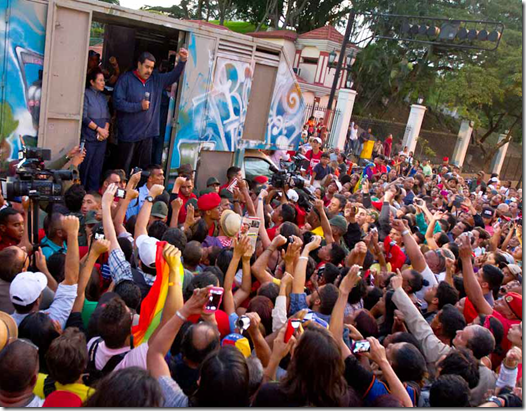
President Nicolás Maduro addresses Chavista supporters on December 7, following election defeat the previous day.

By Richard Fidler

Seventeen years after Hugo Chávez was elected Venezuela’s President for the first time, the supporters of his Bolivarian Revolution, now led by President Nicolás Maduro, suffered their first major defeat in the December 6 elections to the country’s parliament, the National Assembly.

Coming only two weeks after the victory of right-wing candidate Mauricio Macri in Argentina’s presidential election, it was a stunning setback to the “process of change” in Latin America that Chávez had spearheaded until his premature death from cancer in 2013. The opposition majority in the new parliament threatens to undo some of the country’s major social and economic advances of recent years as well as Venezuela’s vital support to revolutionary Cuba and other neighboring countries through innovative solidarity programs like PetroCaribe and the ALBA fair-trade alliance.

The election result is an important gain for Washington as it mounts renewed efforts to restore neoliberal hegemony in Latin America and fracture the new continental alliances (UNASUR, CELAC) that Chávez was instrumental in initiating as alternatives to the US-dominated OAS.

A parliamentary ‘super-majority’ for the opposition Rightists

Under Venezuela’s mixed electoral system, which combines direct election of deputies with proportional representation of parties, the right-wing opposition coalition Democratic Unity Roundtable (MUD, by its Spanish acronym), with 56.2% of the popular vote, won 109 seats. With the support of three indigenous deputies, elected separately, the MUD will have a two-thirds majority in the 167-seat unicameral Assembly.

President Maduro’s United Socialist Party (PSUV) which campaigned in alliance with smaller parties in the Gran Polo Patriótico Simón Bolívar (GPP), took just under 42% of the vote. The GPP won a total of 55 seats: 52 for the PSUV plus 3 for its allies, including 2 for the Communist party.[1] (After the election, Venezuela’s Supreme Court (TSJ) suspended the swearing in of four incoming legislators — three opposition, one PSUV — pending investigations of voting irregularities in Amazonas state. But MUD leaders defied the Court by swearing in the suspended MUD deputies when the National Assembly opened January 5.)

With a “super majority” of two-thirds of the seats, the opposition MUD has the constitutional and legislative power to, among other things:

  • Block government spending and ministerial appointments;
  • Unseat Supreme Court justices;
  • Remove the Vice-President;
  • Convene a National Constituent Assembly, and initiate a recall referendum for President Maduro (although under article 72 of the Constitution, a call for a referendum to remove a public official from office requires the signatures of 20% of the electorate);
  • Submit international treaties, conventions or agreements to referendums; and
  • Pass or modify any draft organic law (laws enacted to develop constitutional rights, which serve as a normative framework for other laws, or which are identified as such by the Constitution).

In short, writes Lucas Koerner in Venezuelanalysis.com,

a two-thirds majority gives the opposition all of the institutional weapons necessary to reverse many of the key transformations of the Venezuelan state achieved by the Bolivarian Revolution over the last seventeen years.

They will now be empowered to revoke critical revolutionary legislation such as the Organic Law of Communes, the Organic Work and Workers’ Law (LOTTT), among numerous others, repeal international treaties such as the ALBA-TP and PetroCaribe, as well as pack the Supreme Court with an eye towards impeaching President Nicolás Maduro.

what_will_venezuelas_new_government_do_jpg_1250606894

Why the opposition victory?

Whether the MUD will do all or any of these things, of course, depends on a number of factors that are not necessarily within its control — above all, how the social and class forces in Venezuela react in the changed political landscape. The MUD itself is not a cohesive political party, and has many divisions among its components. It is composed of 18 parties, 13 of which are now represented in the National Assembly! They are united primarily by their opposition to Chavismo, the spirit and program of the Bolivarian Revolution championed by Hugo Chávez and his successors. But can the election result be interpreted as a vote against Chavismo as such?

With a voter turnout of 74.5% (up from 66.4% registered in the previous legislative election, in 2010), the MUD’s proportion of the popular vote rose by 77% from its vote in 2010, while the PSUV share fell by 44%, some 2 million votes in all. Where did those new MUD votes come from? Gabriel Hetland, a US professor specializing in Venezuelan politics and a first-hand observer of the election, notes that the opposition vote in affluent districts “was nearly identical to what it was in the 2010 National Assembly election.” It is clear, he writes in The Nation,

“that the MUD’s overwhelming victory was due to widespread support among popular sectors that have traditionally favored Chavismo. The MUD won 18 of 24 states, including Hugo Chávez’s home state of Barinas and erstwhile Chavista strongholds in Caracas such as 23 de Enero, Catia, and Caucaguita, a very poor district that abuts Petare, one of the largest barrios in Latin America.”[2]

Hetland reports on his conversations with voters on election day:

“In the popular-sector voting centers I visited I encountered numerous people planning to vote for the opposition. In one barrio in the city of Porlamar… only two of the 18 people I spoke with planned to vote for the PSUV. None of the voters supporting the opposition mentioned liberty or democracy as a reason for doing so. All of them said they were supporting the opposition because of the material difficulties they faced. “I want change,” a woman told me. Pointing to the baby she was holding she said, “I can’t buy formula, and my father, who is 60 years old, had to go to another country for medical treatment” because the medicine he needed was unavailable in Venezuela. Over and over I was told of people’s frustrations with long lines and shortages of food and basic goods. Another young woman holding a baby said, “I get up at 4 am to stand in line and I can’t even buy food. I want change.” As she said this, the women standing next to her nodded their heads vigorously.”

Hetland concludes:

“The sentiments expressed by these voters suggest that it’s more accurate to think of the election result less as a victory for the opposition and more as a rejection of the government.”

As Hetland indicates, voter disaffection with the PSUV reflected the harsh effects of the country’s current economic crisis on the conditions of ordinary Venezuelans, including many who in the past have voted by large majorities in support of the Chavista government. It was a “voto castigo,” a punishment vote. (Although some Chavistas note that in the December 6 legislative election the MUD vote rose by only 4.8% over the vote of MUD candidate Henrique Capriles in the 2013 presidential election, the latter election was more in the nature of a plebiscite on President Maduro as the successor to the recently-deceased Chávez.)

Economic crisis

The shortages of basic goods, the high inflation, and the currency devaluation now afflicting millions of Venezuelans are directly linked in one way or another to the country’s dependency on hydrocarbons production. Oil accounts for more than 95% of Venezuelan exports, and almost half of its fiscal income. High oil prices made it possible for the government to invest heavily in social programs, education and efforts to diversify the economy.

However, the international price of oil has dropped precipitously in recent years with the outbreak of the global capitalist crisis in 2008 and the recent exponential increase in North American production as a result of new, environmentally disastrous techniques like fracking and tar sands production. The increase in US production alone has drastically cut the demand for foreign oil by the world’s biggest consumer — and now biggest producer — of petroleum. The dependent oil-producing countries have failed to develop a common strategy in response — Saudi Arabia, fearful of losing market share, has rejected pressure from Venezuela and others to raise prices — and OPEC, revived in 1999 by Hugo Chávez, has ceased to be a serious player in international markets.

The drop in the international price — from US$100 or more per barrel to less than $30 today — has cut deeply into Venezuelan state revenues. Although the government has maintained spending on social programs and continued to provide inexpensive oil to its Caribbean neighbors, it has had to borrow to cover budget deficits; its total foreign debt increased from 10% of GDP in 2006 to 25% of GDP in 2014 (although this is still a relatively low debt to GDP ratio compared to the rest of Latin America).

When the government curtailed access to dollars at the official exchange rate,[3] the black market exchange rate shot up, increasing exponentially in 2014-15. While the official rate has been fixed at 6.3 bolivars to the dollar since 2013, by the end of 2015 the black market was offering 800 bolivars to the dollar. This in turn played havoc with the price controls the government had imposed for most essential goods in order to counter retailers’ tendency to sell at the black market rate instead of the official rate. This meant that over time more and more products were priced far below the price they could obtain in neighboring countries.

More and more Venezuelans will acquire dollars at the official rate, purchase goods at the subsidized prices for many necessary products, then export them across the border for an enormous profit. Some major companies, writes Telesur correspondent Gregory Wilpert,[4] are involved in this process too, “claiming that they need to import essential goods, and then either not importing these or re-exporting them to acquire dollars. In mid-2014 Maduro estimated that up to 40 per cent of all goods imported into Venezuela (at the official exchange rate) were smuggled right back out again.”

The state has found itself forced to use its dollar currency reserves to import massive amounts of basic products, which it then sells at subsidized prices through state-owned distribution channels. This allows Venezuelans access to a limited amount of basic foodstuffs at low prices. But since these products are scarce, the black market increases exponentially and prices reach many times the regulated price.

“The situation has now become truly untenable,” writes Jorge Martin. “Ordinary working people are forced to queue for hours on end to be able to access small amounts of products at regulated prices in the state-owned supermarkets and distribution chains, and then pay extortionate prices to cover the rest of their basic needs.”

Martin notes that Venezuela’s GDP contracted 4% in 2014, and is forecast to fall by a further 7% to 10% in 2015. “President Maduro has said that inflation this year will be 85%, but many basic products have already risen by an annual inflation rate of over 100%. The IMF forecasts an inflation rate of 159% for the whole year in 2015.”

Corruption and inaction

While oil income from royalties and taxes has until recently brought extraordinary state revenues, also extraordinary are the amounts that are effectively embezzled through the joint collaboration of corrupt Venezuelan capitalists and a section of the state bureaucracy, often linked together through interlocking directorships in banks, insurance companies, firms that contract with the state, and even family members located abroad, using a variety of techniques: import fraud, speculative maneuvers with sovereign debt certificates, negotiation in marginal markets of currencies and debt certificates of the state oil corporation PDVSA, etc.

In one of a series of in-depth exposés of this process, which it describes as a “mafia-like accumulation of capital,” the left pro-Chavista tendency Marea Socialista has documented net capital flight by the “Boliburgesía” (the new “Bolivarian” bourgeoisie) of almost $260 billion (US) between 1998 and 2013 alone. This, it notes, is equivalent to 25 times the cost of Brazil’s World Cup expenditures, 10 times the fall in state income caused by the anti-Chávez oil industry shutdown in 2002-03, the construction of 6 million new homes under the government’s current housing mission, or 37 times the difference between subsidized gasoline sales prices and the cost of production.[5]

There were of course other reasons for the government defeat, as TeleSUR correspondent Tamara Pearson explains: among them, disinformation by the opposition media (still predominant in Venezuela); recent setbacks for the left elsewhere in Latin America themselves linked to the global capitalist crisis; and the alienation of many younger voters who “don’t remember what it was like in Venezuela before Chávez was elected in 1998.” But she notes as well that

“while the opposition has attracted some of the less politically aware social sectors to its anti-Chavismo discourse, the government has also lost some ground from conscientious and solid revolutionaries, partly due to its lack of a solid response to the opposition’s ‘economic war.’ Although it’s easier said than done to combat a rentier state, capitalist system, historical corruption, and big business’s campaign of economic sabotage, Maduro has only announced things like national commissions to deal with the situation.

“While people spend up to seven hours a week lining up for food, and while many of them understand that the government isn’t directly responsible for the situation, the lack of a serious response and significant measures hasn’t helped support for the government.”

Further, says Pearson,

“while the government clearly sides with the poor, for multiple reasons including more right-wing attacks, it has becoming increasingly distanced from the organized grassroots…. [W]ith the way the government communicates with the people, the way it gets information out and involves people in serious decision making — there has been a step back in recent times. This aspect of the Bolivarian revolution is perhaps the most important, so the significance of it and its impact on people shouldn’t be underestimated.”

Some immediate responses to election verdict

President Maduro promptly accepted the official election results but pledged to continue defending the progressive laws and social programs adopted and implemented during the last decade and a half. A new stage is opening in the Bolivarian Revolution, he said in his election night address, a stage in which the central task is to deepen the revolution by building the country’s productive capacity at all levels — “communal, communitarian, industrial and regional.” Venezuelans, he added, should see the current difficulties in the oil industry as “warnings… and as opportunities to replace the rentist petroleum system with a self-sustaining, self-sustainable productive economic system.”

(This would require some major changes in the present program of the PSUV, the Plan de la Patria or Plan for the Fatherland. Although it lists as one of its five major historical objectives “going beyond the capitalist petroleum rentist model,” it also calls for doubling Venezuelan oil production from 3.3 million barrels per day in 2014 to 6 million in 2019.)

Following Maduro’s election night speech, hundreds of Chavista activists from various popular movements marched in solidarity the next morning through the streets of Caracas to the presidential palace (Miraflores). Maduro invited the crowd to send in representatives to meet with him to discuss the next steps. In this and two subsequent meetings, 185 voceros or spokespersons of communes, commandos, brigades, etc. hammered out some lengthy documents outlining what they considered key objectives to be pursued in the coming months.[6] In addition to proposals for greater government control over foreign trade, banking and finance, more effective tax collection and a sustained fight against bureaucracy and corruption, a central theme was the need to strengthen the role and productive capacities of the communal councils and communes, the territorially based grassroots organizations that the Chavistas see as the foundational units for the eventual creation of a “communal state” of direct democracy “from below” to replace the top-down bureaucratic administration of the capitalist state.[7]

A theme heard more and more in the extensive public debate now underway in radio and TV, on web sites and in the social media is the need to move toward nationalization of the major banks and financial institutions, and possibly to establish a state monopoly over foreign trade — essential measures, in my view, if Venezuela is to establish public control over the speculators and protect itself from the worst vagaries of uncontrollable world prices.

Maduro has established work teams to systematize these and other such grassroots proposals in a “central document of the Bolivarian Revolution” as a guide to action in its new stage. And he has convened an organizing committee to meet January 23 to prepare a “Congress of the Fatherland,” although providing few details on what he has in mind.

Communal Parliament

On December 15 Diosdado Cabello, PSUV deputy leader and president of the outgoing National Assembly, presided over the first gathering of the National Communal Parliament. This legislative body was provided for in the Organic Law of Communes, adopted in 2012, but it was only recently that there was a sufficient critical mass of municipal and regional communes to convene it. The communes had begun electing delegates (voceros) to this body in August 2015. It was originally intended that it would function as an adjunct to the National Assembly. “Now it’s up to you in the National Communal Parliament, to discuss and present proposals that you consider necessary to help President Nicolas Maduro,” Cabello told the delegates. He said this grassroots parliament would help to shield the country’s laws of Popular Power from right-wing attempts to rescind them in the new National Assembly.

The Communal Parliament has met several times since, and in early January announced that itsvoceros from Venezuela’s 24 states would meet February 4 to adopt their internal rules of functioning, which will then be published in a new monthly publication, the Gacetas Comunales.

In a parallel development, the outgoing National Assembly hastily adopted in late December a spate of pending legislation that was promptly ratified by Maduro in accordance with the Constitution. A major one, the Law of Presidential Councils of the People’s Power, will provide a means for direct citizen input in decision-making by the government (in this case, the President). The purpose, as the introduction to the law proclaims, is “to strengthen the System of Popular Government” by establishing a basic network that “addresses in a profound way the concrete problems of the population through policies, plans, programs and projects for sectoral development… based on the principles and values enshrined in the Constitution….”

Also adopted was a ground-breaking Anti-GMO and Anti-Patenting Seed Law, the result of an ongoing grassroots campaign by environmental and campesino social movements over the past two years. “The law is a victory for the international movements for agroecology and food sovereignty,” write the authors of the linked article, “because it bans transgenic (GMO) seed while protecting local seed from privatization.

“The law is also a product of direct participatory democracy — the people as legislator — in Venezuela, because it was hammered out through a deliberative partnership between members of the country’s National Assembly and a broad-based grassroots coalition of eco-socialist, peasant, and agroecological oriented organizations and institutions.”

The new opposition-dominated National Assembly may very well attempt to reverse some or all of these legislative gains, of course. However, PSUV deputy Diosdado Cabello, the former Assembly president, notes that the Constitutional Division of the Supreme Court may disallow national laws “which are in conflict with this Constitution, including omissions… in failing to promulgate rules or measures essential to guaranteeing compliance with the Constitution.”[8]

On January 6 President Maduro reshuffled his cabinet and created several new ministerial departments as part of an “economic counter-offensive.” He said the new leadership team would prioritize agricultural production as part of a plan for economic recovery.

MUD aims for destabilization – and overthrow of Maduro

Maduro was scheduled to present a detailed report on his plans to the new National Assembly on January 12, although he acknowledged that there was no assurance it would accept them.

However, on January 12 the Assembly session was suspended in confusion followed soon after by a humiliating backdown by the MUD majority. As mentioned earlier, when the new Assembly first met, the MUD had sworn in three of their deputies who had been suspended by the Supreme Court for alleged irregularities in their election. The Court had responded by declaring the Assembly proceedings void. Now, with the PSUV absent and only a handful of MUD deputies present, the Assembly president Henry Ramos Allup (himself an old-line politician[9] elected president in a private session of the MUD, contrary to Assembly rules) then found there was no quorum and suspended the proceedings.

However, amidst the ensuing public outcry at these shenanigans, the three suspended deputies wrote to the leadership of the Assembly asking that their swearing-in be reversed. The next day, Ramos Allup called the Assembly to order, had the Supreme Court ruling read aloud, then stated that the Assembly leaders would “abide by the ruling of the Supreme Court.” But Maduro has yet to give his promised report.

The opposition’s climbdown probably reflects strategic divisions within their ranks between a relatively moderate faction led by Henrique Capriles, which is said to favour posing as a credible alternative to the government with proposals to solve the economic crisis, and a more confrontationist faction, apparently dominant, which is led by virulent opponents of the government. Its main leader is Leopoldo López, currently serving a 13-year prison sentence for his involvement in the guarimbastreet protests in 2014 that resulted in 43 deaths, as well as other violent actions. Both Capriles and López are former presidential candidates against Maduro and Chávez, respectively, and both have links to the coup plotters of 2002.

The opposition’s defiance of the Supreme Court underscored its determination to steer toward an outright confrontation with President Maduro, with the goal of destabilizing his government as much as possible. Ramos Allup says he hopes to prepare Maduro’s ouster within the next six months. Another primary goal is passage of an amnesty law to free what the opposition terms “political prisoners,” that is, all those who have been involved in violent protests (including Leopoldo López).

Among other promised or rumoured measures favoured by the anti-government majority in the Assembly, writes Greg Wilpert, are a law

“to give ownership titles to the beneficiaries of the housing mission. Over the past five years the government has constructed one million public homes, which it has essentially leased to families in perpetuity, but without giving them a title that can be bought and sold. The reasoning behind this is to avoid the development of a speculative housing market of homes built with public funds. The opposition is betting that most public housing beneficiaries would prefer a saleable ownership title, so that they can sell the home and thereby possibly make a profit from it.

“… a rumored project to dollarize the economy. It is obvious to everyone in Venezuela that the current economic situation of high inflation, frequent shortages of basic goods, long lines at supermarkets, and a massive black market for price-controlled products, is not sustainable. One ‘solution’ to these problems that some opposition leaders have favored it to simply get rid of the local currency, the bolivar, and base the entire economy on dollars, just as Ecuador did in 2001. Aside from undermining the country’s economic sovereignty, such a move would also almost definitely mean major painful displacements for economy, leading to increased inequality and unemployment. …

“Other major projects on the opposition docket,” reports Wilpert, “include the repeal of a wide variety of progressive laws that were passed during the Chavez and Maduro presidencies, beginning with the land reform, [and including] re-privatization of key industries and the dismantling of price controls, among other things.”

Capriles has also proposed a “padlock law” to “put an end to oil diplomacy” and “stop the government from giving away and wasting the country’s resources” — a threat clearly aimed at the PetroCaribe initiative that has provided Caribbean countries including Cuba with much-needed oil at preferential repayment rates.

Needless to say, little of this was mentioned in the MUD election platform.

Basically, the virulence of the opposition majority in the legislature — they have even removed portraits of Hugo Chávez (and Simón Bolívar!) from the Assembly precincts — reflects the visceral determination of the class they represent to avenge and reverse not only the laws but the very foundations of the Bolivarian regime initiated by Chávez and his original Movement for the Fifth Republic. No wonder this opposition holds the 1999 Constitution and its institutions in such contempt. That Constitution effectively terminated the institutional setup underlying the rule of the bourgeois elites who had monopolized political power for generations, characterized by the sham alternance of two similar capitalist parties cemented in the infamous “Punto Fijo” accord. In its place the new Constitution outlined the creation of a real sovereign democracy in which the great mass of the population were to be the “protagonists,” the living actors, of their destiny as implemented through a variety of grassroots-operated institutional forms that are only now beginning to become reality.

A new stage — and a challenge

Apart from the role of the Supreme Court (itself threatened by the opposition-dominated National Assembly) in trying to restrain the Assembly within constitutional limits, there are now three powers contending in this conflictual context: the President, head of state and supported by the military, who have confirmed their loyalty to the Constitution and the Bolivarian Revolution; the National Assembly, at loggerheads with the President and determined to replace him and all he stands for as soon as possible; and what is commonly referred to as the People’s Power, the grassroots mobilizations of ordinary citizens organized territorially in communal councils and communes or politically in support of the “process of change” — a force that is diffuse and still lacking a coherent structured national leadership. It is unclear at this point what role this relatively new force can play in helping to overcome the current economic and political crisis. The governing party, the PSUV, is largely an electoral machine and somewhat discredited by the implication of some leaders in corruption and bureaucratic maneuvers. It needs a fundamental overhaul.

There is much talk among Chavistas of answering the crisis by “deepening the revolution,” taking a “qualitative leap” as Chávez himself advocated in his Golpe de Timón speech.

In a remarkable essay, Venezuelan militant José Roberto Duque of Misión Verdad issues a challenge. If, he says, the Presidency and the Assembly are determined to prevent each other from fulfilling its role, “then it will be technically and procedurally impossible to to legislate (the Assembly’s mission) or to govern (the executive’s mission) in Venezuela.

“As such, we will be on the threshold of a situation in which a third actor, the most important and decisive amongst state subjects (popular power, citizens, you and I) must take a position with respect to the legitimacy of the actions of our representatives….

“Today we Chavistas unanimously support the ‘Communal State’ project proposed by Chávez. How many of us are prepared to keep building that Communal State even when the National Assembly eliminates the Law of Communal Councils and the Law of the Communes in one foul stroke? Will we have the stamina to keep building the other society clandestinely and illegally? Or will we submit to bourgeois laws that order us to give the entire productive apparatus up to private business?”

Duque explores these and related questions and concludes:

“The communes should be structures that are capable of surviving at the margins of the state and government, even functioning as areas of rearguard and resistance at the moment of an institutional collapse — when the Bolivarian government ceases its functions because of either legal or illegal means.

“We must be capable then of creating and consolidating self-sustainable and self-sufficient structures. We are in a very early stage of our communard history, and that is the reason why a ministry still exists that is in charge of financing the launch of productive projects in the communes. But in the future it would be an aberration for the communes and other organisations and means of production to continue to be dependent on state financing and other entities.”

I think this is the fundamental challenge facing the Bolivarian Revolution in the coming period. But it must be accompanied by measures at the level of the existing state to overcome the economic crisis — through implementation of an emergency program that can provide immediate relief to the masses of Venezuelan workers and campesinos.


[1] Elecciones parlamentarias de Venezuela de 2015, Wikipedia, la enciclopedia libre.

[2] The End of Chavismo? Why Venezuela’s Ruling Party Lost Big, and What Comes Next, The Nation, December 10, 2015.

[3] Capital controls were first imposed in 2002-03 in order to stabilize the currency and stop a flight of capital resulting from a bosses’ shutdown of the oil industry in the wake of their failed attempt to oust Chávez in a coup.

[4] Wilpert is the author of an excellent book on the Chávez years: Changing Venezuela by Taking Power (Verso, 2007).

[5] See, for example, Sinfonía de un Desfalco a la Nación: Tocata y fuga… de Capitales.

[6] See El sacudón electoral del 6D como crisis revolucionaria y motor de saltos cualitativos hacia el Socialismo Bolivariano, http://www.aporrea.org/poderpopular/n283366.html andhttp://www.aporrea.org/poderpopular/n283410.html.

[7] There are now more than 45,000 communal councils and 1,430 communes established throughout Venezuela. Most of the communes have been established since Hugo Chávez’s famous speech to his cabinet El Golpe de Timón just after his election in 2012 and shortly before his death in March 2013, in which he urged his ministers to prioritize the construction of communal democracy.

[8] Constitución de la República Bolivariana de Venezuela, art. 336. Here is an English translation.

[9] A leader of Acción Democrática, he is also vice president of the Socialist International!

This Article First Appeared on “Life on the Left”

Share this:

  • Tweet
  • More
Like Loading...

అడకత్తెరలో పోక చెక్కలుగా పత్తి రైతులు

14 Thursday Jan 2016

Posted by raomk in AP NEWS, Current Affairs, Economics, Farmers, INDIA, NATIONAL NEWS, Prices

≈ Leave a comment

Tags

cotton, cotton farmers, cotton market, cotton prices

ఎంకెఆర్‌

మీ వూర్లోనో, ప్రాంతంలోనో పత్తి ధరలలో స్ధానిక పరిస్థితులు, పత్తి నాణ్యత తదితర కారణాలతో స్వల్ప హెచ్చు తగ్గులు వుండవచ్చు. ప్రపంచ మార్కెట్లో మొత్తం మీద పత్తి ధరలు తగ్గుముఖంలో వున్నాయి. కర్ణుడి చావుకు కారణాలనేకం అన్నట్లు పత్తి రైతుల పరిస్ధితి వుంది.ఎప్పుడు ఏం జరుగుతుందో ఏ పరిణామం ప్రతికూల పర్యవసానాలను ముందుకు తెస్తుందో తెలియటం లేదు.

ఇటీవల చైనా ఆర్ధిక వ్యవస్ధలో సంభవించిన పరిణామాలలో స్టాక్‌ మార్కెట్‌ కుదేలు కావటంతో పాటు కరెన్సీ యువాన్‌ విలువ కూడా పడిపోయింది.అది అలాగే కొనసాగితే అ ప్రభావం చైనాతో పాటు మనవంటి అనేక దేశాలపై పడుతోంది. మన ఎగుమతులపై ప్రతికూల ప్రభావం చూపుతుందని నిపుణులు చెబుతున్నారు. రెండు దేశాలకూ అమెరికా, ఐరోపా దేశాల మార్కెట్లు వుమ్మడిగా వున్నాయి. కరెన్సీ విలువలు తగ్గిన దేశాల నుంచి దిగుమతులు చేసుకుంటే వారికి లాభం. ఆ రీత్యా చైనా కరెన్సీ విలువ పడిపోతే అక్కడి నుంచి అంతకంటే మన కరెన్సీ విలువ పడిపోతే ఇక్కడి నుంచి దిగుమతి చేసుకుంటారు తప్ప వ్యాపారులకు మరొక ప్రాతిపదిక వుండదు. మన దేశం నుంచి ఈ ఏడు 13-15శాతం పెరుగుదల రేటుతో దుస్తులు, వస్త్రాల ఎగుమతులు వుంటాయని ఆశించగా డిసెంబరు నాటికి 7-8శాతానికి మించలేదు. ధనిక దేశాలలో ఆర్ధిక పరిస్థితి మందగించటమే దీనికి కారణం. ఇప్పుడు చైనా యువాన్‌ విలువ పతనం కావటంతో గతం కంటే తక్కువ విలువకే (డాలర్లకే) చైనా సరకులను ధనిక దేశాలు దిగుమతి చేసుకోవచ్చు. గత దశాబ్ది కాలంలో సగటున మన వస్త్ర వుత్పత్తుల ఎగుమతుల పెరుగుదల రేటు 3-4శాతం మాత్రమే వుందని రేటింగ్‌ సంస్ధ మూడీస్‌ విభాగమైన ‘ఇక్రా’ తాజాగా తెలిపింది. ఈ స్థితిలో మన రూపాయి విలువను తగ్గించుకుంటే మన ఎగుమతులు పెరుగుతాయి. అదే చేస్తే మన దిగుమతులకు అయ్యేఖర్చు అంతకంటే ఎక్కువ పెరుగుతుంది. ఇప్పటికే విదేశీ వాణిజ్యలోటుతో వున్న మన దేశం డాలర్ల కోసం మరిన్ని ప్రజావ్యతిరేక చర్యలు తీసుకోవాల్సి వుంటుంది.మన వస్త్ర వుత్పత్తుల ఎగుమతులు తగినంతగా లేకపోతే అంతర్గతంగా డిమాండ్‌ తగ్గిపోయి పత్తి ధరలు మరింత పతనం లేదా ఇప్పుడున్న స్ధితిలో ఎదుగూ బొదుగూ లేకుండా వుంటాయి.

కాటన్‌ ఇన్‌కార్పొరేట్‌ సంస్ధ తాజా సమాచారం ప్రకారం డిసెంబరు 29నుంచి జనవరి పది వరకు అంతర్జాతీయ పత్తి ధరల సూచిక తగ్గుదల చూపింది. ప్రపంచంలో అగ్రస్ధానం కోసం పడుతూ ఒకటి రెండు స్ధానాలలో దేశాలలో సూచీలు ఇలా వున్నాయి.(లింట్‌ బేల్‌ ధర సెంట్లలో)

సూచీ జనవరి 12న డిసెంబరు ఏడాది క్రితం

న్యూయార్క్‌ 61.6 63.7 63.3

అమెరికా 68.5 70.4 70.4

చైనా 88.3 91.1 95.8

భారత్‌ 63.8 63.8 65.8

పాకిస్ధాన్‌ 62.1 60.8 59.9

డాలర్‌ విలువతో పోల్చితే చైనా యువాన్‌ ధర తాజాగా పడిపోయిన కారణంగా జనవరి 12న చైనాలో పత్తి ధర 92 నుంచి 88 సెంట్లకు పడిపోయినట్లు కనిపించినప్పటికీ చైనా మార్కెట్‌లో క్వింటాలు ధర 1280 వద్ద స్ధిరంగా వుంది. ఒక్క పాకిస్తాన్‌లో గత నెల రోజుల్లో ధరలు పెరిగాయి. మన దేశంలో పెద్ద మార్పులేదు. పాకిస్తాన్‌లో వుత్పత్తి 17 సంవత్సరాల కనిష్టం 7.2 మిలియన్‌ బేళ్లకు పడిపోవటం అక్కడి మార్కెట్‌లో కొద్ది పాటి పెరుగుదలకు కారణమైందని చెప్పవచ్చు. తెల్లదోమ, ఇతర తెగుళ్లే దీనికి కారణం.ఈ ఏడాది ప్రపంచంలో వుత్పత్తి తగ్గిన కారణంగా వచ్చే ఏడాది విస్తీర్ణం పెరగవచ్చని మార్కెట్‌ వర్గాలు అప్పుడే అంచనాలు వేస్తున్నాయి. 2011-14 మధ్య ఏటా 19.7 మిలియన్ల బేళ్ల చొప్పున దిగుమతి చేసుకున్న చైనా తన విధాన మార్పుల కారణంగా 2015-16లో కేవలం 5.5 మిలియన్‌ బేళ్లకే పరిమితం చేసుకుంది. అంతర్గతంగా తన రైతాంగానికి ధర పడిపోకుండా హామీ ఇచ్చి మద్దతు ధర పెంచుతోంది. ఈ కాలంలో చైనా వెలుపల మిల్లుల వినియోగం పెరిగినప్పటికీ అది చైనా దిగుముతు తగ్గిన స్ధాయిలో లేకపోవటంతో ప్రపంచ మార్కెట్‌ ధరలు స్ధబ్దుగా వుంటున్నాయి. దీనికి తోడు చమురు మార్కెట్‌లో ధరలు గణనీయంగా తగ్గిన కారణంగా దాని వుపవుత్పత్తులైన నైలాన్‌, ఇతర కృత్రిమ నూలు ధరలు తగ్గటం కూడా పత్తి డిమాండ్‌ను పరిమితం చేశాయి.

Share this:

  • Tweet
  • More
Like Loading...
← Older posts
Newer posts →

Recent Posts

  • వెనెజులాపై దాడి, మదురో కిడ్నాప్‌ -అమెరికా అసలు లక్ష్యం చైనా !
  • విస్మృత ఆదివాసీకి తొలిసారి పట్టంగట్టిన కేరళ కమ్యూనిస్టులు, శబరిమల బంగారం దొంగలు సోనియా గాంధీతో భేటీ !
  • నైజీరియాపై అమెరికా క్షిపణులు: ” శాంతి ” దూత డోనాల్డ్‌ ట్రంప్‌ చేయించిన తొమ్మిదవ దాడి !
  • ఆ గట్టునుంటావా ఈ గట్టుకొస్తావా : నరేంద్రమోడీకి విషమ పరీక్ష పెట్టిన డోనాల్డ్‌ ట్రంప్‌ !
  • జర్మన్‌ హిట్లర్‌ బాటలో శాస్త్రవేత్తలను బయటకు పంపుతున్న ట్రంప్‌ !

Recent Comments

pscknr's avatarpscknr on కేరళ స్థానిక సంస్థల ఎన్నికల ఫల…
Venugopalrao Nagumothu's avatarVenugopalrao Nagumot… on విత్తనాల ముసాయిదా బిల్లు …
Raj's avatarRaj on న్యూయార్క్‌ మేయర్‌గా సోషలిస్టు…
Aravind's avatarAravind on సిజెఐ బిఆర్‌ గవాయిపై దాడి యత్న…
Arthur K's avatarArthur K on CPI(M) for proportional repres…

Archives

  • January 2026
  • December 2025
  • November 2025
  • October 2025
  • September 2025
  • August 2025
  • July 2025
  • June 2025
  • May 2025
  • April 2025
  • March 2025
  • February 2025
  • January 2025
  • December 2024
  • November 2024
  • October 2024
  • September 2024
  • August 2024
  • July 2024
  • June 2024
  • May 2024
  • April 2024
  • March 2024
  • February 2024
  • January 2024
  • December 2023
  • November 2023
  • October 2023
  • September 2023
  • August 2023
  • July 2023
  • June 2023
  • May 2023
  • April 2023
  • March 2023
  • February 2023
  • January 2023
  • December 2022
  • November 2022
  • October 2022
  • September 2022
  • August 2022
  • July 2022
  • June 2022
  • May 2022
  • April 2022
  • March 2022
  • February 2022
  • January 2022
  • December 2021
  • November 2021
  • October 2021
  • September 2021
  • August 2021
  • July 2021
  • June 2021
  • May 2021
  • April 2021
  • March 2021
  • February 2021
  • January 2021
  • December 2020
  • November 2020
  • October 2020
  • September 2020
  • August 2020
  • July 2020
  • June 2020
  • May 2020
  • April 2020
  • March 2020
  • February 2020
  • January 2020
  • December 2019
  • November 2019
  • October 2019
  • September 2019
  • August 2019
  • July 2019
  • June 2019
  • May 2019
  • April 2019
  • March 2019
  • February 2019
  • January 2019
  • December 2018
  • November 2018
  • October 2018
  • September 2018
  • August 2018
  • July 2018
  • June 2018
  • May 2018
  • April 2018
  • March 2018
  • February 2018
  • January 2018
  • December 2017
  • November 2017
  • October 2017
  • September 2017
  • August 2017
  • July 2017
  • June 2017
  • May 2017
  • April 2017
  • March 2017
  • February 2017
  • January 2017
  • December 2016
  • November 2016
  • October 2016
  • September 2016
  • August 2016
  • July 2016
  • June 2016
  • May 2016
  • April 2016
  • March 2016
  • February 2016
  • January 2016
  • December 2015
  • November 2015
  • October 2015

Categories

  • Africa
  • AP
  • AP NEWS
  • Asia
  • BJP
  • BRS
  • CHINA
  • Communalism
  • Congress
  • COUNTRIES
  • CPI(M)
  • Current Affairs
  • Economics
  • Education
  • employees
  • Environment
  • Europe
  • Farmers
  • Filims
  • Germany
  • Greek
  • Gujarat
  • Health
  • History
  • imperialism
  • INDIA
  • International
  • INTERNATIONAL NEWS
  • Japan
  • Latin America
  • Left politics
  • Literature.
  • Loksabha Elections
  • NATIONAL NEWS
  • Opinion
  • Others
  • Pensioners
  • Political Parties
  • Politics
  • Prices
  • Readers News Service
  • RELIGION
  • Religious Intolarence
  • RUSSIA
  • Science
  • Social Inclusion
  • Sports
  • STATES NEWS
  • tdp
  • TDP
  • Telangana
  • Telugu
  • UK
  • Uncategorized
  • USA
  • WAR
  • Women
  • Women
  • Ycp

Meta

  • Create account
  • Log in
  • Entries feed
  • Comments feed
  • WordPress.com

Recent Posts

  • వెనెజులాపై దాడి, మదురో కిడ్నాప్‌ -అమెరికా అసలు లక్ష్యం చైనా !
  • విస్మృత ఆదివాసీకి తొలిసారి పట్టంగట్టిన కేరళ కమ్యూనిస్టులు, శబరిమల బంగారం దొంగలు సోనియా గాంధీతో భేటీ !
  • నైజీరియాపై అమెరికా క్షిపణులు: ” శాంతి ” దూత డోనాల్డ్‌ ట్రంప్‌ చేయించిన తొమ్మిదవ దాడి !
  • ఆ గట్టునుంటావా ఈ గట్టుకొస్తావా : నరేంద్రమోడీకి విషమ పరీక్ష పెట్టిన డోనాల్డ్‌ ట్రంప్‌ !
  • జర్మన్‌ హిట్లర్‌ బాటలో శాస్త్రవేత్తలను బయటకు పంపుతున్న ట్రంప్‌ !

Recent Comments

pscknr's avatarpscknr on కేరళ స్థానిక సంస్థల ఎన్నికల ఫల…
Venugopalrao Nagumothu's avatarVenugopalrao Nagumot… on విత్తనాల ముసాయిదా బిల్లు …
Raj's avatarRaj on న్యూయార్క్‌ మేయర్‌గా సోషలిస్టు…
Aravind's avatarAravind on సిజెఐ బిఆర్‌ గవాయిపై దాడి యత్న…
Arthur K's avatarArthur K on CPI(M) for proportional repres…

Archives

  • January 2026
  • December 2025
  • November 2025
  • October 2025
  • September 2025
  • August 2025
  • July 2025
  • June 2025
  • May 2025
  • April 2025
  • March 2025
  • February 2025
  • January 2025
  • December 2024
  • November 2024
  • October 2024
  • September 2024
  • August 2024
  • July 2024
  • June 2024
  • May 2024
  • April 2024
  • March 2024
  • February 2024
  • January 2024
  • December 2023
  • November 2023
  • October 2023
  • September 2023
  • August 2023
  • July 2023
  • June 2023
  • May 2023
  • April 2023
  • March 2023
  • February 2023
  • January 2023
  • December 2022
  • November 2022
  • October 2022
  • September 2022
  • August 2022
  • July 2022
  • June 2022
  • May 2022
  • April 2022
  • March 2022
  • February 2022
  • January 2022
  • December 2021
  • November 2021
  • October 2021
  • September 2021
  • August 2021
  • July 2021
  • June 2021
  • May 2021
  • April 2021
  • March 2021
  • February 2021
  • January 2021
  • December 2020
  • November 2020
  • October 2020
  • September 2020
  • August 2020
  • July 2020
  • June 2020
  • May 2020
  • April 2020
  • March 2020
  • February 2020
  • January 2020
  • December 2019
  • November 2019
  • October 2019
  • September 2019
  • August 2019
  • July 2019
  • June 2019
  • May 2019
  • April 2019
  • March 2019
  • February 2019
  • January 2019
  • December 2018
  • November 2018
  • October 2018
  • September 2018
  • August 2018
  • July 2018
  • June 2018
  • May 2018
  • April 2018
  • March 2018
  • February 2018
  • January 2018
  • December 2017
  • November 2017
  • October 2017
  • September 2017
  • August 2017
  • July 2017
  • June 2017
  • May 2017
  • April 2017
  • March 2017
  • February 2017
  • January 2017
  • December 2016
  • November 2016
  • October 2016
  • September 2016
  • August 2016
  • July 2016
  • June 2016
  • May 2016
  • April 2016
  • March 2016
  • February 2016
  • January 2016
  • December 2015
  • November 2015
  • October 2015

Categories

  • Africa
  • AP
  • AP NEWS
  • Asia
  • BJP
  • BRS
  • CHINA
  • Communalism
  • Congress
  • COUNTRIES
  • CPI(M)
  • Current Affairs
  • Economics
  • Education
  • employees
  • Environment
  • Europe
  • Farmers
  • Filims
  • Germany
  • Greek
  • Gujarat
  • Health
  • History
  • imperialism
  • INDIA
  • International
  • INTERNATIONAL NEWS
  • Japan
  • Latin America
  • Left politics
  • Literature.
  • Loksabha Elections
  • NATIONAL NEWS
  • Opinion
  • Others
  • Pensioners
  • Political Parties
  • Politics
  • Prices
  • Readers News Service
  • RELIGION
  • Religious Intolarence
  • RUSSIA
  • Science
  • Social Inclusion
  • Sports
  • STATES NEWS
  • tdp
  • TDP
  • Telangana
  • Telugu
  • UK
  • Uncategorized
  • USA
  • WAR
  • Women
  • Women
  • Ycp

Meta

  • Create account
  • Log in
  • Entries feed
  • Comments feed
  • WordPress.com

Social

  • View mannem.koteswararao’s profile on Facebook
  • View mannemkoteswara’s profile on Twitter

Recent Posts

  • వెనెజులాపై దాడి, మదురో కిడ్నాప్‌ -అమెరికా అసలు లక్ష్యం చైనా !
  • విస్మృత ఆదివాసీకి తొలిసారి పట్టంగట్టిన కేరళ కమ్యూనిస్టులు, శబరిమల బంగారం దొంగలు సోనియా గాంధీతో భేటీ !
  • నైజీరియాపై అమెరికా క్షిపణులు: ” శాంతి ” దూత డోనాల్డ్‌ ట్రంప్‌ చేయించిన తొమ్మిదవ దాడి !
  • ఆ గట్టునుంటావా ఈ గట్టుకొస్తావా : నరేంద్రమోడీకి విషమ పరీక్ష పెట్టిన డోనాల్డ్‌ ట్రంప్‌ !
  • జర్మన్‌ హిట్లర్‌ బాటలో శాస్త్రవేత్తలను బయటకు పంపుతున్న ట్రంప్‌ !

Recent Comments

pscknr's avatarpscknr on కేరళ స్థానిక సంస్థల ఎన్నికల ఫల…
Venugopalrao Nagumothu's avatarVenugopalrao Nagumot… on విత్తనాల ముసాయిదా బిల్లు …
Raj's avatarRaj on న్యూయార్క్‌ మేయర్‌గా సోషలిస్టు…
Aravind's avatarAravind on సిజెఐ బిఆర్‌ గవాయిపై దాడి యత్న…
Arthur K's avatarArthur K on CPI(M) for proportional repres…

Archives

  • January 2026
  • December 2025
  • November 2025
  • October 2025
  • September 2025
  • August 2025
  • July 2025
  • June 2025
  • May 2025
  • April 2025
  • March 2025
  • February 2025
  • January 2025
  • December 2024
  • November 2024
  • October 2024
  • September 2024
  • August 2024
  • July 2024
  • June 2024
  • May 2024
  • April 2024
  • March 2024
  • February 2024
  • January 2024
  • December 2023
  • November 2023
  • October 2023
  • September 2023
  • August 2023
  • July 2023
  • June 2023
  • May 2023
  • April 2023
  • March 2023
  • February 2023
  • January 2023
  • December 2022
  • November 2022
  • October 2022
  • September 2022
  • August 2022
  • July 2022
  • June 2022
  • May 2022
  • April 2022
  • March 2022
  • February 2022
  • January 2022
  • December 2021
  • November 2021
  • October 2021
  • September 2021
  • August 2021
  • July 2021
  • June 2021
  • May 2021
  • April 2021
  • March 2021
  • February 2021
  • January 2021
  • December 2020
  • November 2020
  • October 2020
  • September 2020
  • August 2020
  • July 2020
  • June 2020
  • May 2020
  • April 2020
  • March 2020
  • February 2020
  • January 2020
  • December 2019
  • November 2019
  • October 2019
  • September 2019
  • August 2019
  • July 2019
  • June 2019
  • May 2019
  • April 2019
  • March 2019
  • February 2019
  • January 2019
  • December 2018
  • November 2018
  • October 2018
  • September 2018
  • August 2018
  • July 2018
  • June 2018
  • May 2018
  • April 2018
  • March 2018
  • February 2018
  • January 2018
  • December 2017
  • November 2017
  • October 2017
  • September 2017
  • August 2017
  • July 2017
  • June 2017
  • May 2017
  • April 2017
  • March 2017
  • February 2017
  • January 2017
  • December 2016
  • November 2016
  • October 2016
  • September 2016
  • August 2016
  • July 2016
  • June 2016
  • May 2016
  • April 2016
  • March 2016
  • February 2016
  • January 2016
  • December 2015
  • November 2015
  • October 2015

Categories

  • Africa
  • AP
  • AP NEWS
  • Asia
  • BJP
  • BRS
  • CHINA
  • Communalism
  • Congress
  • COUNTRIES
  • CPI(M)
  • Current Affairs
  • Economics
  • Education
  • employees
  • Environment
  • Europe
  • Farmers
  • Filims
  • Germany
  • Greek
  • Gujarat
  • Health
  • History
  • imperialism
  • INDIA
  • International
  • INTERNATIONAL NEWS
  • Japan
  • Latin America
  • Left politics
  • Literature.
  • Loksabha Elections
  • NATIONAL NEWS
  • Opinion
  • Others
  • Pensioners
  • Political Parties
  • Politics
  • Prices
  • Readers News Service
  • RELIGION
  • Religious Intolarence
  • RUSSIA
  • Science
  • Social Inclusion
  • Sports
  • STATES NEWS
  • tdp
  • TDP
  • Telangana
  • Telugu
  • UK
  • Uncategorized
  • USA
  • WAR
  • Women
  • Women
  • Ycp

Meta

  • Create account
  • Log in
  • Entries feed
  • Comments feed
  • WordPress.com

Create a free website or blog at WordPress.com.

Privacy & Cookies: This site uses cookies. By continuing to use this website, you agree to their use.
To find out more, including how to control cookies, see here: Cookie Policy
  • Subscribe Subscribed
    • vedika
    • Join 247 other subscribers
    • Already have a WordPress.com account? Log in now.
    • vedika
    • Subscribe Subscribed
    • Sign up
    • Log in
    • Report this content
    • View site in Reader
    • Manage subscriptions
    • Collapse this bar
%d